01 / 04
The Kidney Grille (Niere)
Twin vertical kidneys have fronted almost every BMW since 1933. Slim and elegant for decades, they’ve grown into the brand’s boldest — and most argued-about — signature.
7 March 1916 · Munich, Bavaria
Origins
A maker of aircraft engines that became a maker of drivers’ cars. From a Bavarian workshop in 1916 to the sports sedan, the M badge, and the electric era — a century measured in driving pleasure.
1916
Bayerische Flugzeugwerke is founded on 7 March 1916 — BMW’s official birthday. Alongside Karl Rapp’s nearby engine works it builds aircraft engines for a wartime sky, not cars for the road.
1917
Rapp Motorenwerke is renamed Bayerische Motoren Werke under director Franz Josef Popp, with financier Camillo Castiglioni backing the young firm. The engine — not the automobile — is the founding idea.
1923
With aircraft engines banned after the war, BMW turns to motorcycles. The R32, with its boxer twin and shaft drive, sets a two-wheeled template BMW still follows a century later.
1928
BMW buys the Eisenach car works and the licence to build the Dixi — inheriting its first automobile, and with it, a place in the motoring world.
1959
Bleeding money from unsold V8 saloons and the exquisite-but-ruinous 507, BMW is nearly absorbed by Daimler-Benz. Herbert Quandt gambles on independence, deepens his stake, and — with the little 700 and the coming Neue Klasse — saves the company.
1972
BMW Motorsport GmbH is founded, and with it the blue-violet-red ///M colours. The division that will build the M1, the M3 and a racing dynasty has arrived.
The Century
From 1916 to 2026. Scrub the years, pick an era, and the model grid below narrows to match.
The Machines
Filter by era from the timeline above, or by discipline here. Select any car for the full story.
17 models
No models match this filter.
Design DNA
A BMW is recognisable in silhouette. Trace the signatures that have travelled, almost unbroken, from the Neue Klasse to today.
01 / 04
Twin vertical kidneys have fronted almost every BMW since 1933. Slim and elegant for decades, they’ve grown into the brand’s boldest — and most argued-about — signature.
02 / 04
That forward-hooked bend where the rear glass meets the C-pillar. Introduced on the 1961 Neue Klasse, it’s a near-permanent BMW cue that quietly signals rear-drive intent.
03 / 04
A front that leans forward, top ahead of bottom, like a shark’s snout. Defined in the Neue Klasse era, it gives BMWs a permanent sense of forward motion even at rest.
04 / 04
Four round eyes behind glass — the classic BMW face from the 2002 through the E39, and echoed today by four LED “corona” rings.
The Signature
Almost everyone knows what the BMW roundel “means.” Almost everyone is wrong. Reveal the truth.
The myth
The story everyone tells: the blue-and-white roundel is a stylised aircraft propeller carving through a blue Bavarian sky — a romantic nod to BMW’s beginnings building engines for aircraft.
The truth
The truth is quieter. The roundel inherited its ring from the earlier Rapp Motorenwerke mark, and the blue-and-white quadrants are the colours of the Free State of Bavaria — shown in reversed order because trademark rules discouraged using state symbols directly. The aviation link is real, but the “propeller” idea was popularised by a 1929 BMW advertisement, long after the logo was designed. // VERIFY reversed-order/trademark detail (commonly cited)
Showing the popular myth.
Liveries
From the house blue to the blue-violet-red of Motorsport. Pick a colour and watch it land on the metal.
BMW Blue
The house colour, straight off the roundel.
Culture & Myth
A century of engineering leaves a trail of details, arguments and happy accidents. A few worth keeping.
BMW built aircraft and motorcycle engines before it ever built a car. That engine-out identity is why the straight-six sits at the heart of the brand, and why “Motoren” — engines — is literally in the name.
In Germany BMW has always said “Freude am Fahren.” The English-speaking world got “The Ultimate Driving Machine,” coined by a US agency in 1975 — arguably one of the most effective car slogans ever written.
The ///M blue-violet-red were meant to bridge BMW’s blue with a planned Texaco sponsorship’s red, the violet blending the two. The sponsorship never fully materialised, but the colours became motorsport shorthand worldwide. // VERIFY Texaco origin (widely repeated, hard to source definitively)
The twin “kidney” grille debuted as two slim nostrils on the 1933 BMW 303 and has since swelled into one of the most debated design elements in the industry — proof a brand signature can become a genuine cultural argument.
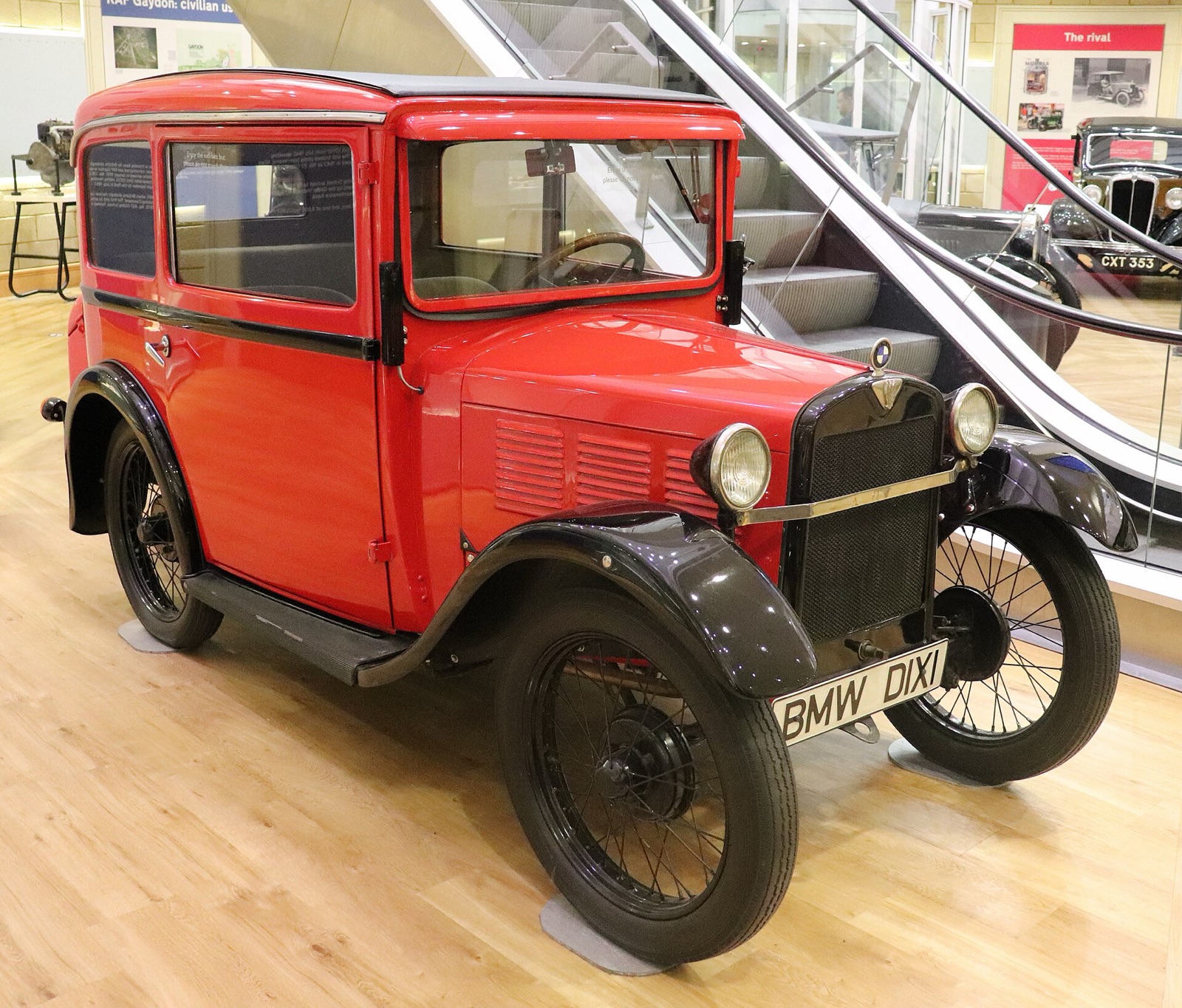
Pre-War Sporting · 1929–1945
BMW’s first car wasn’t really a BMW. When the company bought the Eisenach works in 1928 it inherited the Dixi 3/15 — a licence-built Austin Seven — and rebadged it. Tiny, cheap and dependable, it turned a struggling aero-engine maker into a car company overnight and taught BMW how to build for the road.
Fun fact
BMW’s very first automobile was designed in Birmingham, not Bavaria: the 3/15 was the Austin Seven, built under licence right down to its chassis.
Design note
The humble starting point every kidney grille descends from — proof BMW could put wheels under its engineering.
Evolution
4 chapters across the years — scroll to explore.
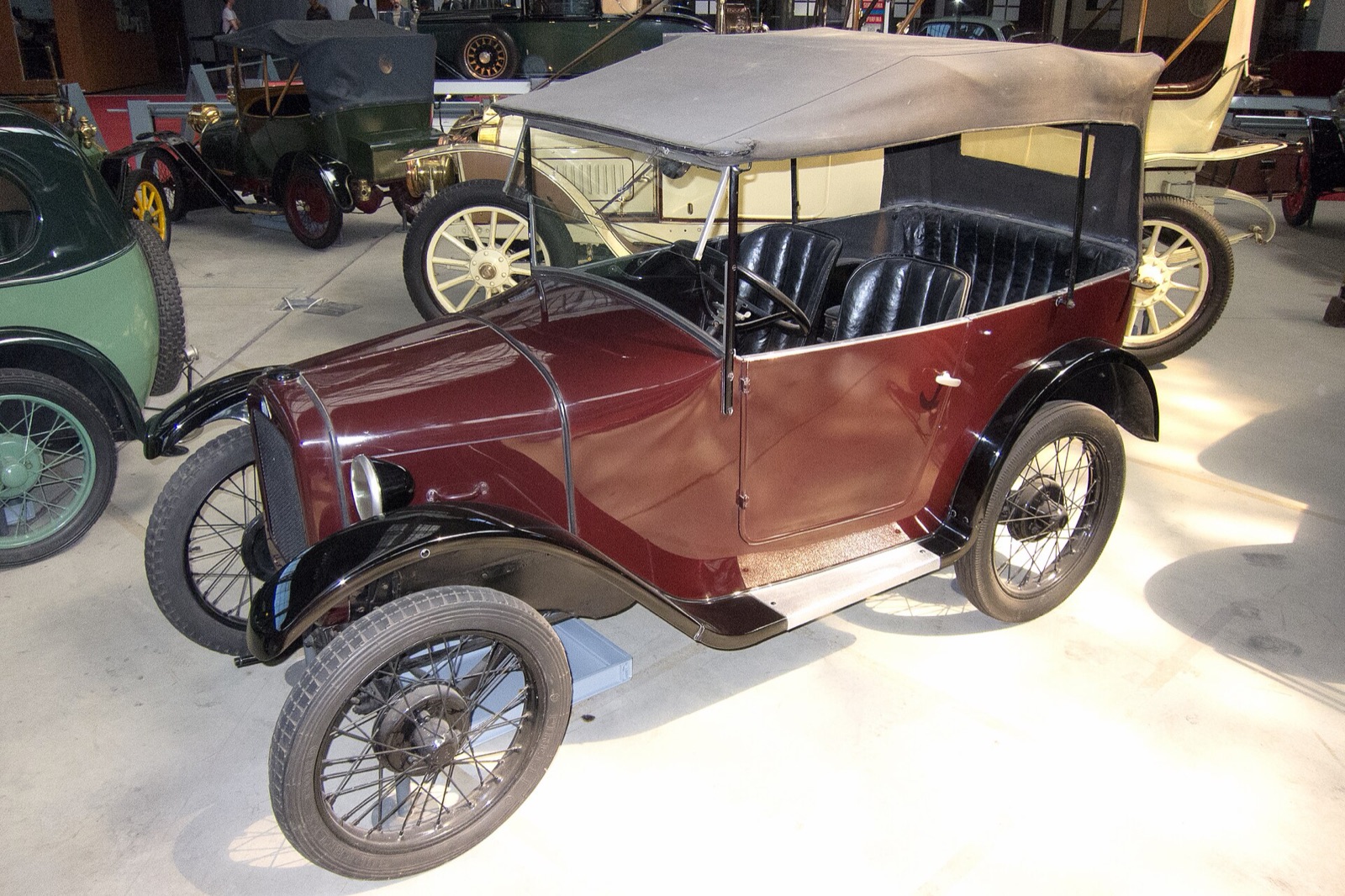
Dixi 3/15 DA-1
1927–1929
A licence-built Austin Seven with left-hand drive, metric bolts and Bosch dampers — the little Dixi that became BMW's very first car.
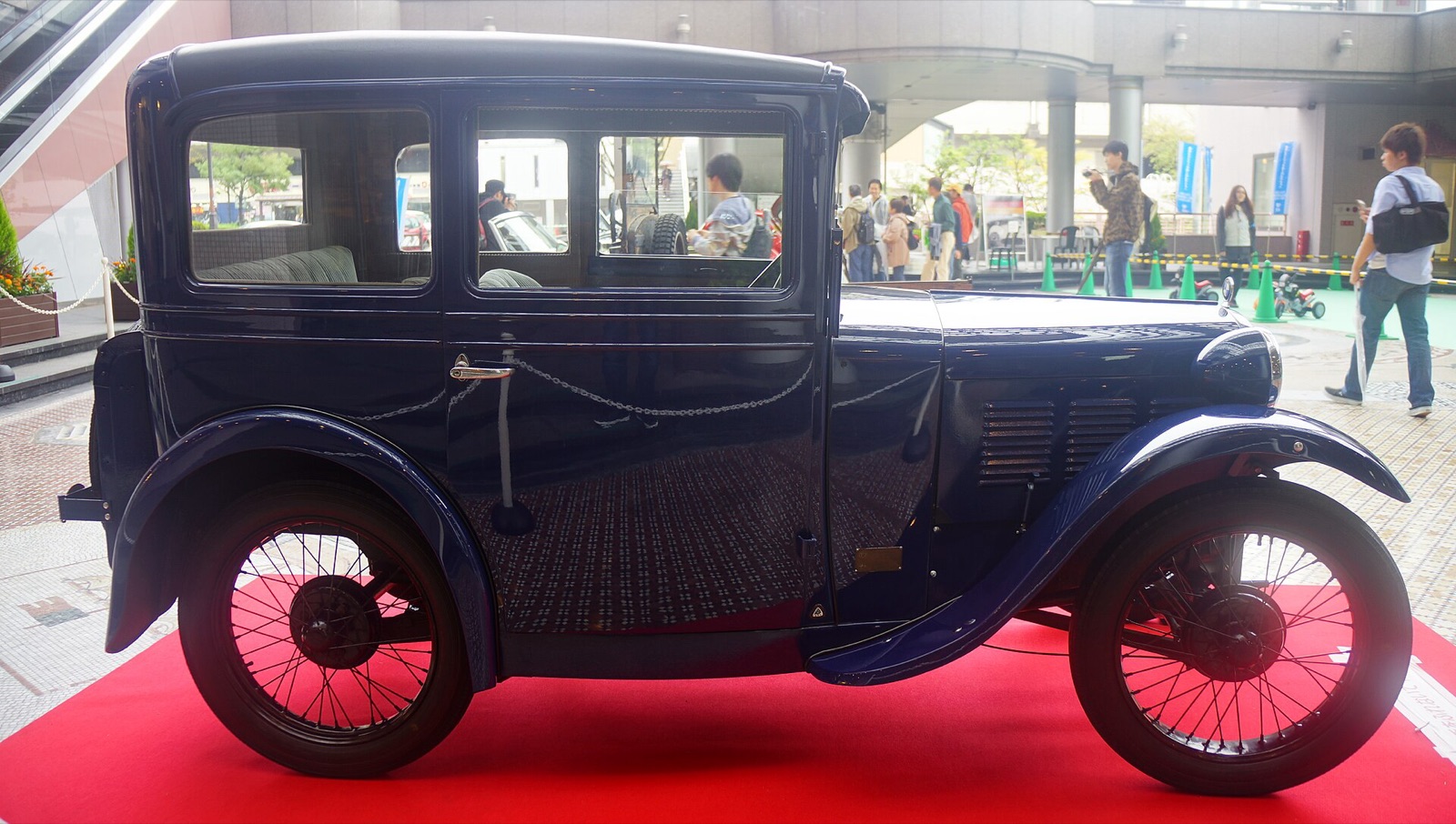
3/15 DA-2
1929–1931
The first properly BMW-badged 3/15, finally braking on all four wheels with a cable-operated pedal, bigger tyres and a lower final drive.
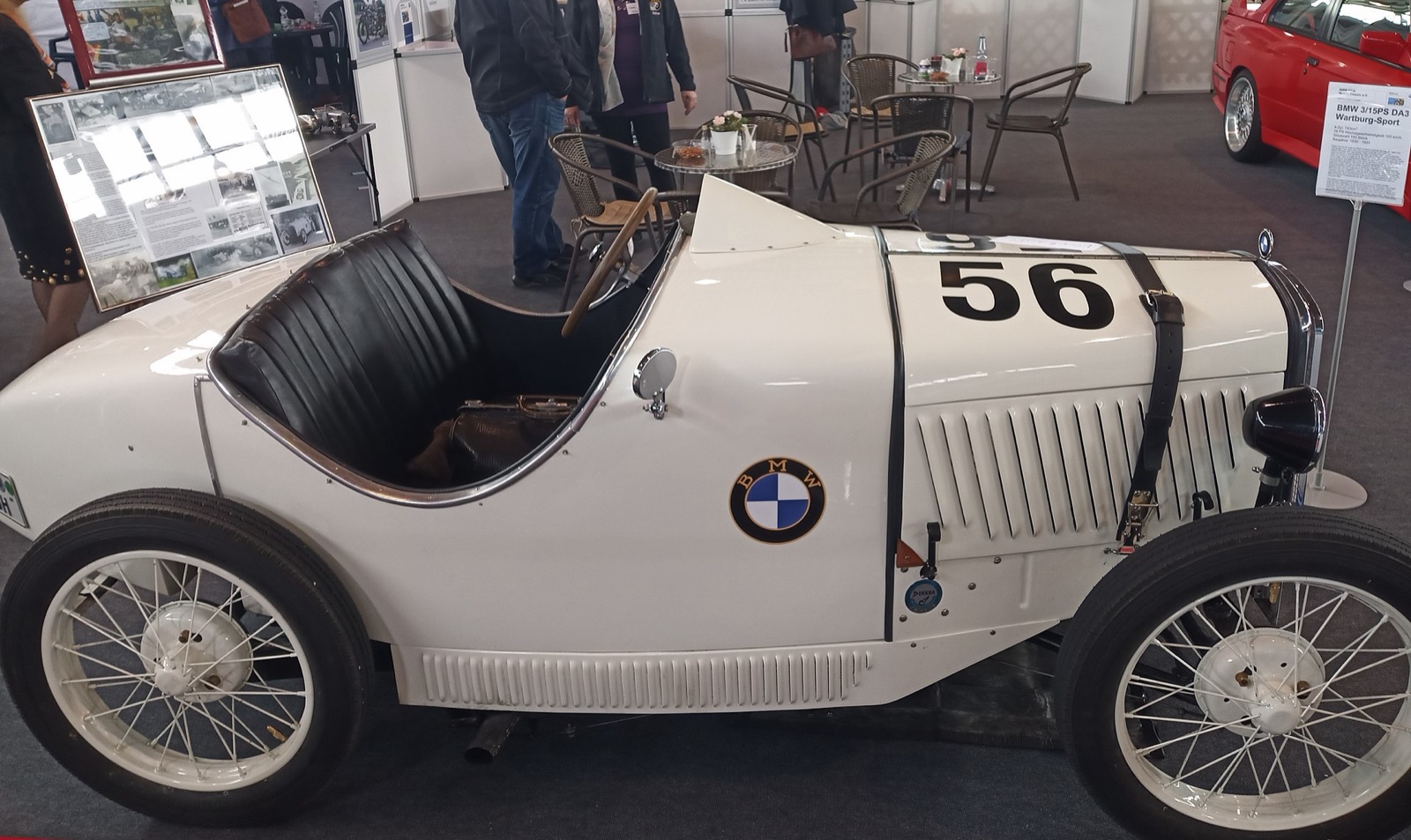
3/15 DA-3 Wartburg
1930–1931
BMW's first sports car — a lowered, boat-tailed roadster with a hotter 18 PS engine, of which only 150 were built before the Depression killed it.
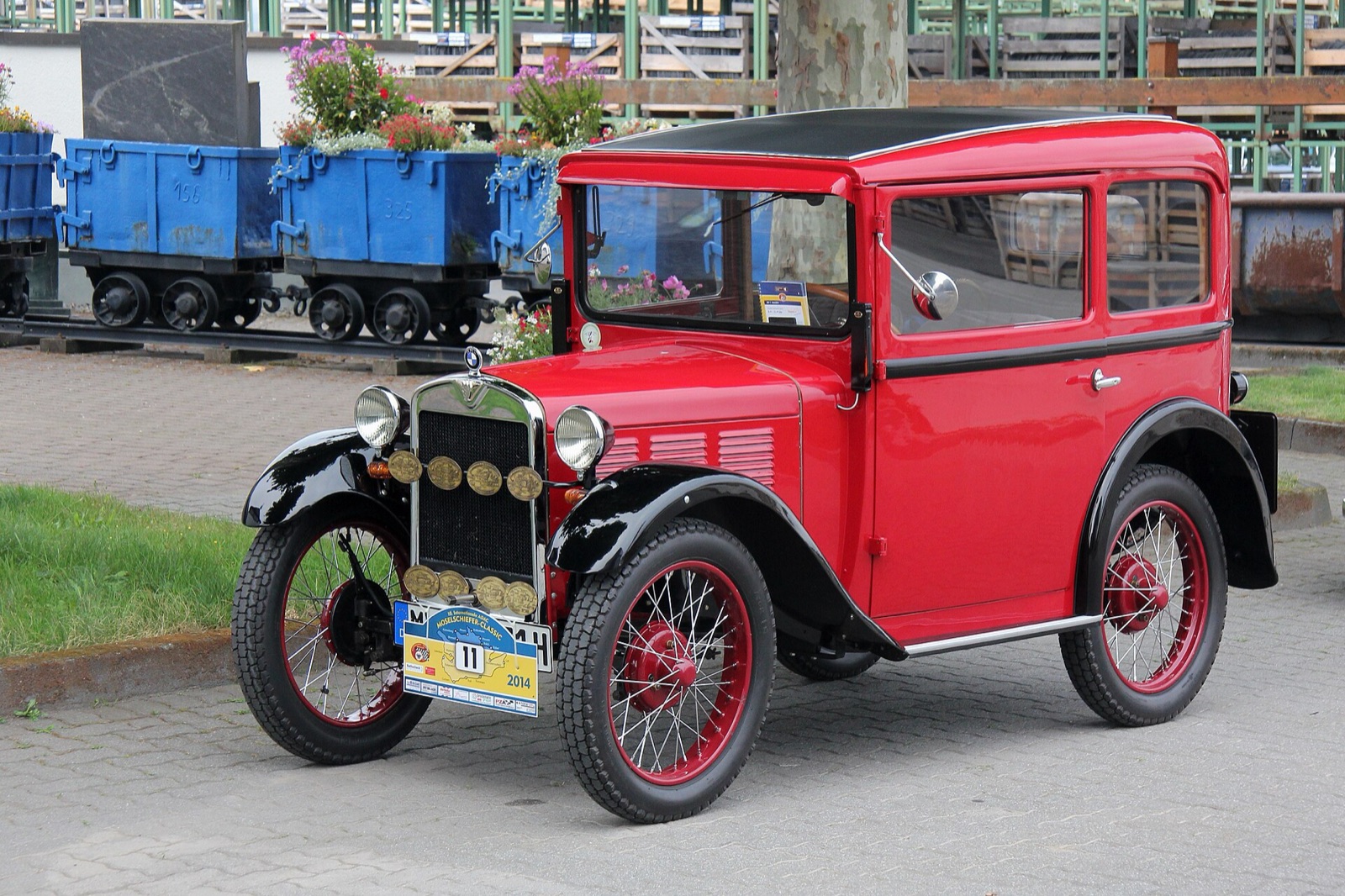
3/15 DA-4
1931–1932
The first BMW with independent front suspension, breaking from the Austin blueprint just before the licence expired and the 3/20 took over.
Imagery via Wikimedia Commons
Pre-War Sporting · 1929–1945
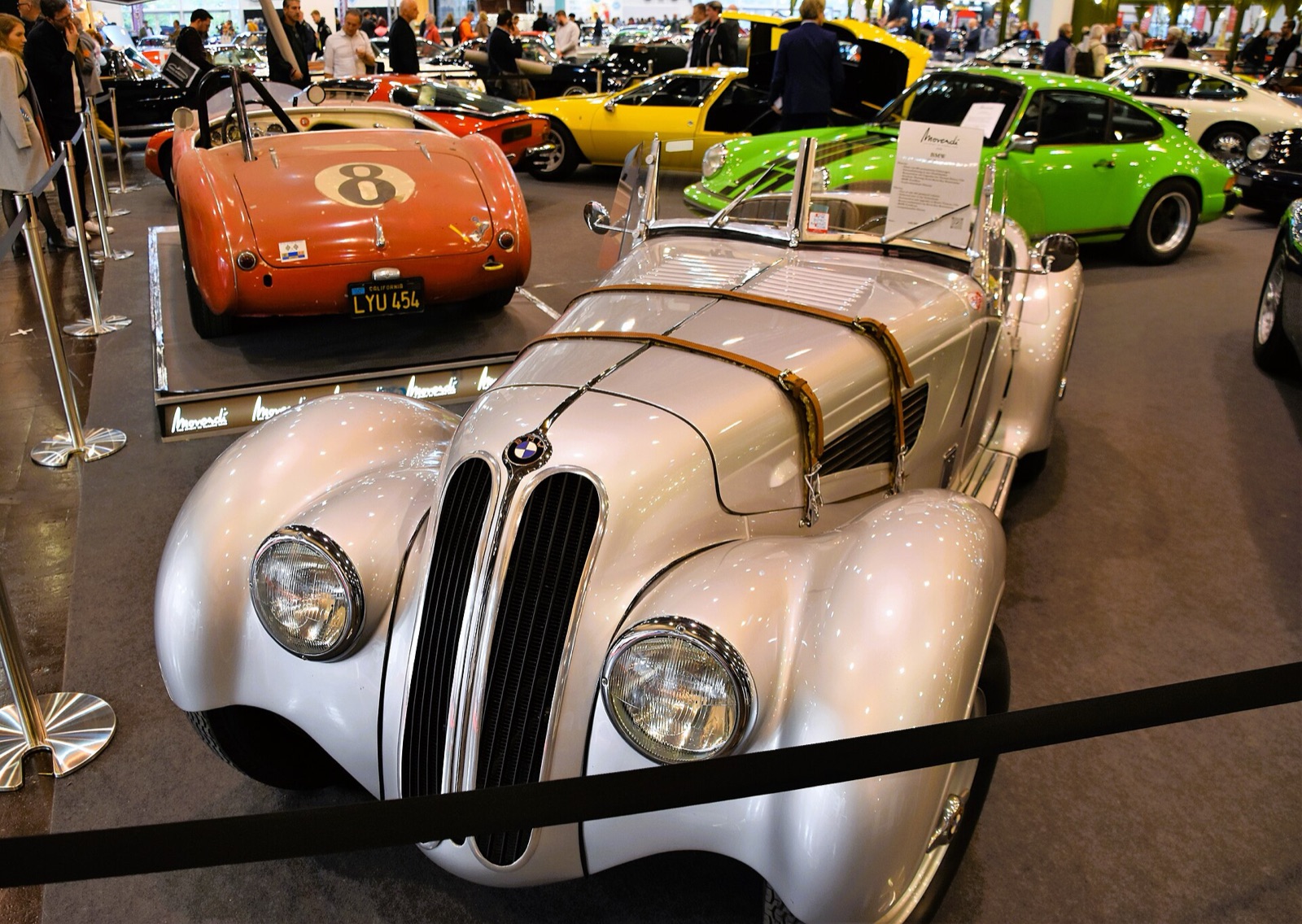
The 328 rewrote what a small sports car could be. A lightweight tubular frame, aerodynamic bodywork and an ingenious cross-pushrod cylinder head made it a giant-killer, culminating in an outright win at the 1940 Mille Miglia. Barely 460 were built, and every post-war BMW sports car chases its ghost.
Fun fact
Its clever cylinder head delivered hemi-style breathing without the cost of twin cams — a design later licensed to Bristol in Britain, seeding an entire car marque.
Design note
Introduced the flowing, purposeful sports form and a slimmer twin-kidney grille — the first BMW that looked fast standing still.
Evolution
5 chapters across the years — scroll to explore.
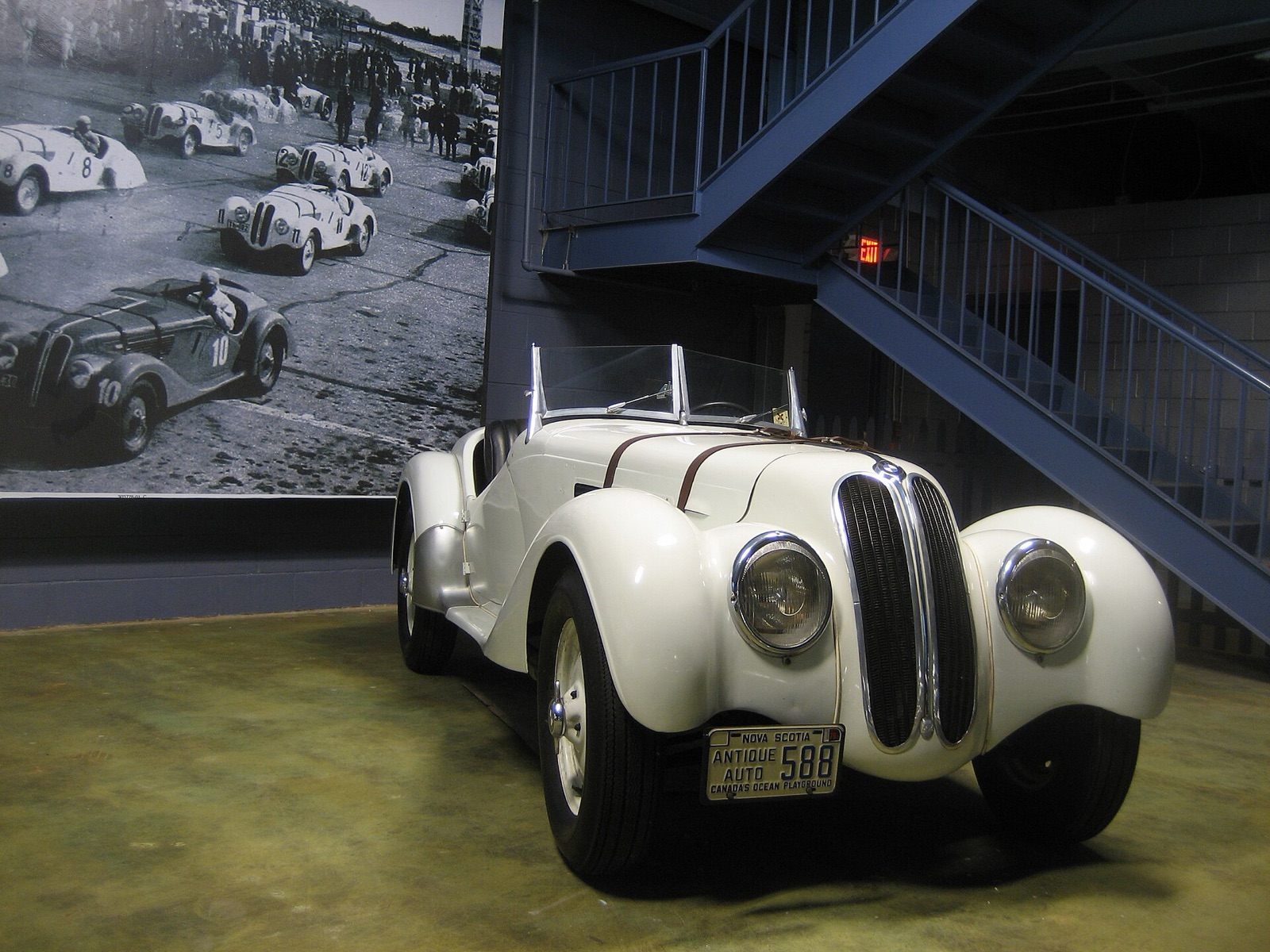
Series Roadster
1936–1940
The 464-built production two-seater that stunned the paddock — an 80hp alloy-head 2.0-litre straight-six, hydraulic drum brakes and those iconic bonnet straps, and it won its class on debut at the Nürburgring.
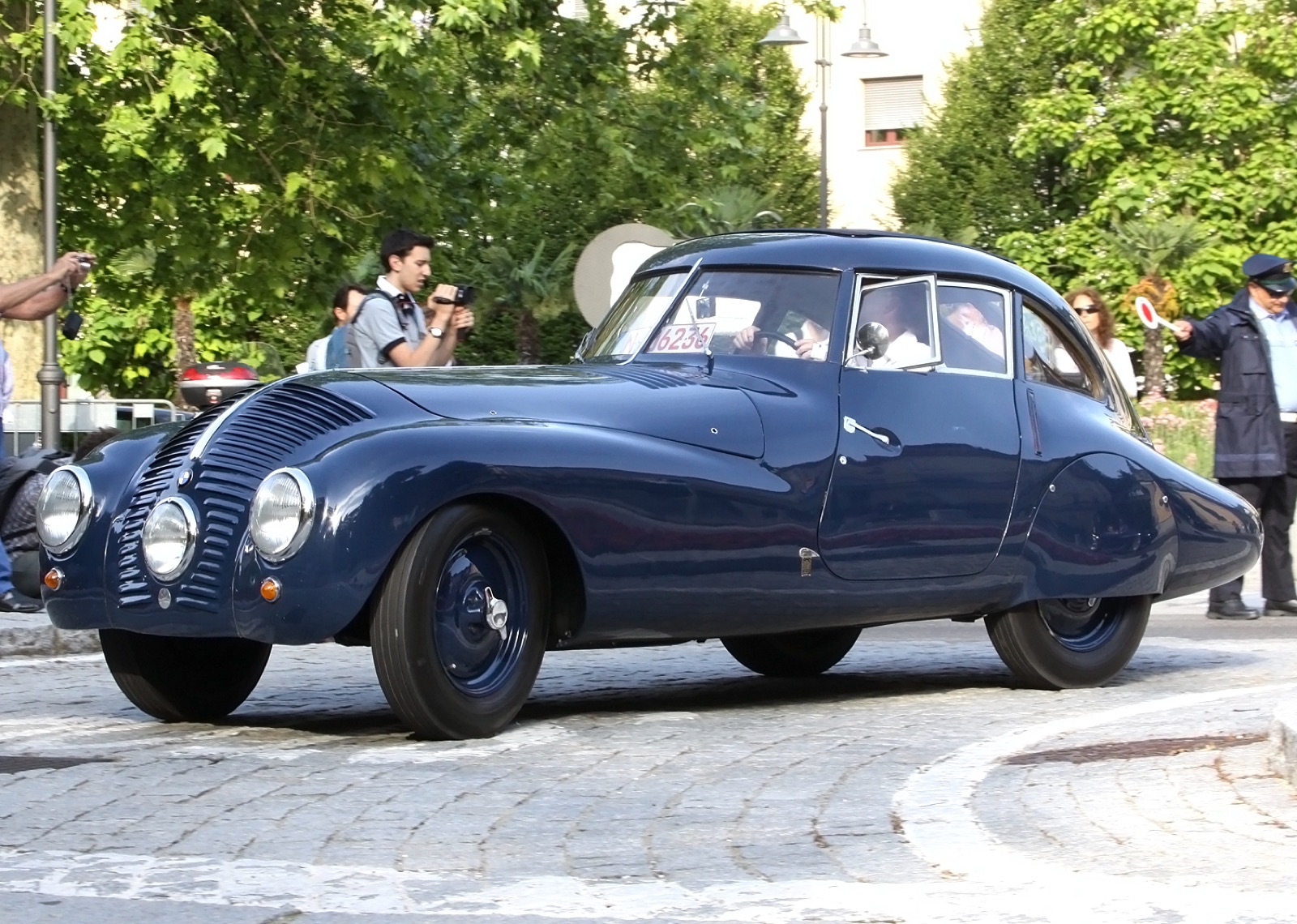
Wendler Streamliner
1937–1939
Two wind-cheating aluminium coupés bodied by Wendler to a Koenig-Fachsenfeld design, so slippery for their day they dropped the drag coefficient toward 0.40 with faired-in wheels and a teardrop tail.
Mille Miglia Touring Coupé
1939–1940
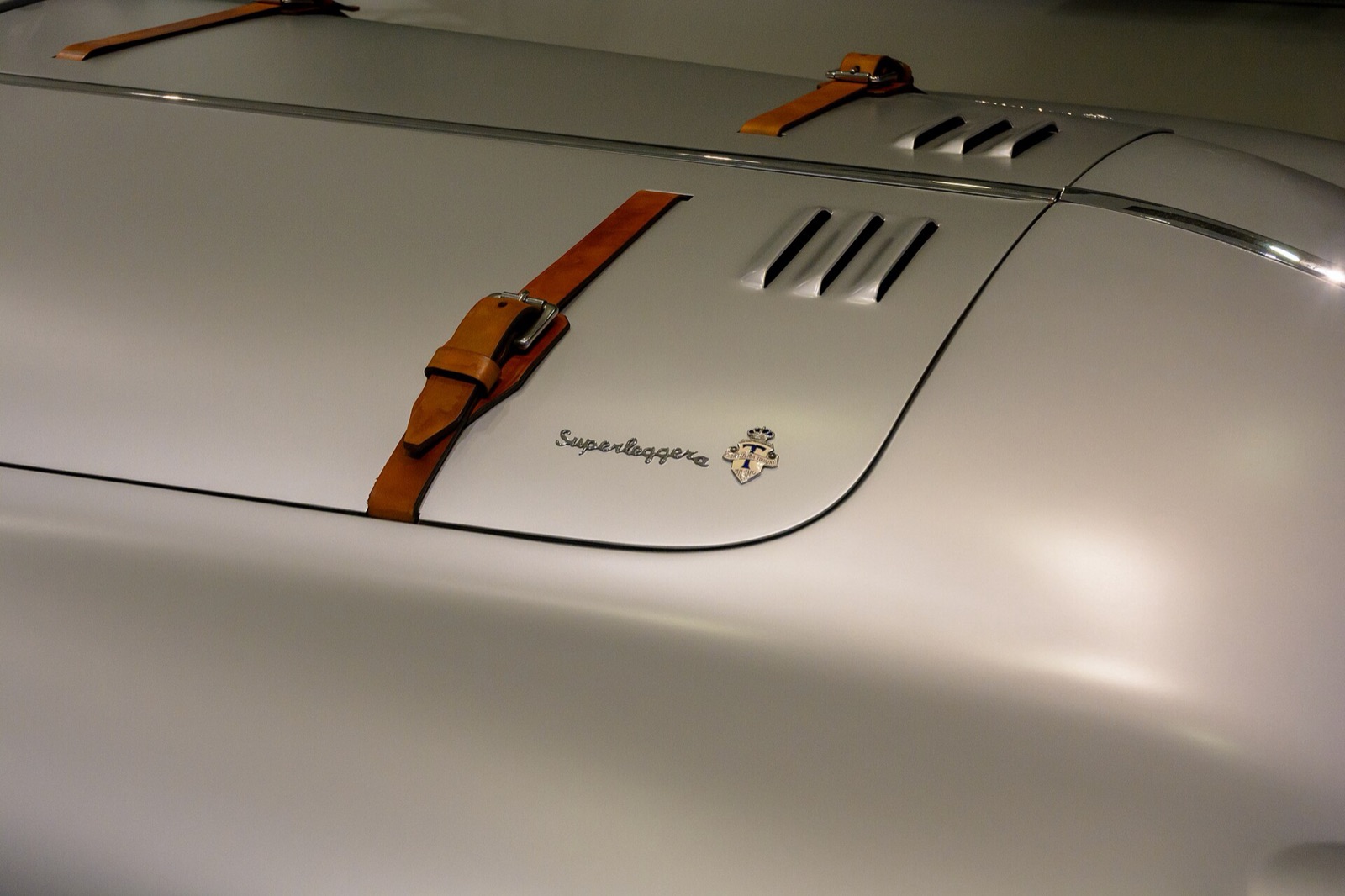
The Superleggera-bodied alloy coupé built by Milan's Touring — fifth overall at Le Mans in 1939, then the outright winner of the 1940 Mille Miglia at a staggering 166.7 km/h average.
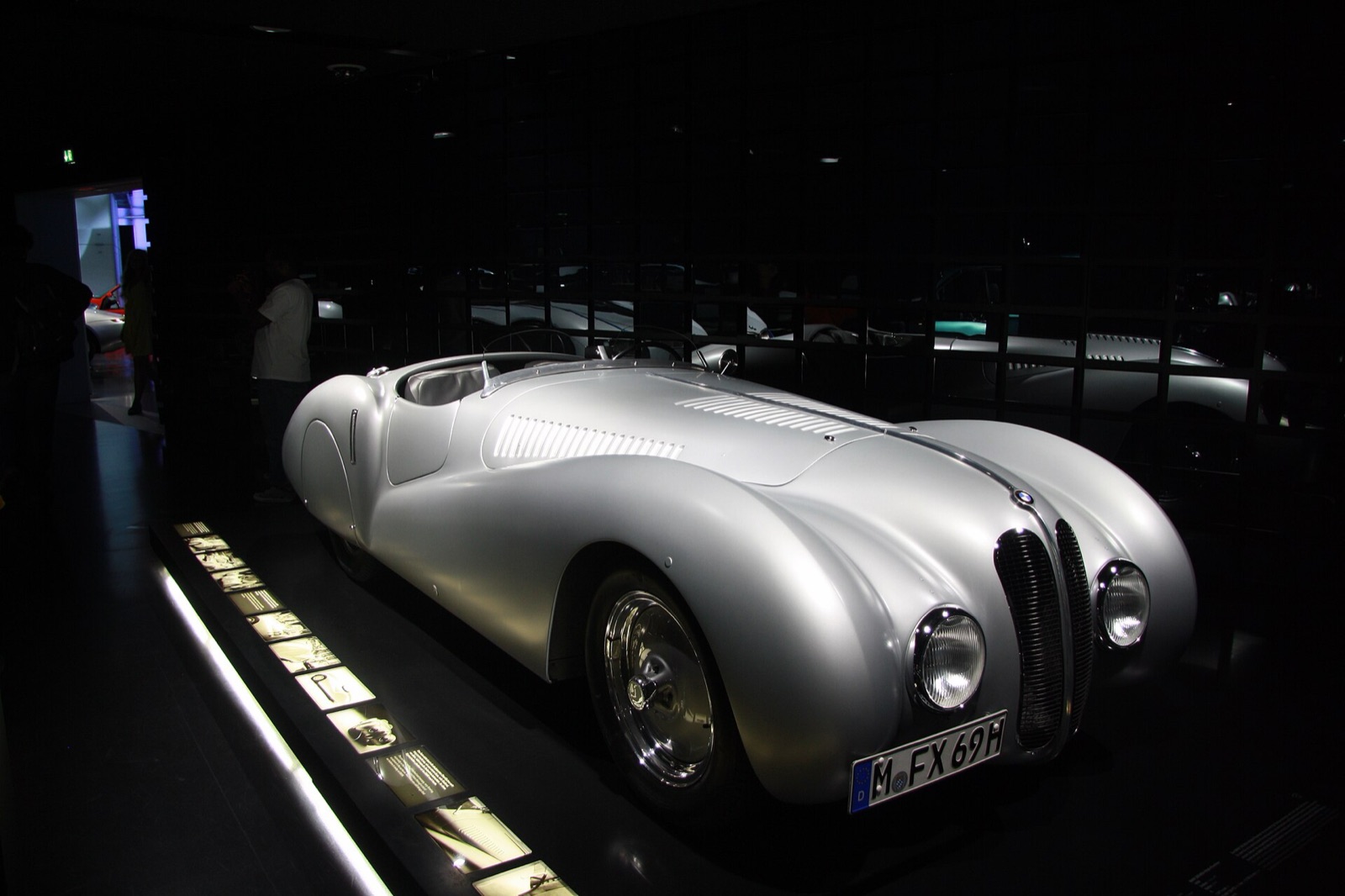
Mille Miglia Roadster
1940
Three lightweight works roadsters run alongside the coupés at the 1940 Mille Miglia — one finished third and served as a rolling prototype for the never-built post-war BMW.
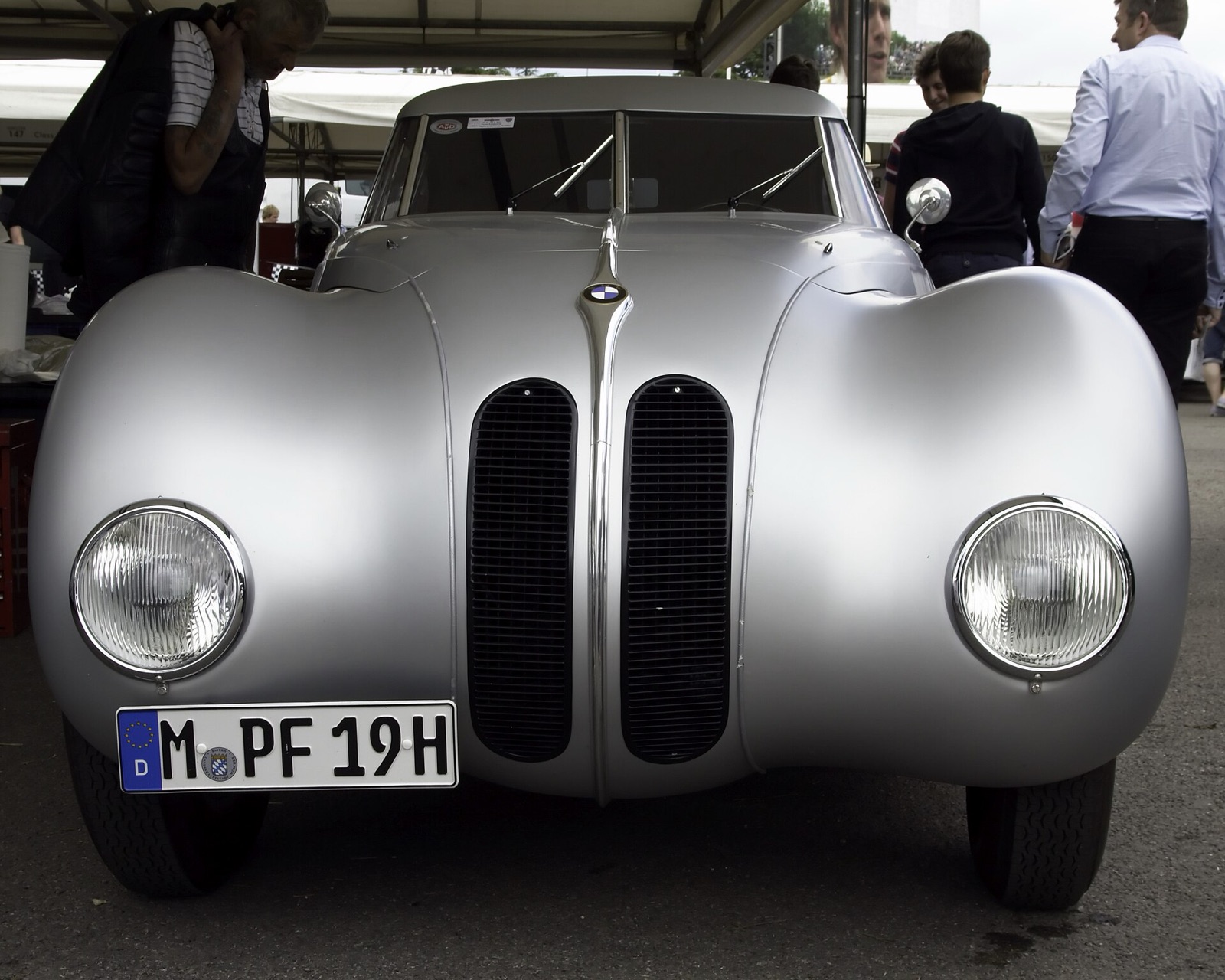
Kamm Coupé
1940
The radical Kamm-tail coupé, its abruptly chopped rear cheating the wind decades ahead of its time; it retired at the 1940 Mille Miglia and BMW only rebuilt it from photos and simulations in 2010.
Imagery via Wikimedia Commons
Post-War Rebuild · 1945–1961
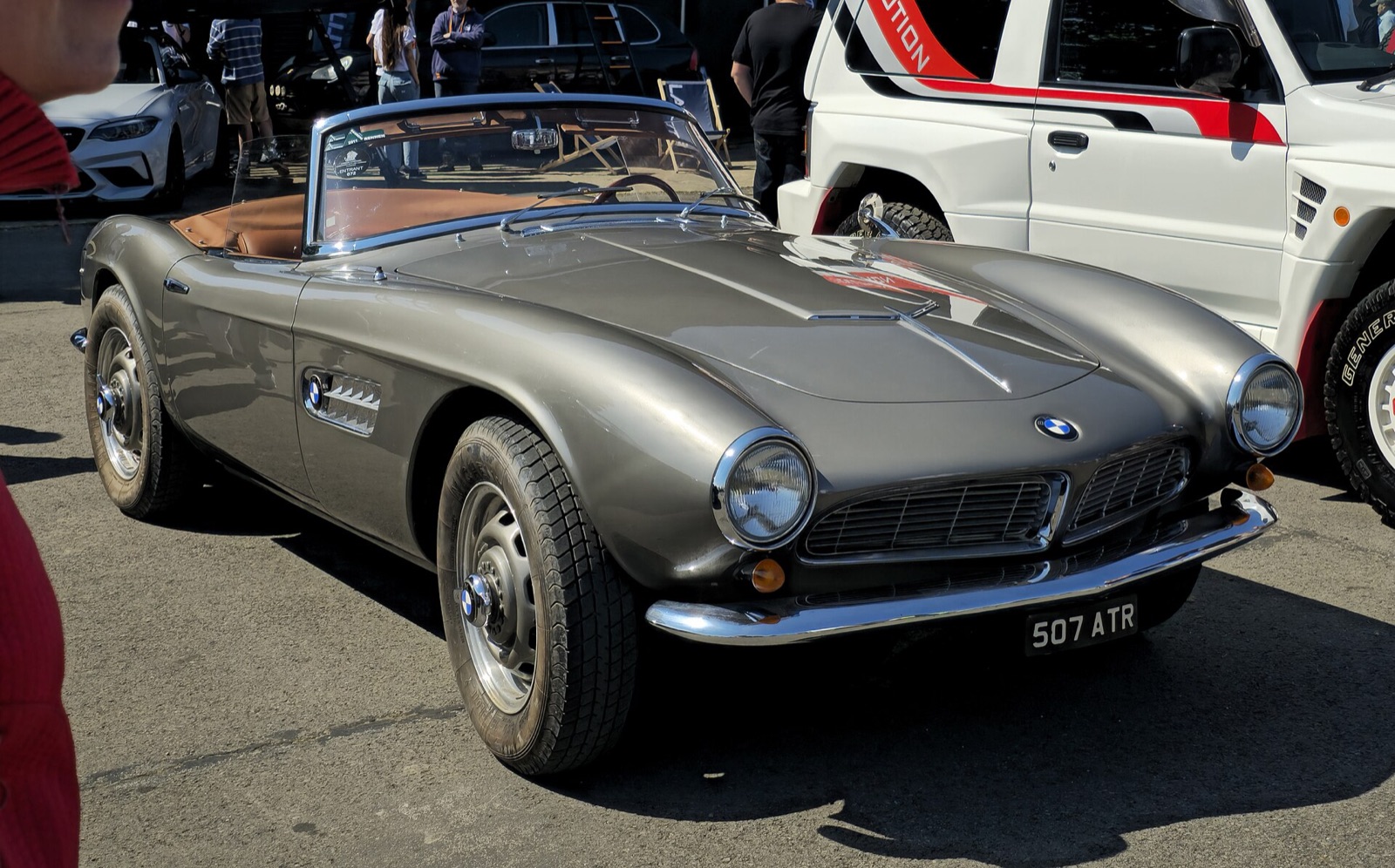
Shaped by Albrecht Graf Goertz to seduce America, the 507 is routinely called the most beautiful BMW ever made. It was also a financial catastrophe: hand-built costs ballooned, only 252 were made, and every one lost money — beauty that nearly bankrupted the company.
Fun fact
Elvis Presley bought a 507 while stationed in Germany. The ruinous losses on each car helped leave BMW vulnerable to the 1959 Daimler-Benz takeover bid it barely escaped.
Design note
Its wide, low twin-kidney grille lying flat across the nose is the template the modern BMW face still quotes.
Evolution
3 chapters across the years — scroll to explore.
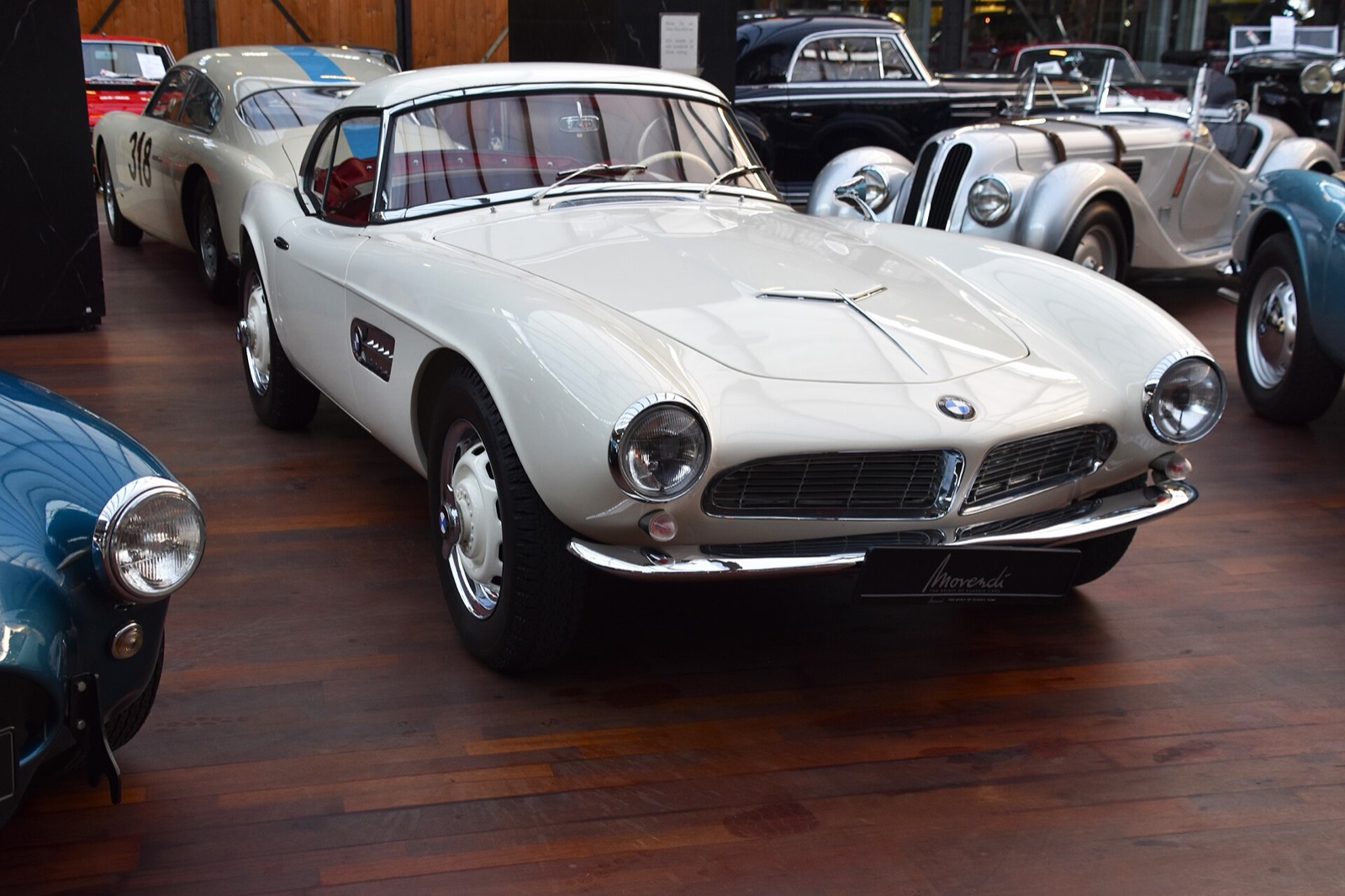
Series I
1956–1957
The first 34 hand-built cars carried a huge 110-litre aluminium fuel tank behind the seats that ate boot space and wafted petrol fumes into the cabin — and could be topped by the gorgeous optional hardtop.
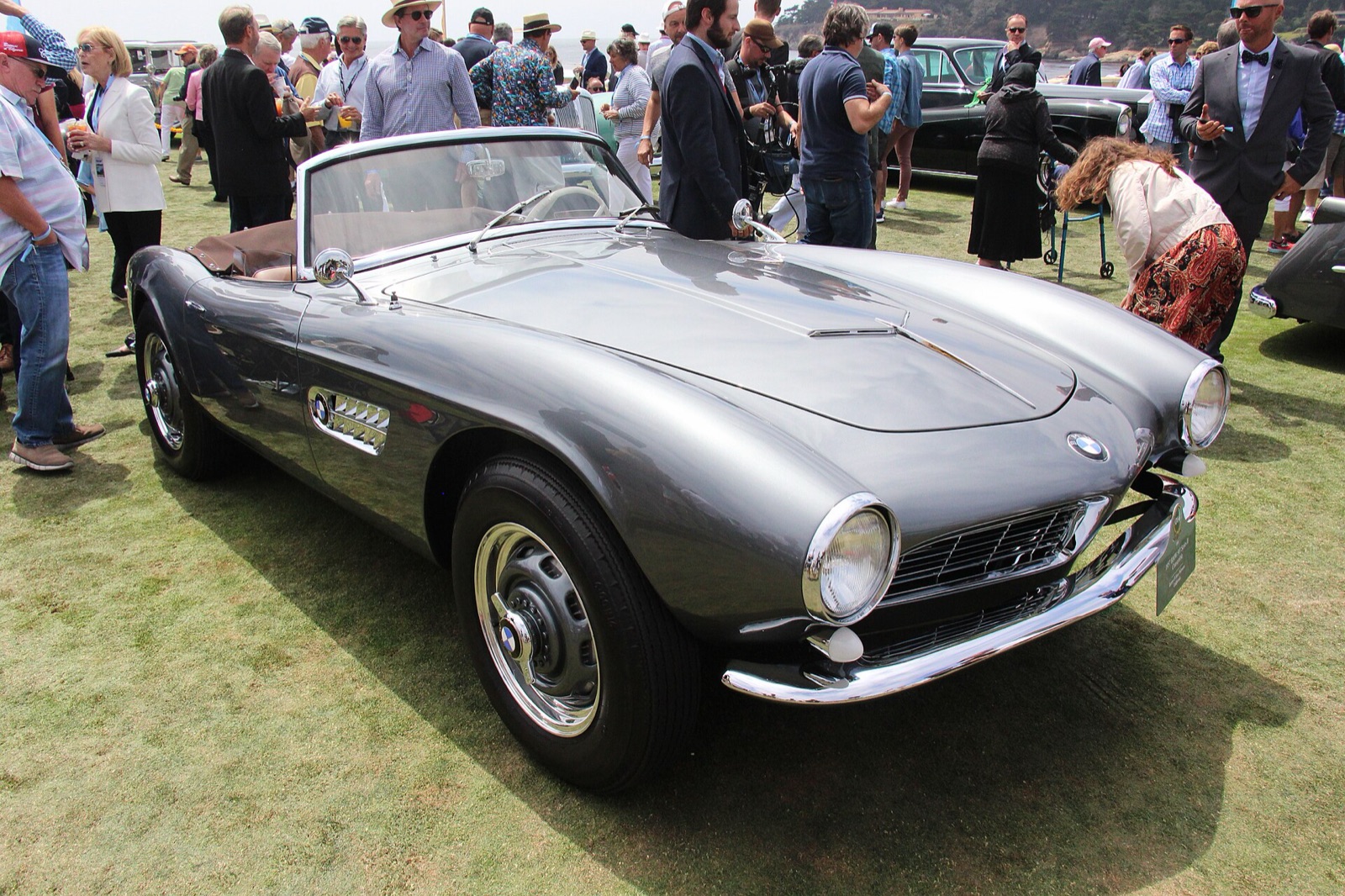
Series II
1957–1959
BMW shrank the tank to 66 litres and tucked it under the boot around the spare, freeing up luggage and legroom — and late cars gained Girling front discs and Pirelli radials for the Goertz-styled V8 roadster.
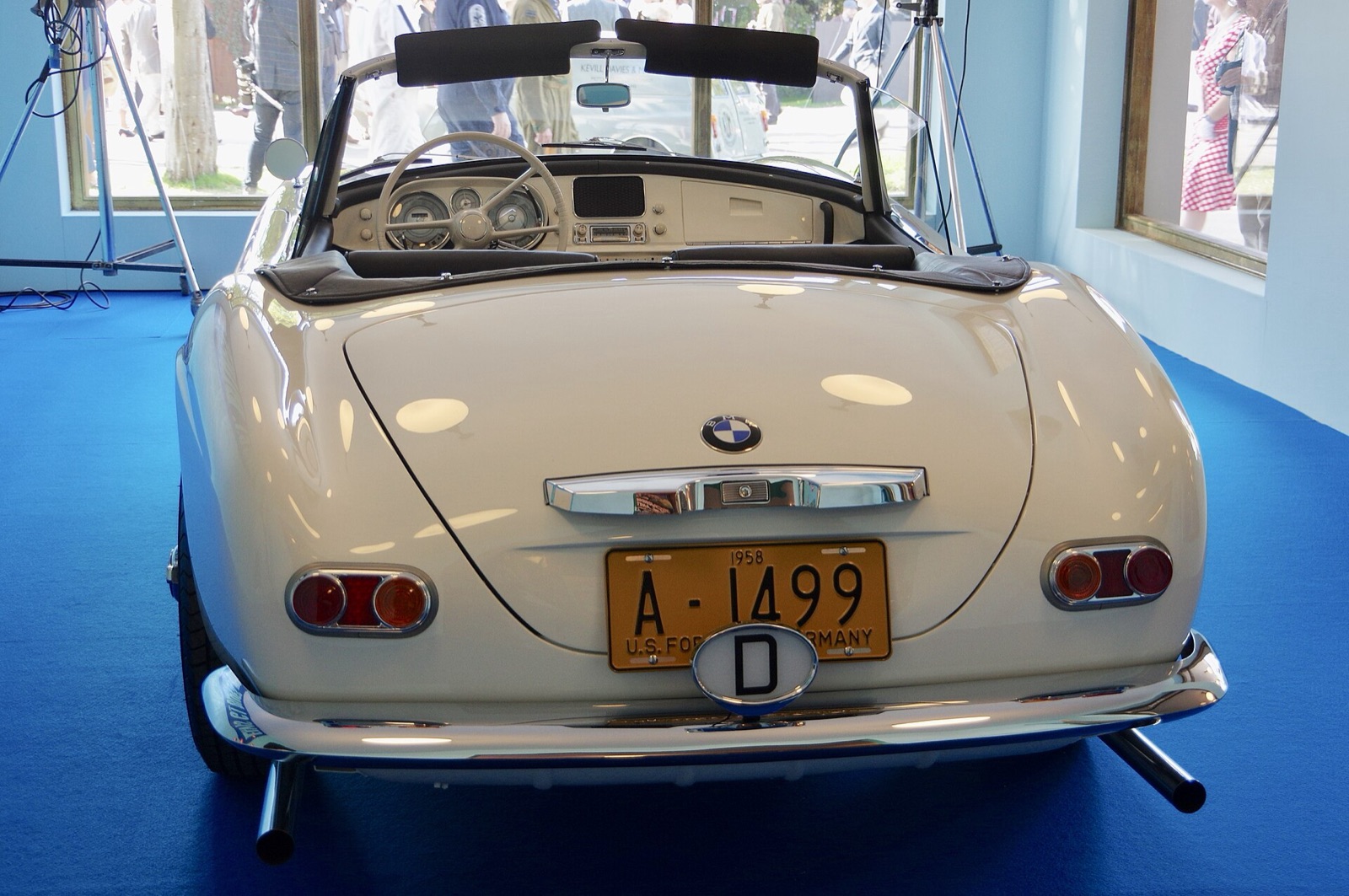
Elvis's 507
1957–1958
GI Elvis Presley bought chassis 70079 while stationed in Germany, and had it repainted red after fans kept leaving lipstick kisses on it — one of just 252 cars that are now the most valuable BMWs ever built.
Imagery via Wikimedia Commons
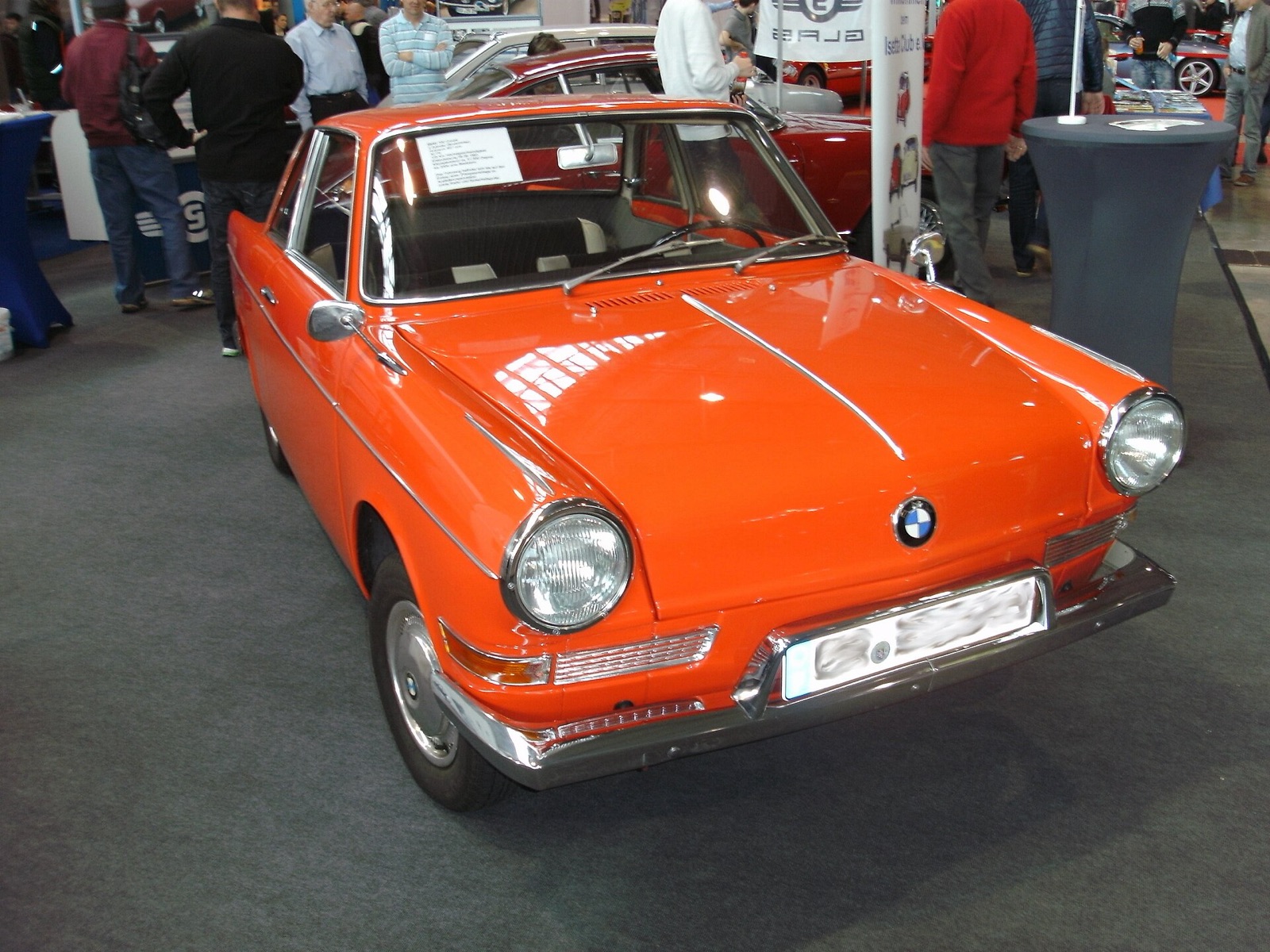
Post-War Rebuild · 1945–1961
With the baroque V8 saloons unsold and the 507 bleeding cash, the cheap, cheerful, Michelotti-styled 700 arrived just in time. Its rear-mounted motorcycle-derived flat-twin and unibody construction sold in the numbers BMW desperately needed — and the sporty 700 RS even went racing.
Fun fact
The 700 was BMW’s first monocoque car, and its surprise sales success is a key reason BMW survived 1959 as an independent company rather than a Daimler subsidiary.
Design note
Proved BMW’s future was light, sporting and monocoque — not heavy and coachbuilt.
Evolution
5 chapters across the years — scroll to explore.
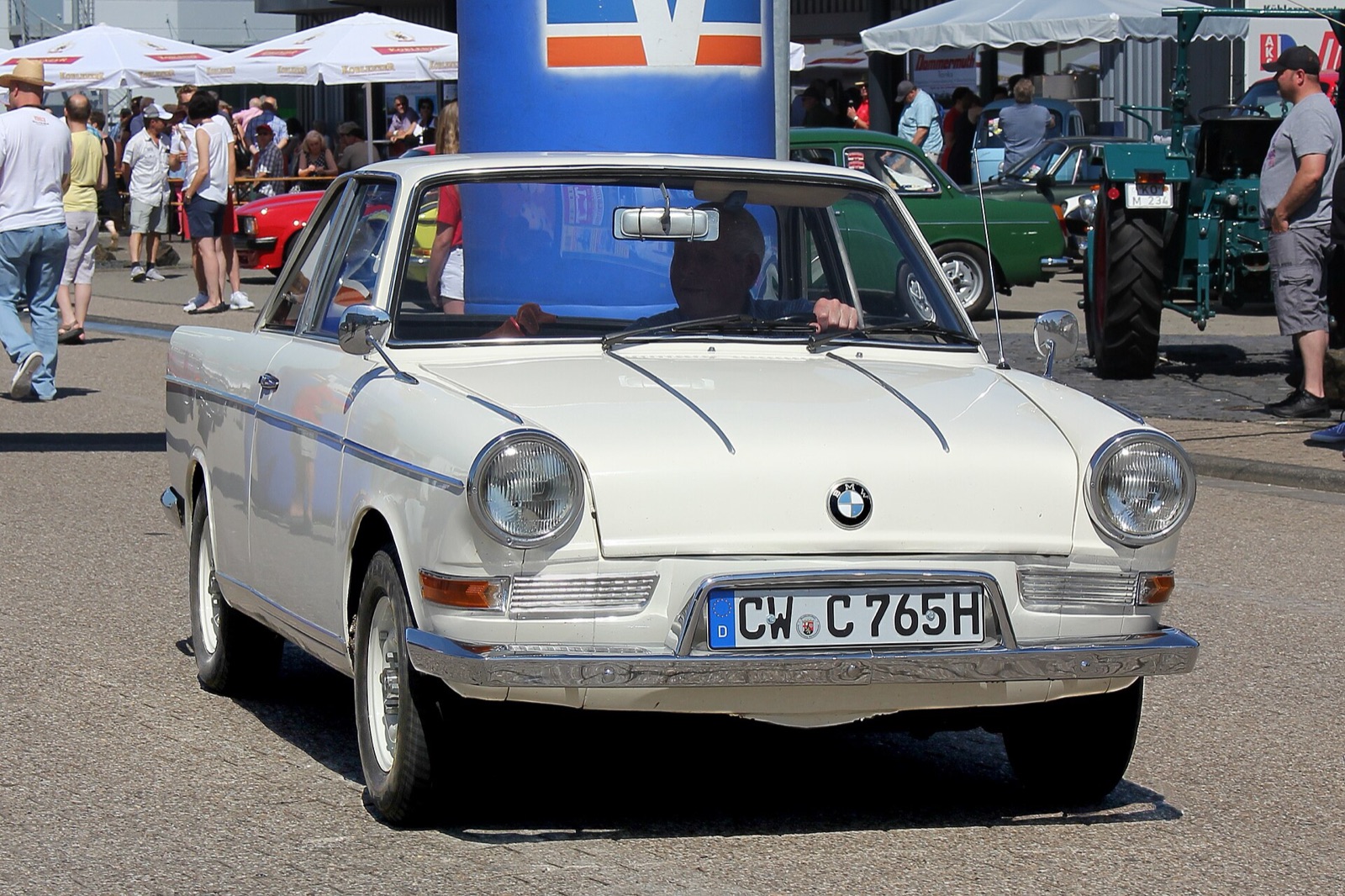
700 Coupé
1959–1965
The Michelotti-penned fastback coupé that kicked off the range in August 1959 — a rear-engined air-cooled flat-twin and BMW's first monocoque body.
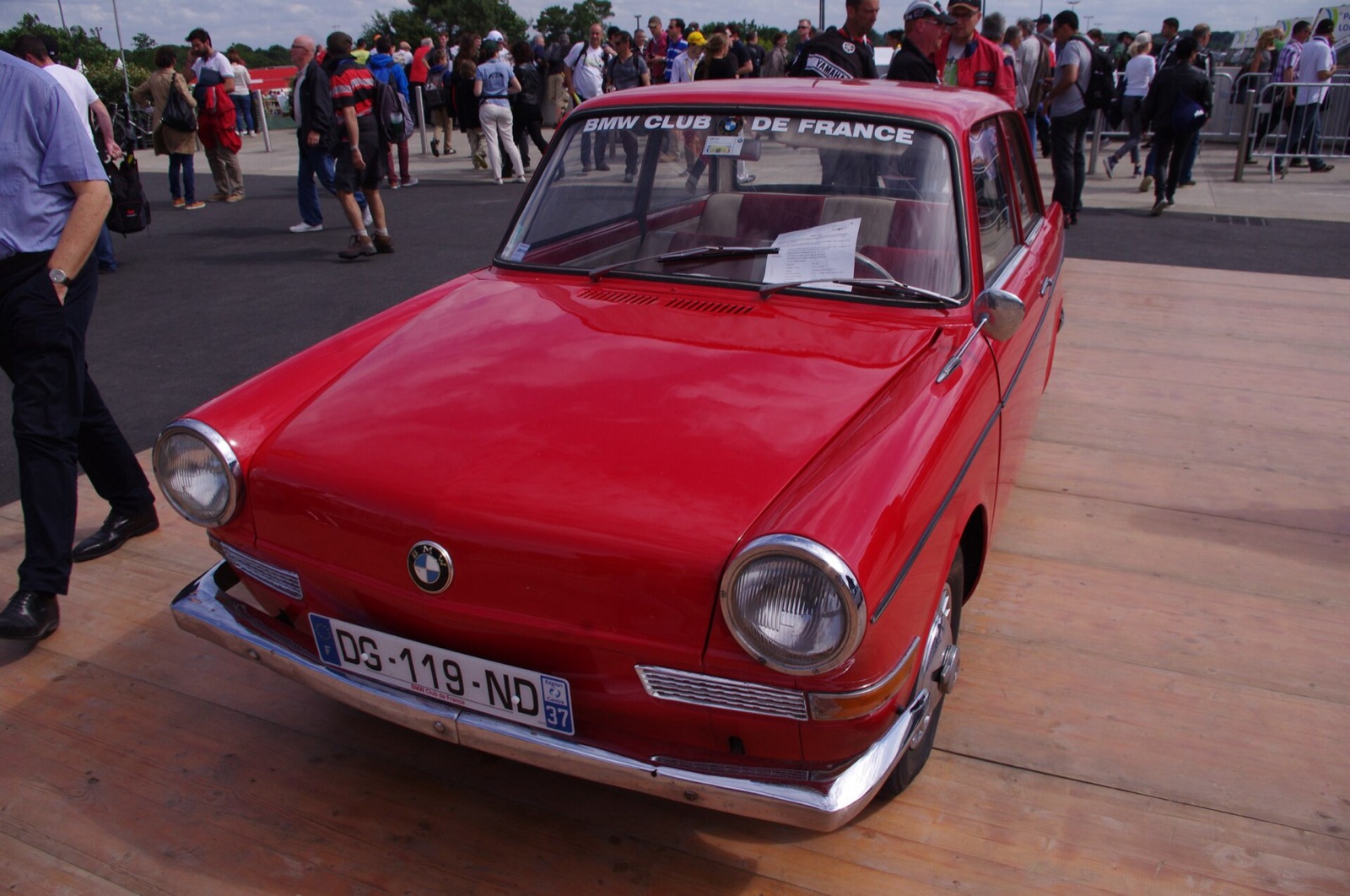
700 Saloon
1959–1965
The taller, roomier two-door sedan whose 25,000 launch orders and 188,000-plus sales quite literally saved BMW from being swallowed by Daimler-Benz.
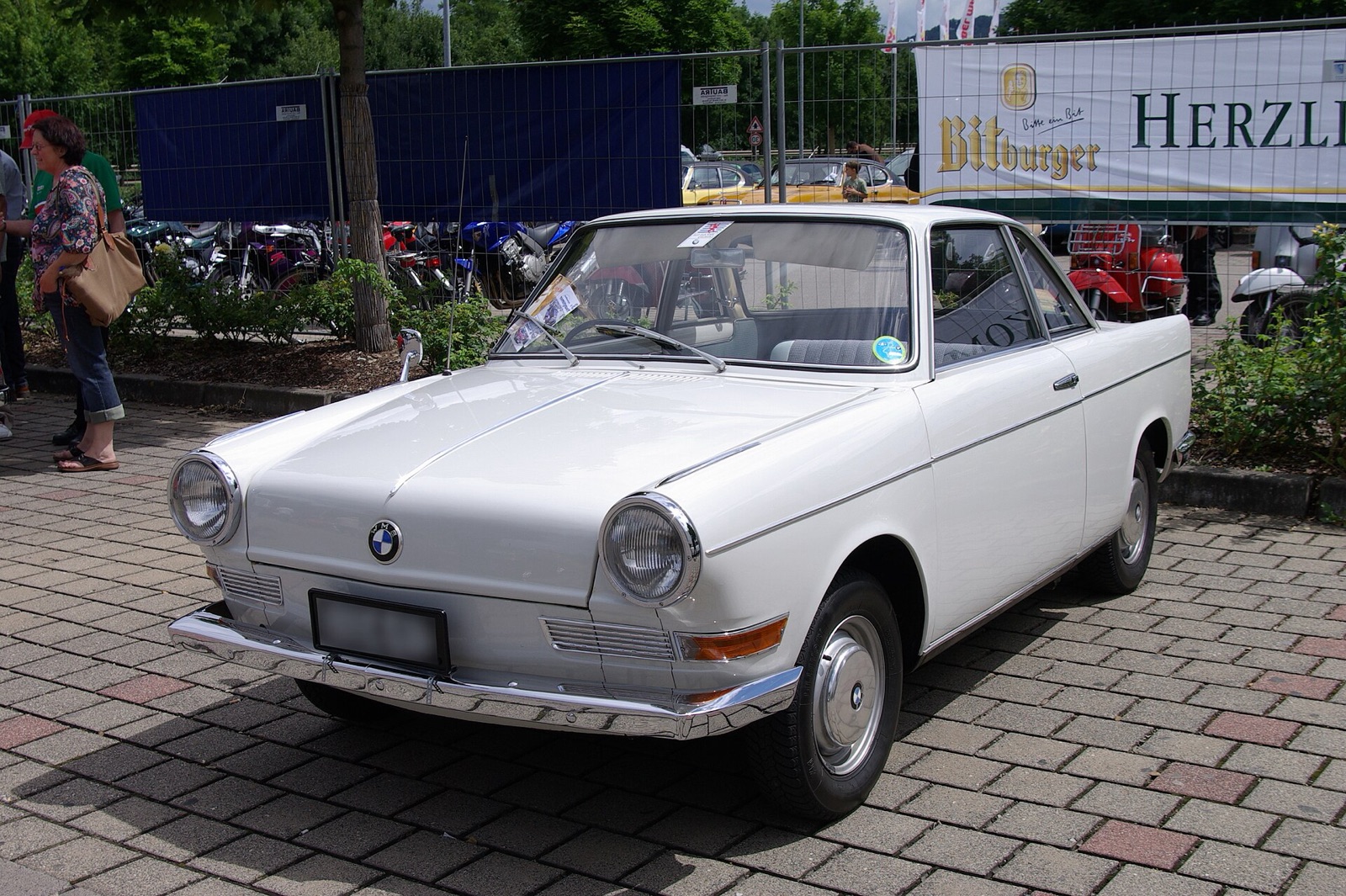
700 Sport / CS
1960–1965
The hot coupé — twin Solex carbs, 9.0:1 compression and 40 PS plus a rear anti-roll bar, renamed 700 CS in 1963.
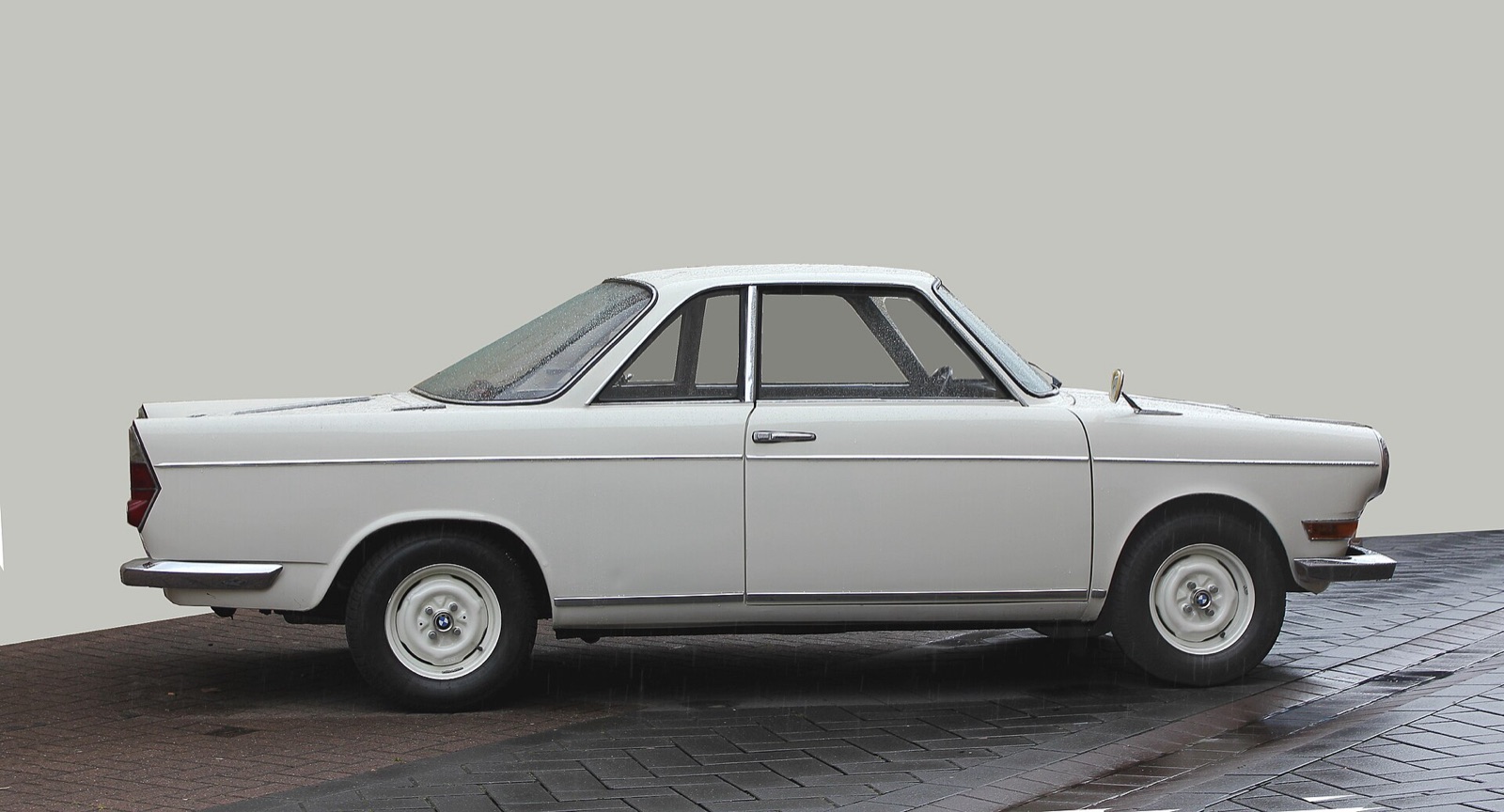
700 LS
1962–1965
The stretched Luxus line — a 16 cm longer wheelbase for the LS saloon of 1962, capped by the sporty 40 PS LS Coupé of 1964.
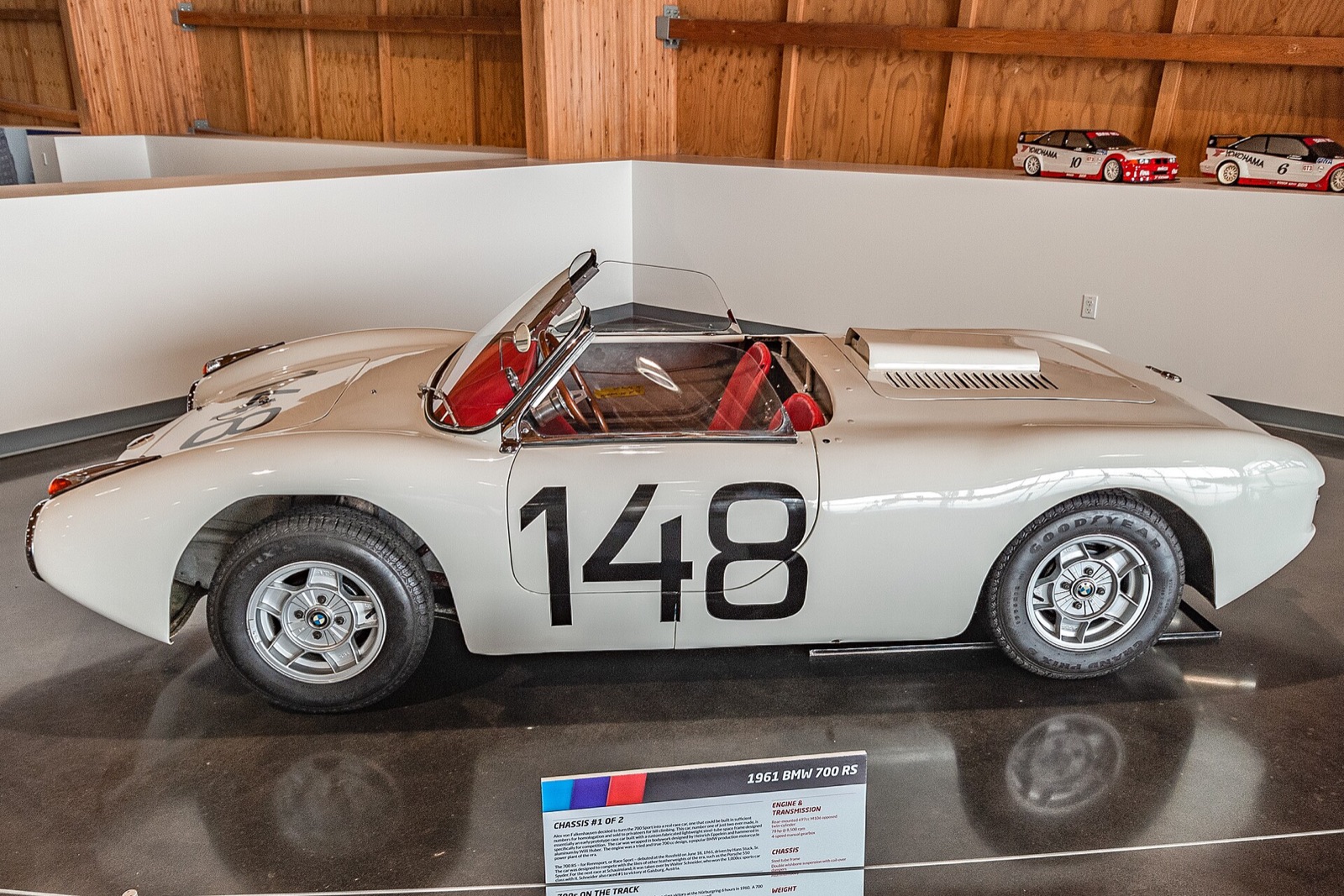
700 RS
1961–1962
The featherweight works racer — tubular spaceframe, aerodynamic alloy body and a DOHC twin punched out to 70 PS, campaigned to hillclimb glory by Hans Stuck.
Imagery via Wikimedia Commons
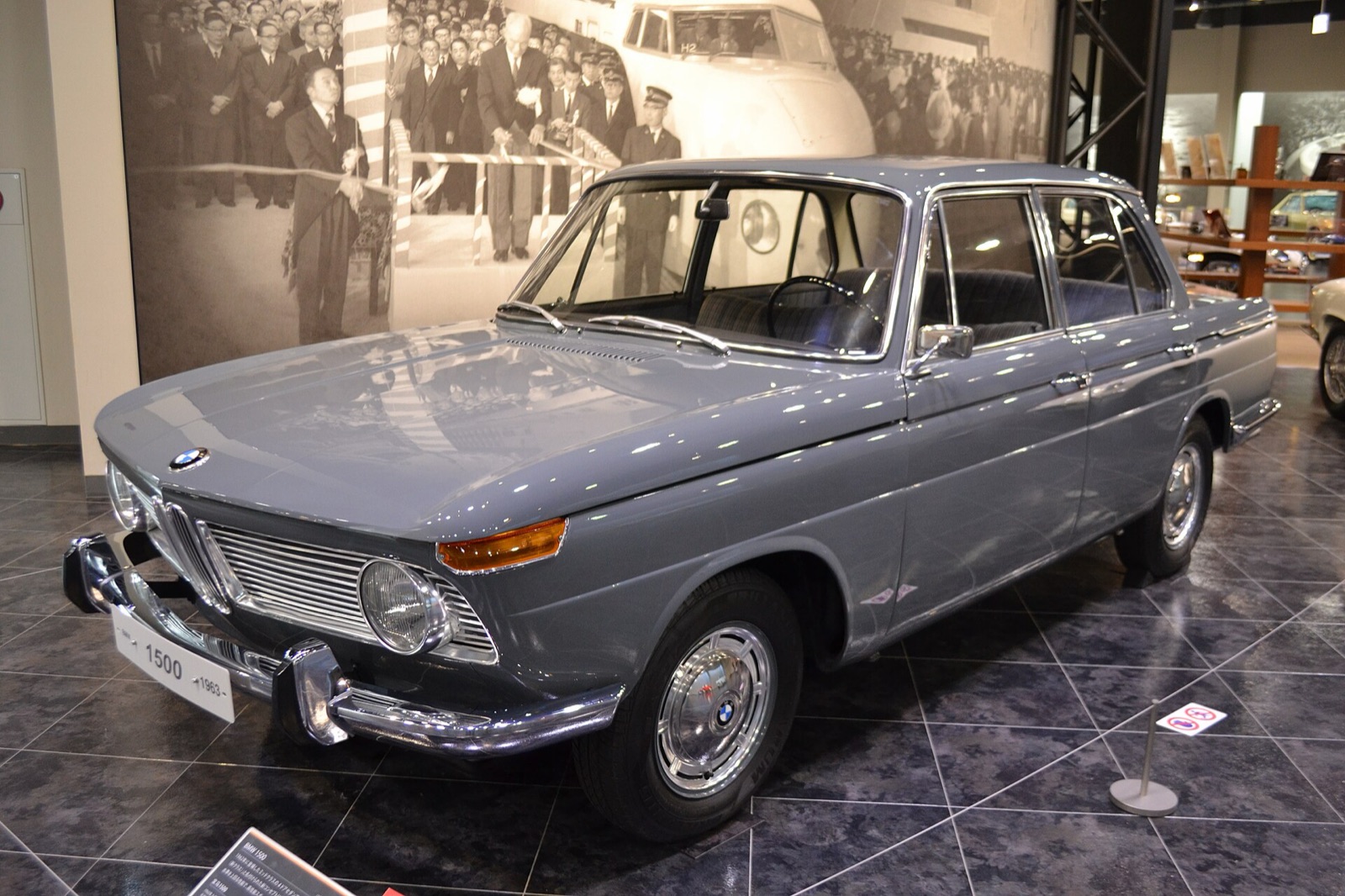
Neue Klasse & the Sports Sedan · 1962–1974
The car that saved BMW and invented its identity. Unveiled at Frankfurt in 1961, the Neue Klasse fused a compact four-door body with a lively overhead-cam engine, taut handling and the forward-leaning “shark nose.” It created a whole category — the sports sedan — and restored BMW to health.
Fun fact
The Neue Klasse’s success was so complete it bankrolled everything after it: without the 1500 there is no 2002, no 3 Series, and no M.
Design note
Codified the template — shark nose, Hofmeister kink, low beltline, taut three-box balance — that every BMW sedan since has refined.
Evolution
5 chapters across the years — scroll to explore.
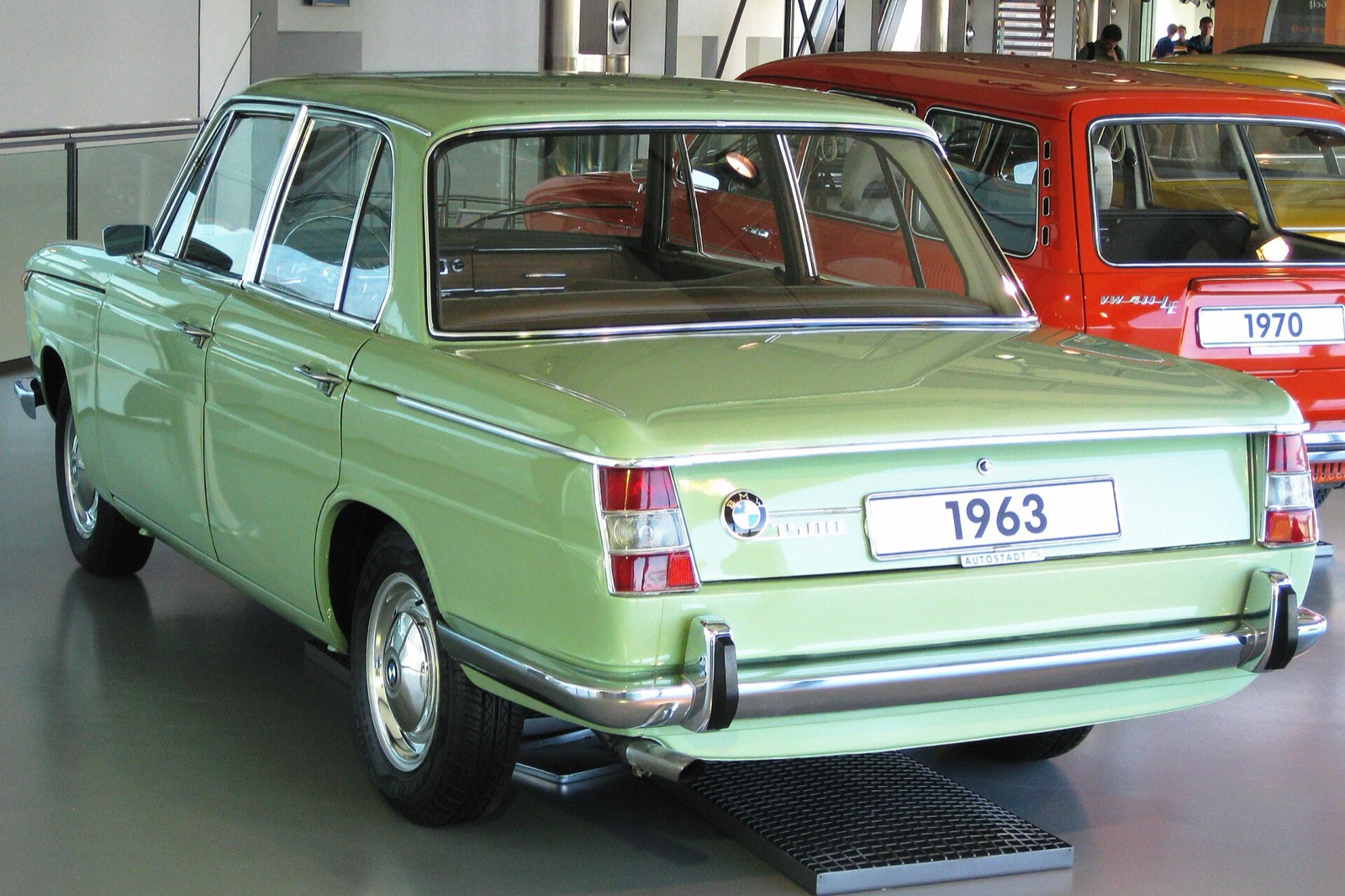
1500
1962–1964
The car that saved BMW — a crisp Michelotti-influenced three-box saloon with a brand-new canted M10 four and semi-trailing-arm rear end that defined the sports sedan.
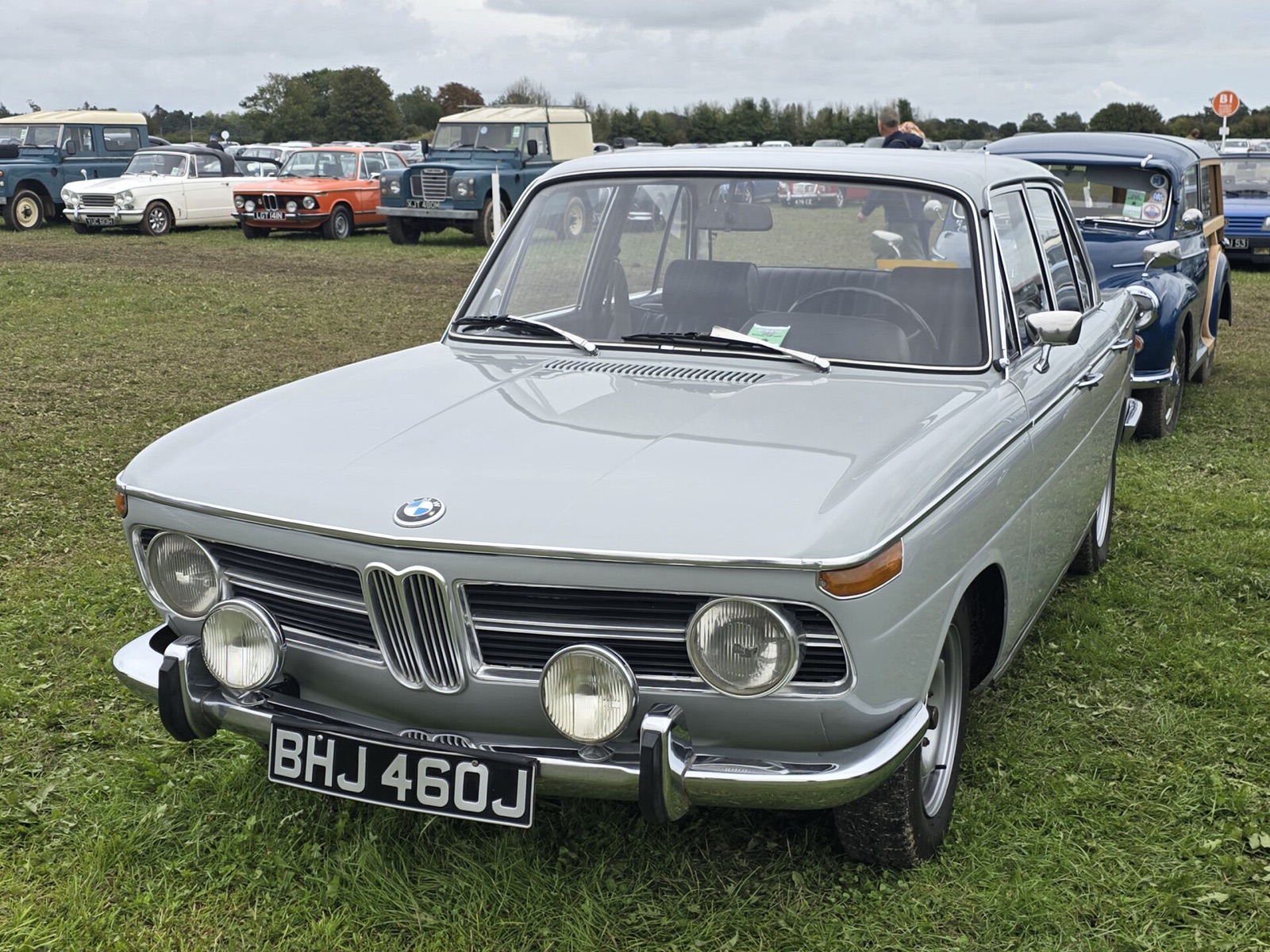
1800
1963–1971
Bored and stroked to 1.8 litres and 90 hp, the 1800 gave the New Class real muscle and eventually inherited the 2000's square headlights in its final year.
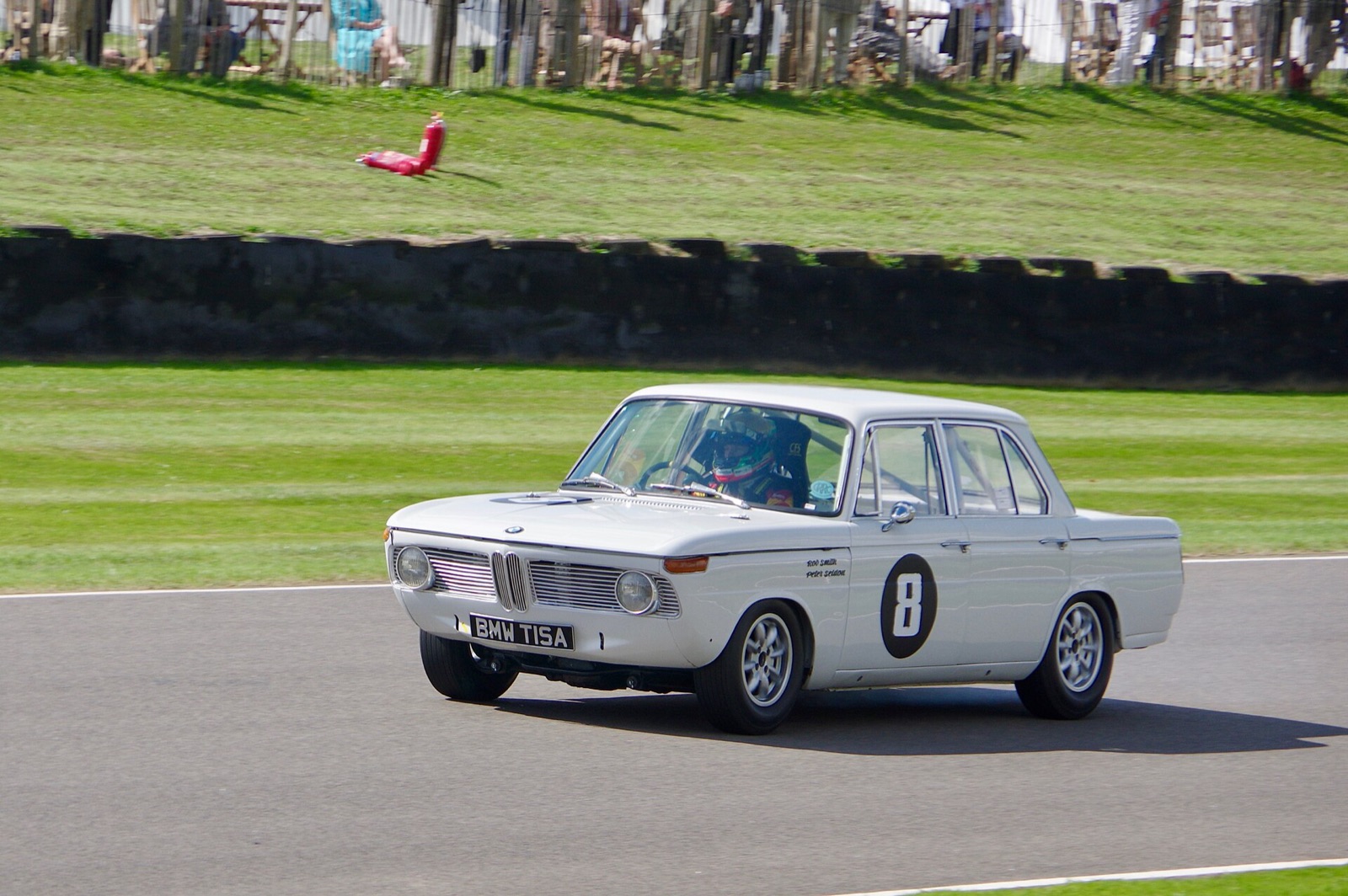
1800 TI/SA
1964–1965
A 130 hp homologation special with twin Weber 45s and a Getrag five-speed, sold only to licensed racers — 200 built, and it won the 1965 Spa 24 Hours.
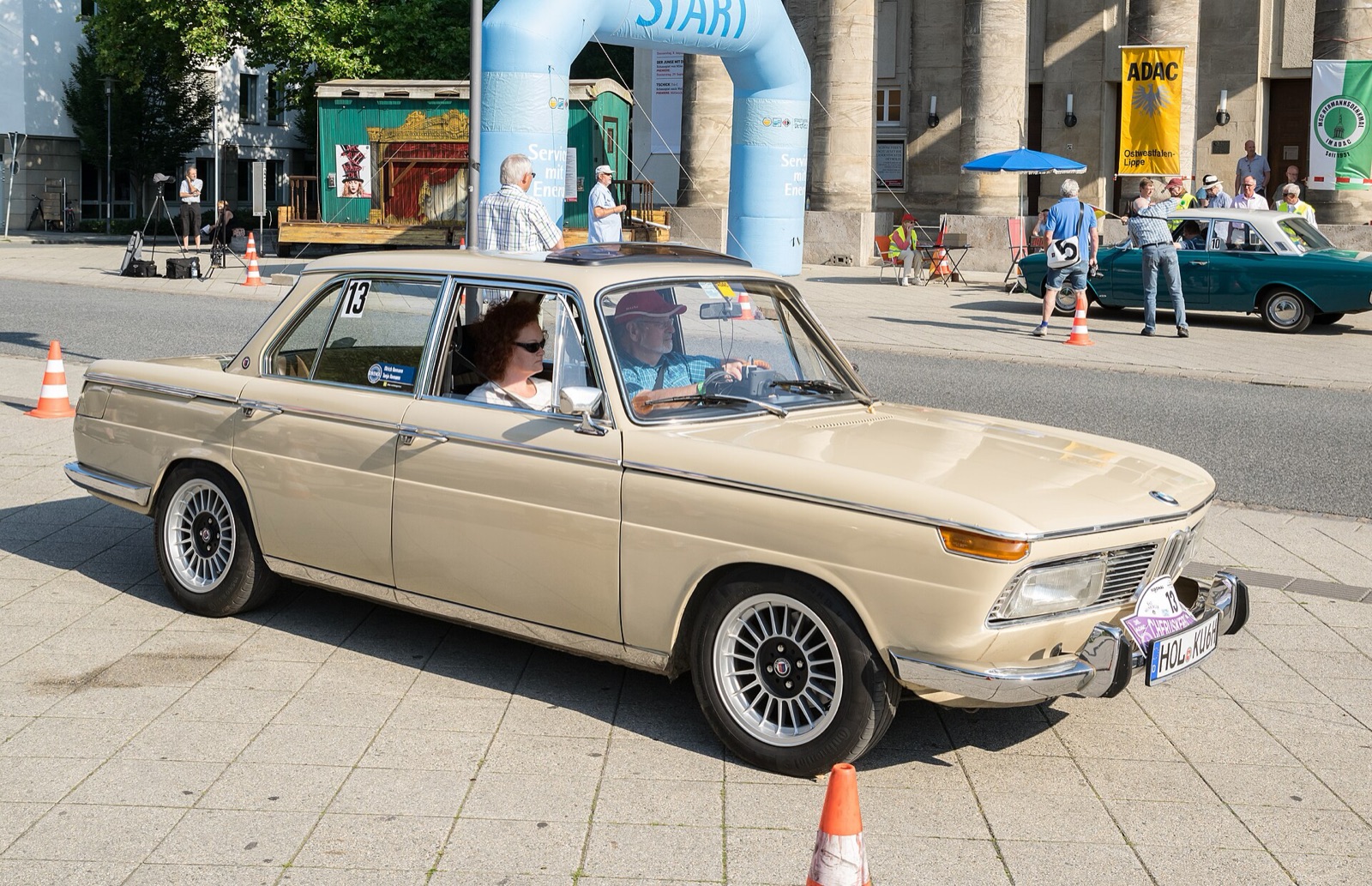
2000 / 2000 tilux
1965–1972
The upscale flagship arrived with distinctive rectangular headlights, wide taillights and a two-litre M10, the tilux adding a wood dash and optional leather.
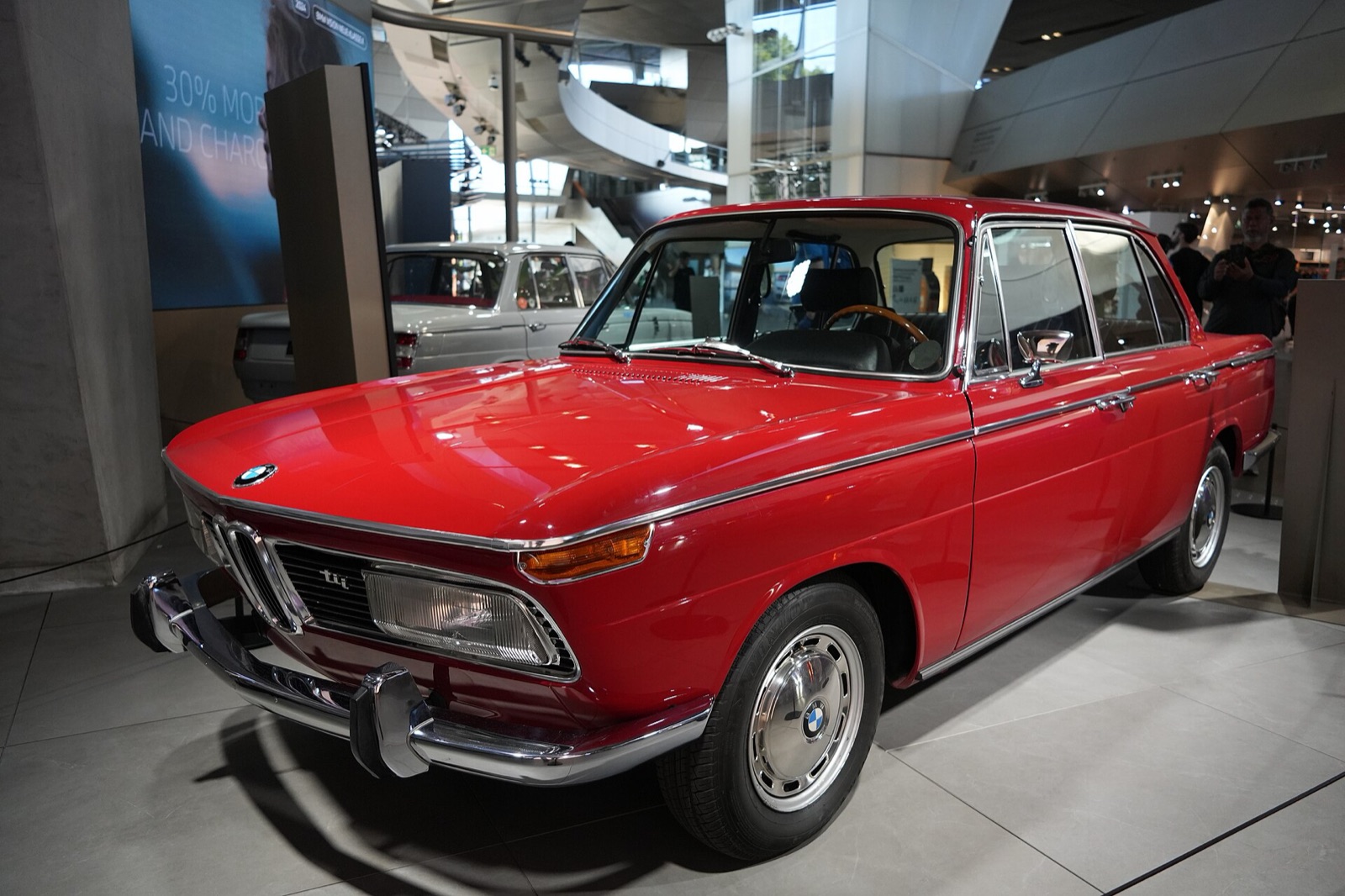
2000 tii
1969–1972
BMW's very first fuel-injected car — Kugelfischer mechanical injection lifting the two-litre to 130 hp and previewing the tii badge that would make the 2002 famous.
Imagery via Wikimedia Commons
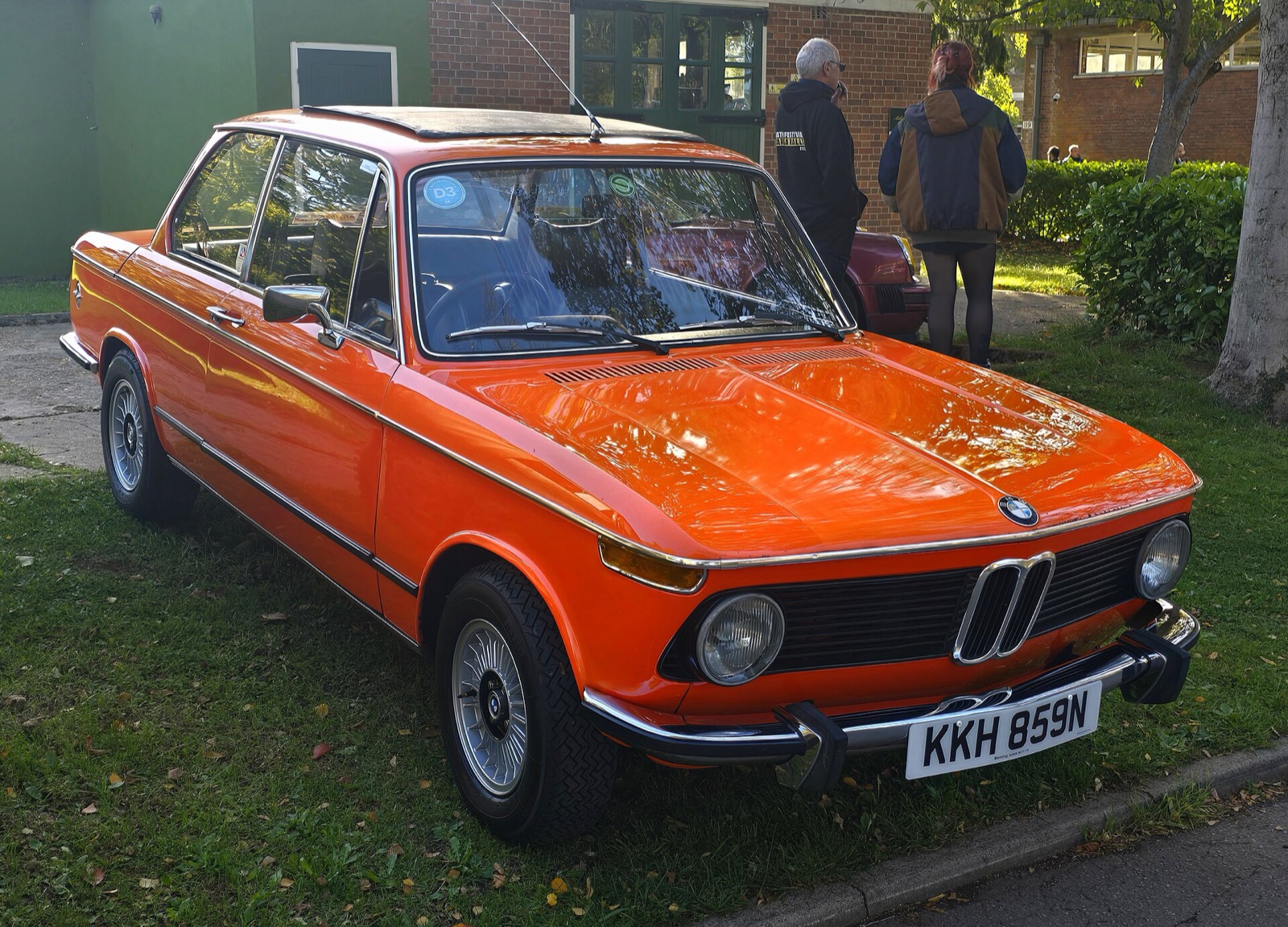
Neue Klasse & the Sports Sedan · 1962–1974
Drop the Neue Klasse’s two-litre four into the smaller 02 body and you get the 2002 — the car that made BMW’s name in America. Light and tossable, it was evangelised by the import magazines as the thinking driver’s sedan. The 1973 2002 turbo became Germany’s first turbocharged production car.
Fun fact
The 2002 turbo wore its “2002 turbo” script mirror-reversed on the front spoiler so drivers ahead could read it in their mirrors — intimidation deemed so aggressive it sparked public outcry.
Design note
Round headlights, a clean upright glasshouse and a tidy Hofmeister kink — the purest small-BMW shape and the spiritual grandfather of the 3 Series.
Evolution
5 chapters across the years — scroll to explore.
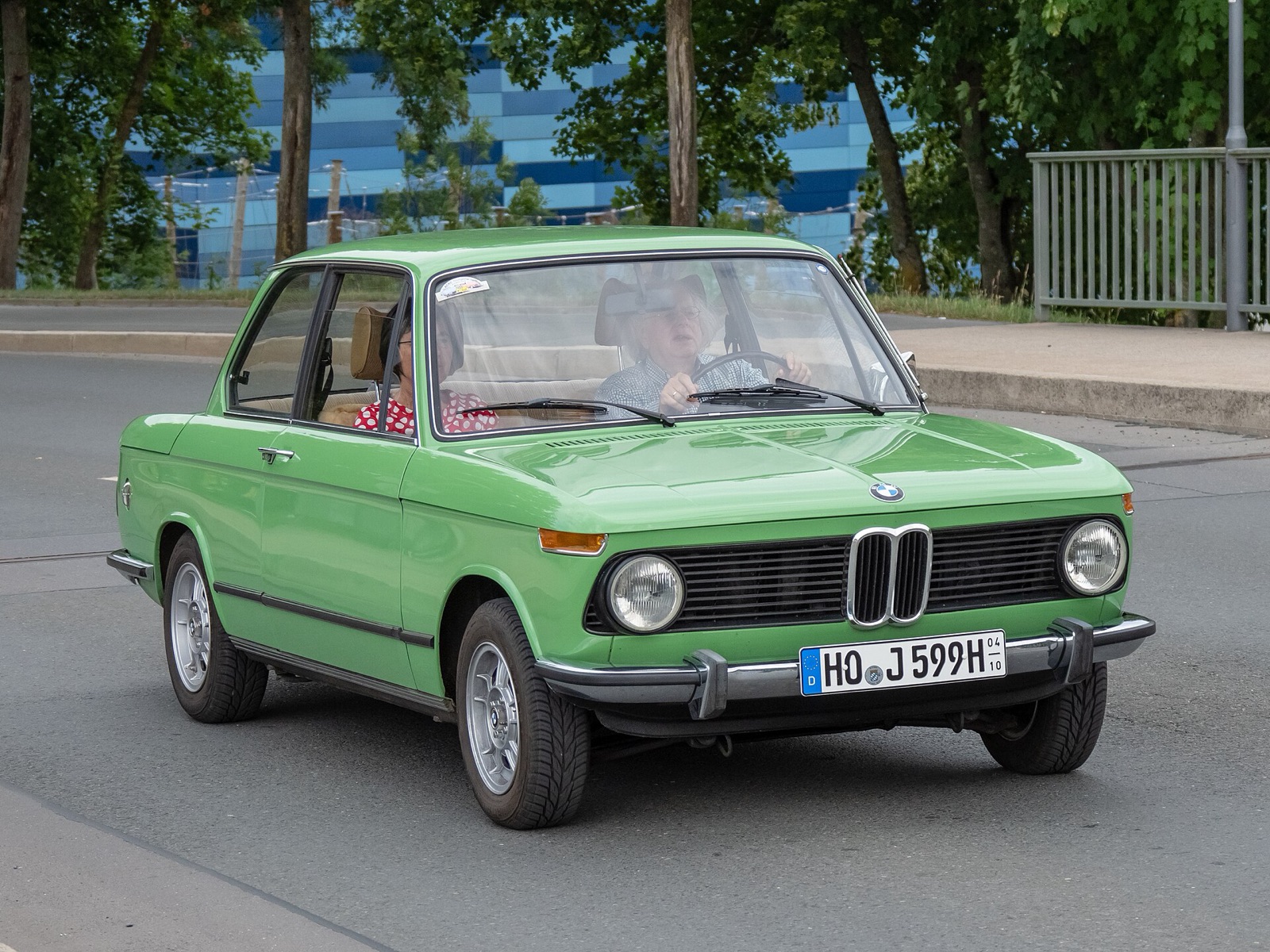
1600-2 / 1602
1966–1975
The one that started it all — a lightweight two-door chopped from the New Class sedan that proved a small BMW could be quick, chuckable and genuinely fun.
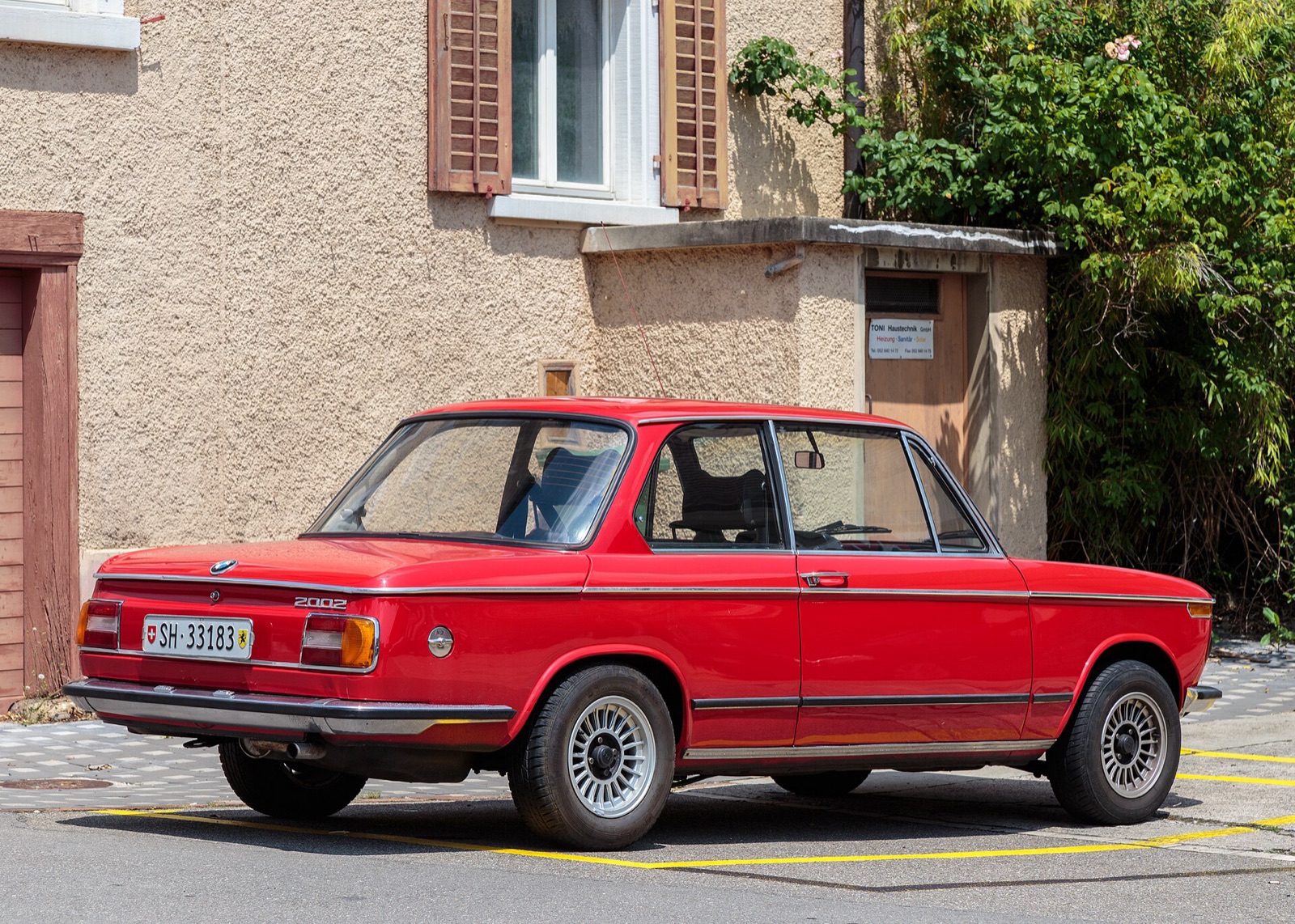
2002
1968–1975
Drop the two-litre M10 into the 1600 and you get the car that made BMW's name in America — 100 hp, perfect balance and the whole sport-sedan blueprint in one boxy shape.
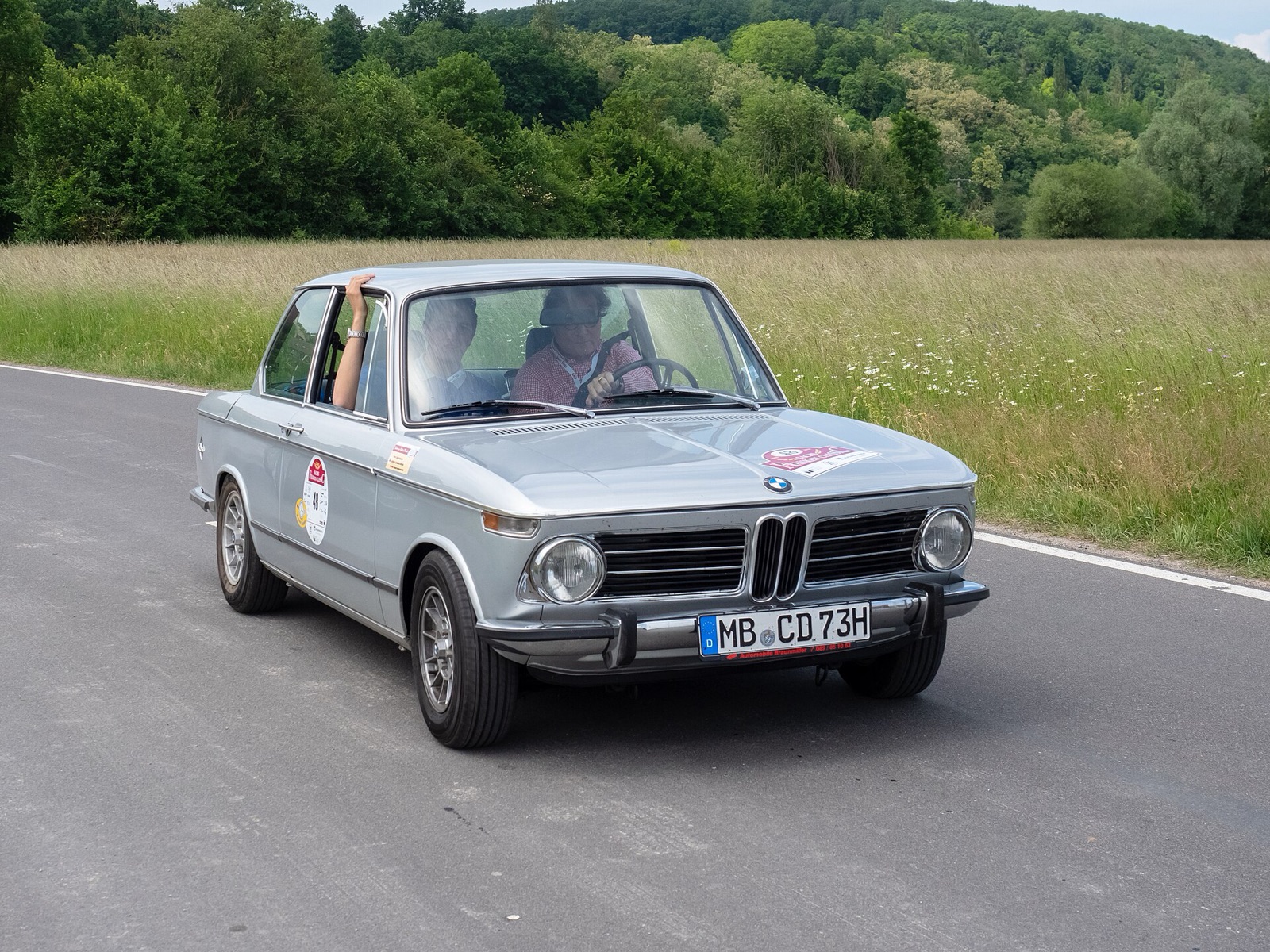
2002 tii
1971–1975
Kugelfischer mechanical fuel injection lifted it to 130 hp and 115 mph, making the tii the connoisseur's 02 and the sharpest-driving of the whole range.
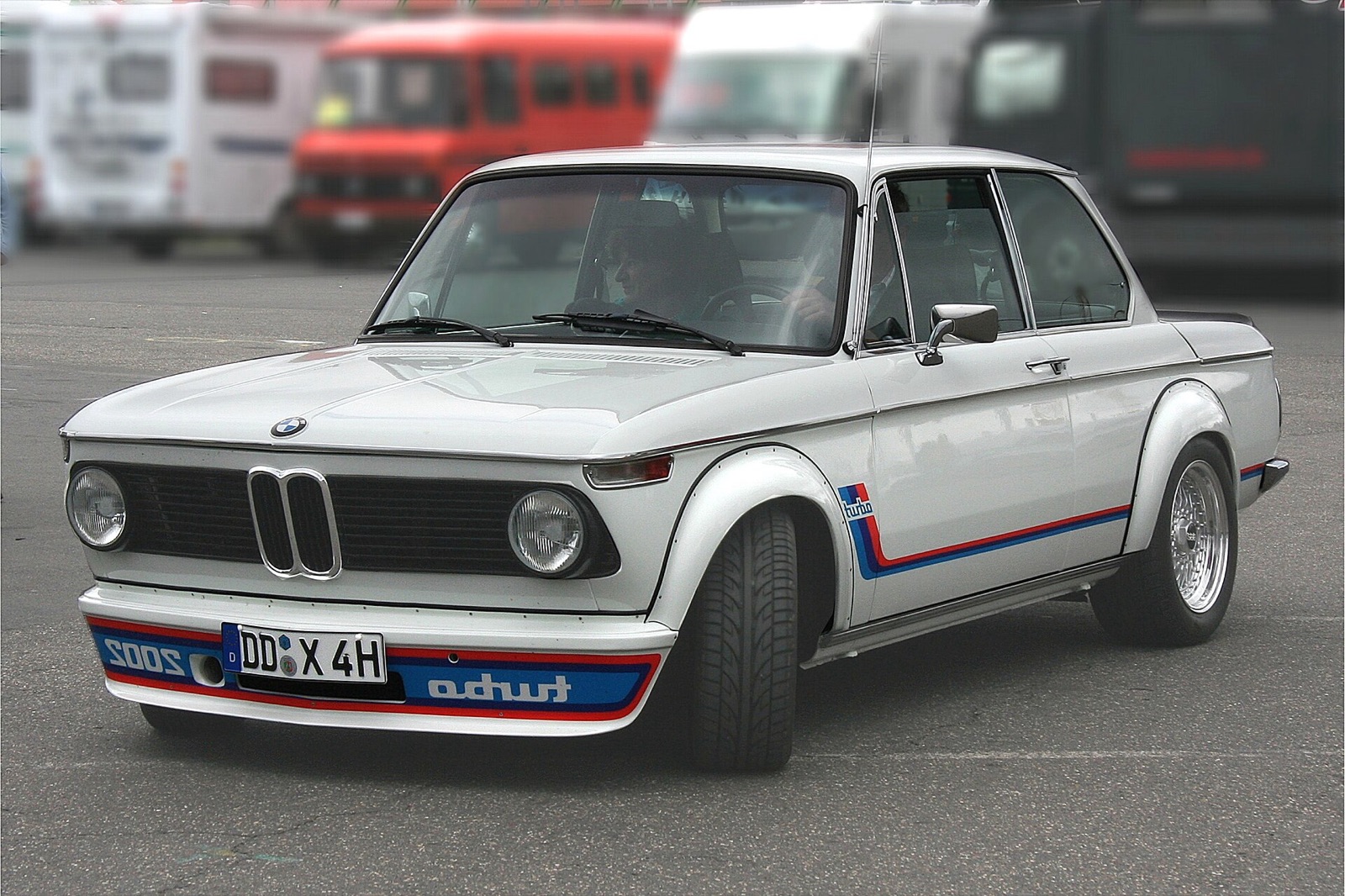
2002 turbo
1973–1974
Europe's first turbocharged production car — 170 hp, mirror-script decals and flared arches, killed almost at birth by the oil crisis after just 1,672 were built.
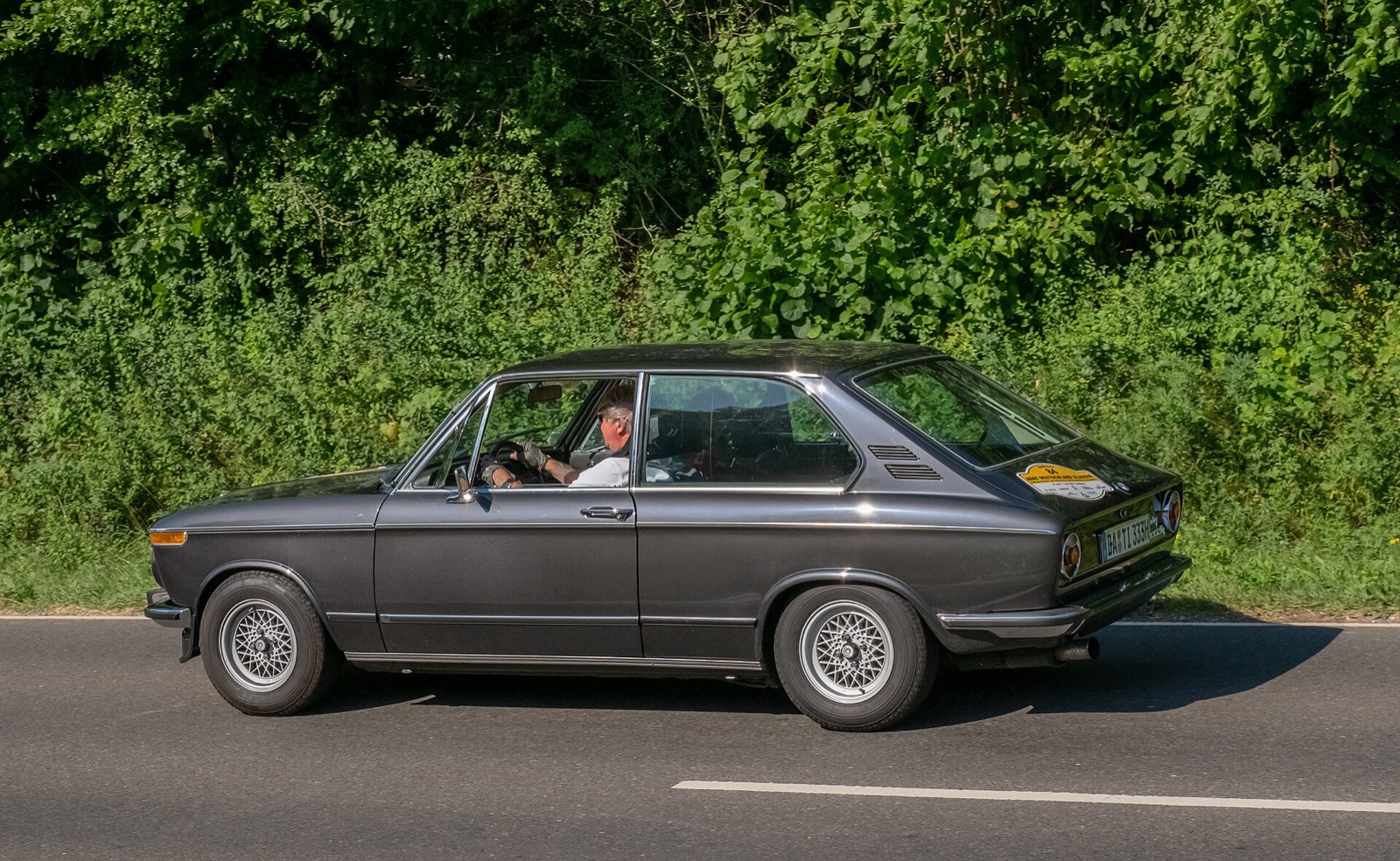
Touring
1971–1974
A three-door hatchback 02 offered across the range up to the tii — practical, rare and now the cult-favourite shape, with only about 26,000 ever built.
Imagery via Wikimedia Commons
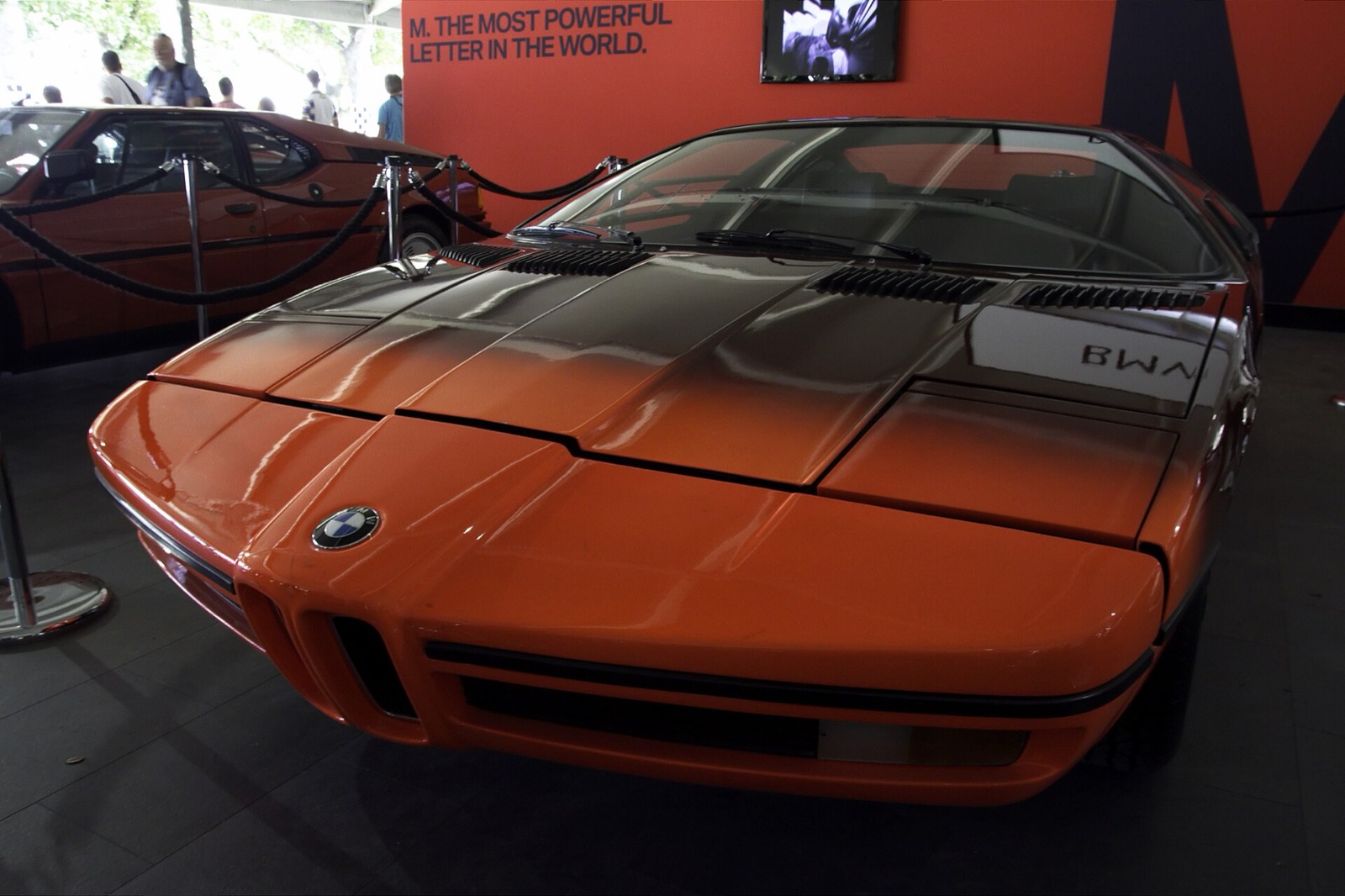
Neue Klasse & the Sports Sedan · 1962–1974
Paul Bracq’s wedge-shaped, gullwing-doored safety concept was BMW’s statement of intent for its home 1972 Munich Olympics. Painted in the brand-new Motorsport colours, it previewed crumple zones and a padded cockpit — and, crucially, the low mid-engine proportions that would resurface as the M1.
Fun fact
The Turbo wore the ///M colours before there was really an M car to wear them — a rolling debut for the Motorsport division founded that very same year.
Design note
Fathered the M1’s silhouette and proved BMW could build an exotic — the design bridge between a sedan brand and a supercar.
Evolution
2 chapters across the years — scroll to explore.
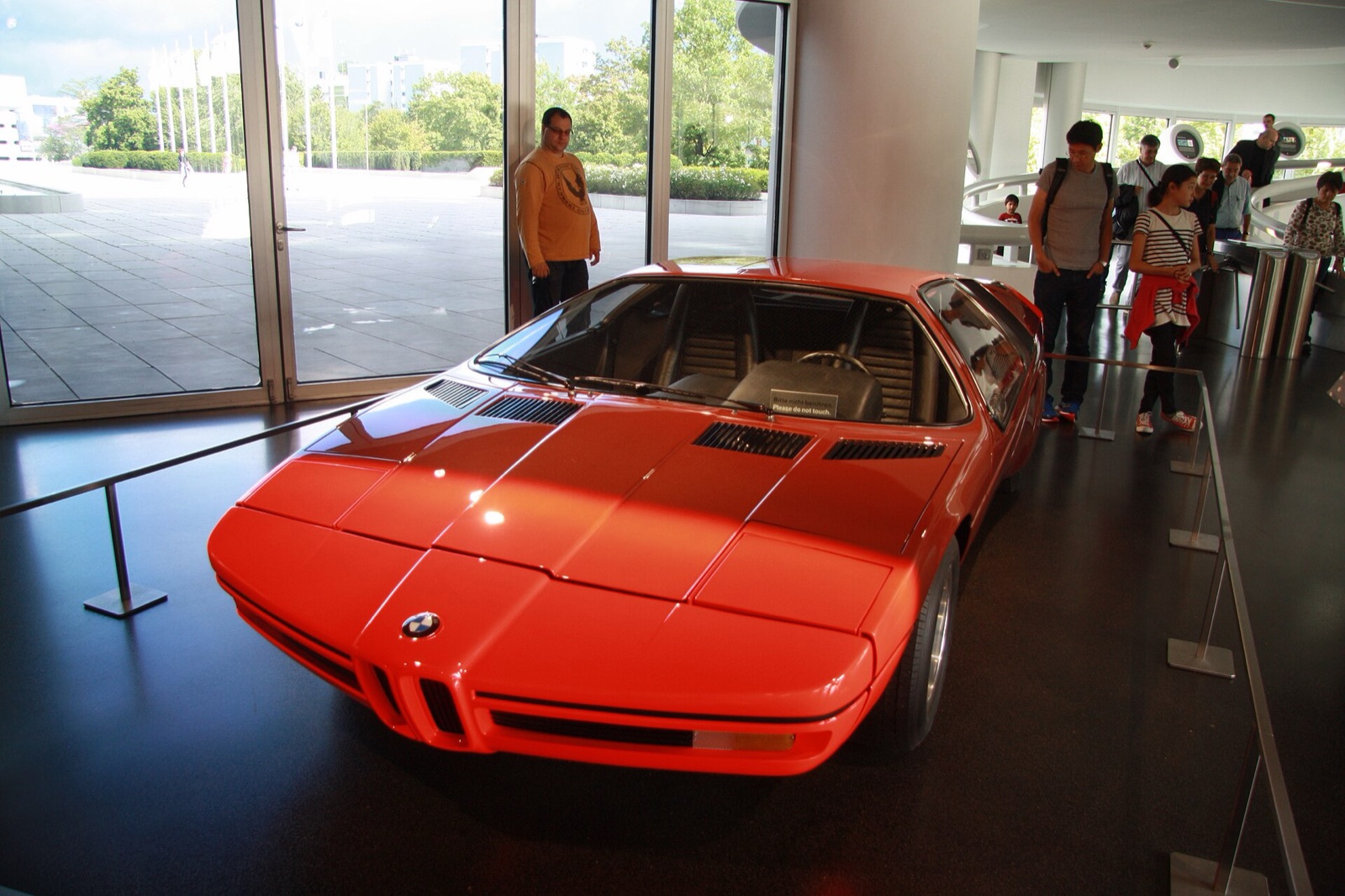
E25 Turbo
1972
Paul Bracq's Olympic showstopper: gullwing doors, a mid-mounted 276-hp turbo four from the 2002, and radar braking — a safety-and-speed statement dressed in wild orange, with just two ever built.
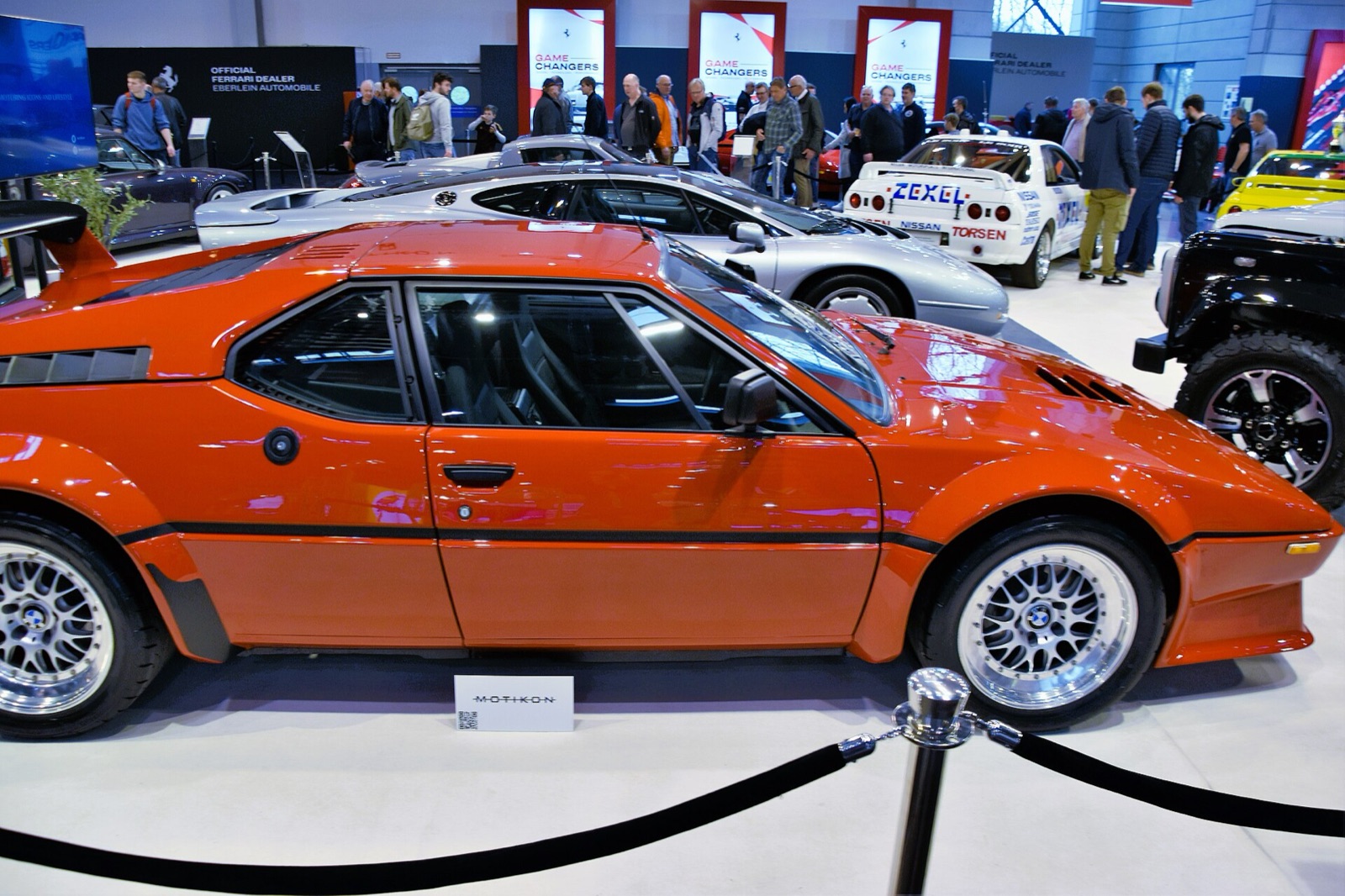
M1 lineage
1978–1981
The Turbo's wedge silhouette and mid-engine dream came true in the Giugiaro-penned M1 supercar, BMW's first mid-engined production car and the direct heir to Bracq's concept.
Imagery via Wikimedia Commons
Neue Klasse & the Sports Sedan · 1962–1974
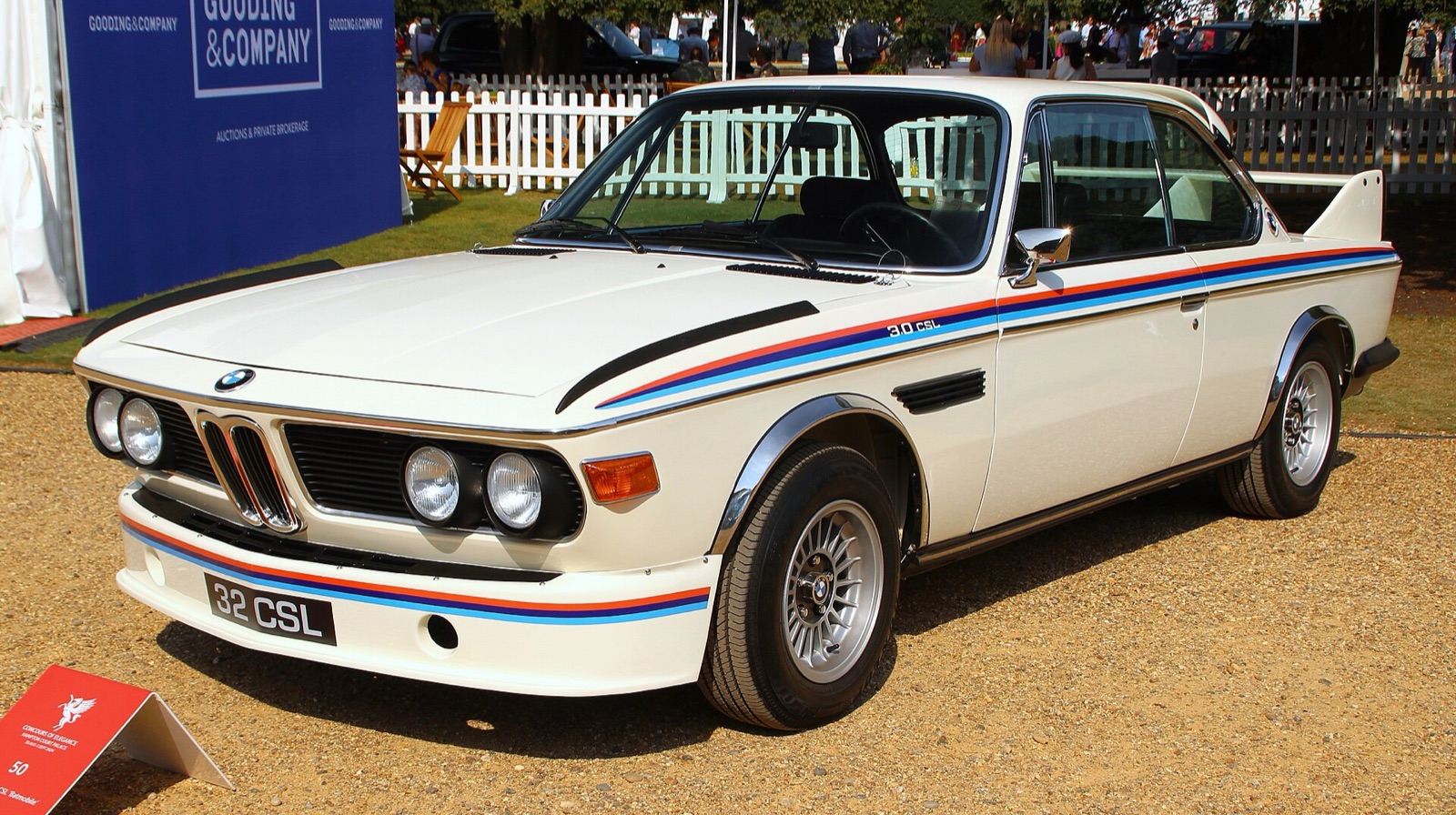
To go racing in the European Touring Car Championship, BMW built the featherweight E9 coupé — CSL for Coupé Sport Leichtbau. Thin-gauge steel, aluminium panels and Perspex windows shed weight; the wild 1973 aero kit of roof fins, deep front dam and towering rear wing earned it the “Batmobile” name. It dominated the ETCC and founded BMW Motorsport’s racing legend.
Fun fact
The Batmobile’s aero was illegal for German road use, so the wings were shipped in the boot for owners to bolt on themselves once off the public road.
Design note
The first true BMW Motorsport homologation special — and the origin point of BMW’s appetite for functional aero theatre.
Evolution
5 chapters across the years — scroll to explore.
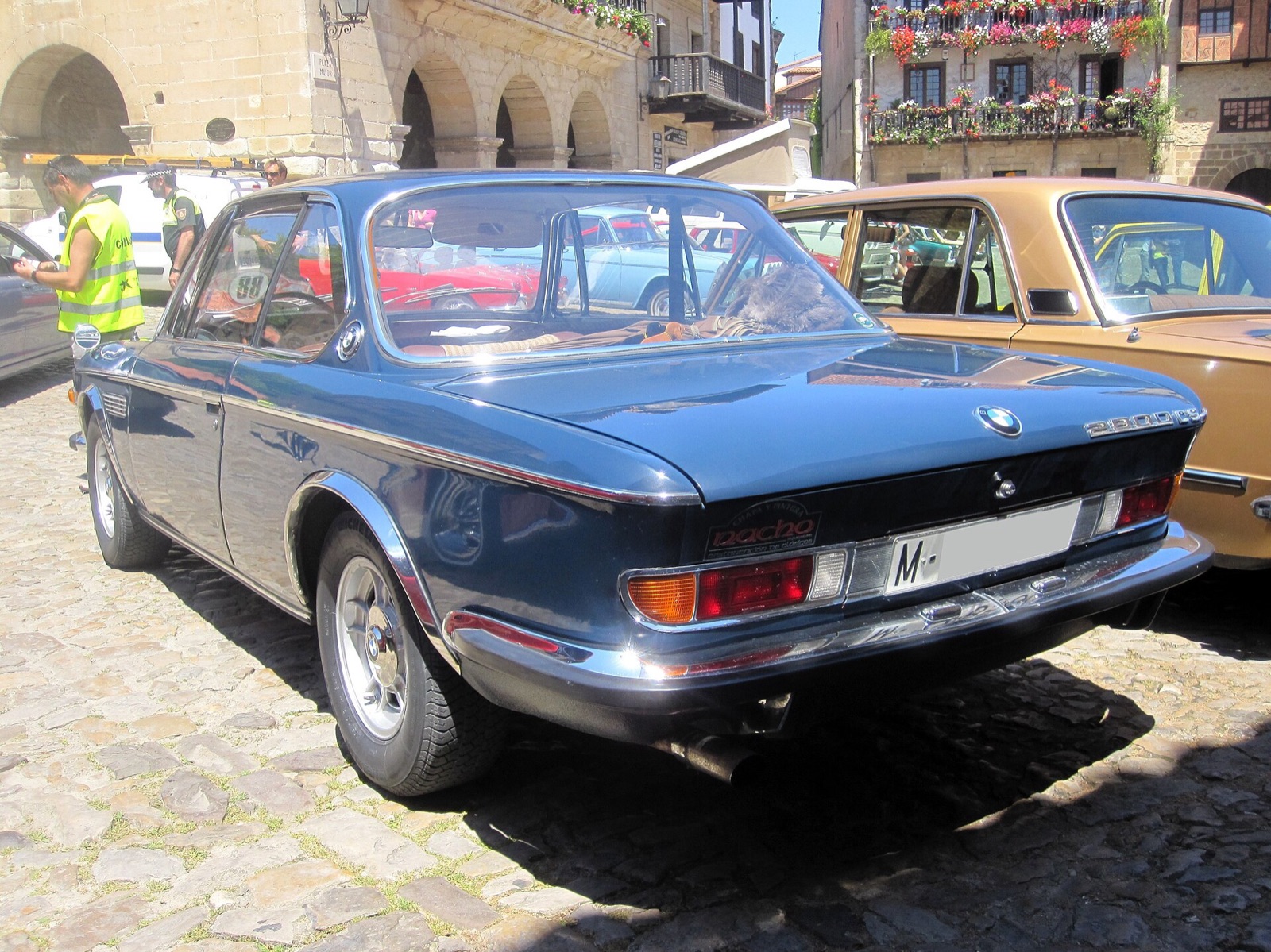
2800 CS
1968–1971
The Karmann-bodied E9 that started it all, dropping BMW's silky M30 straight-six into a shark-nosed pillarless coupé.
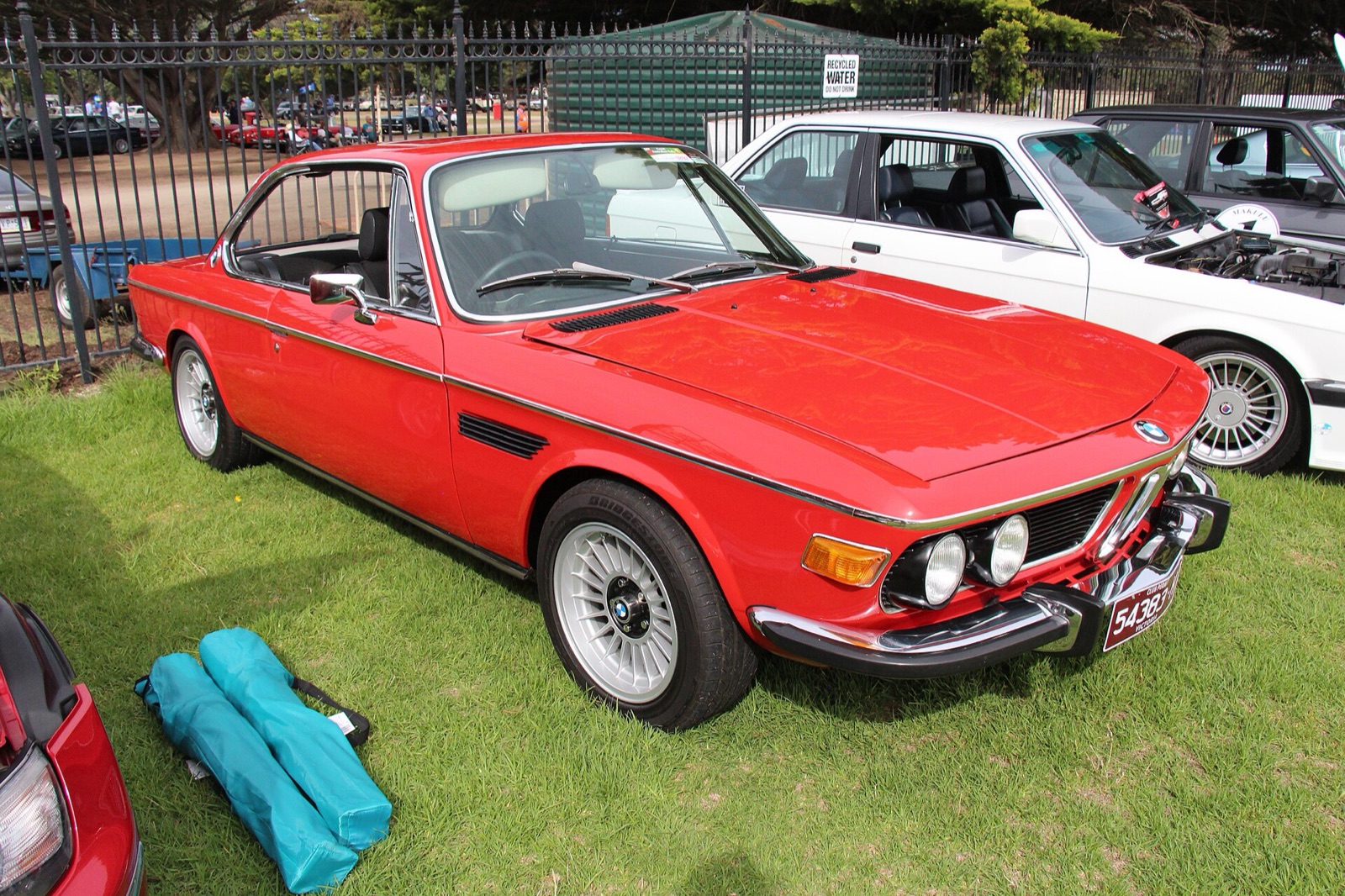
3.0 CS / CSi
1971–1975
Bored out to a full three litres, the fuel-injected CSi packed 200 hp and became the definitive elegant grand-touring E9.
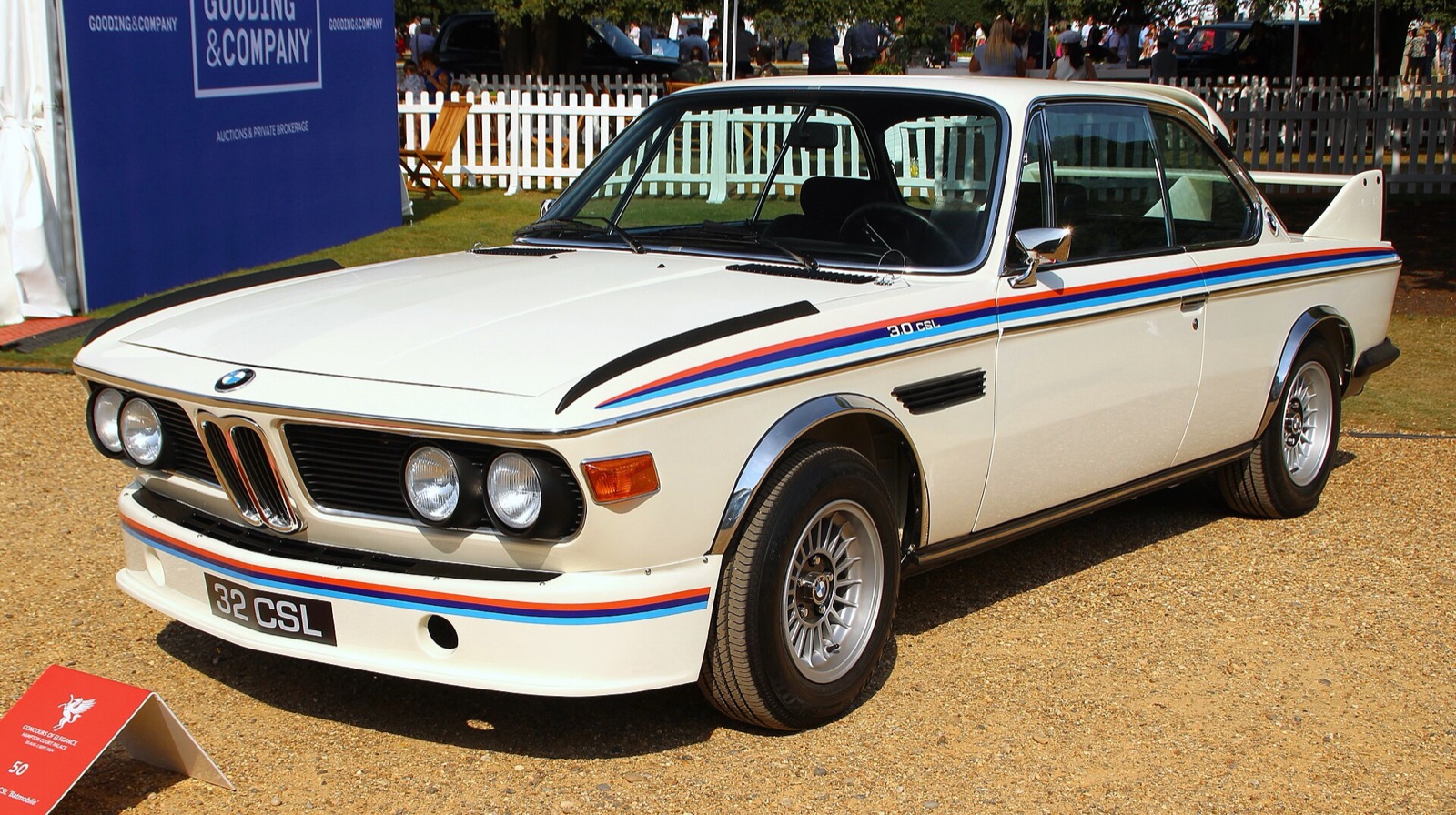
3.0 CSL 'leichtbau'
1972–1975
The homologation special that shed weight with alloy panels, thin steel and Perspex windows, wearing BMW's iconic Motorsport stripes.
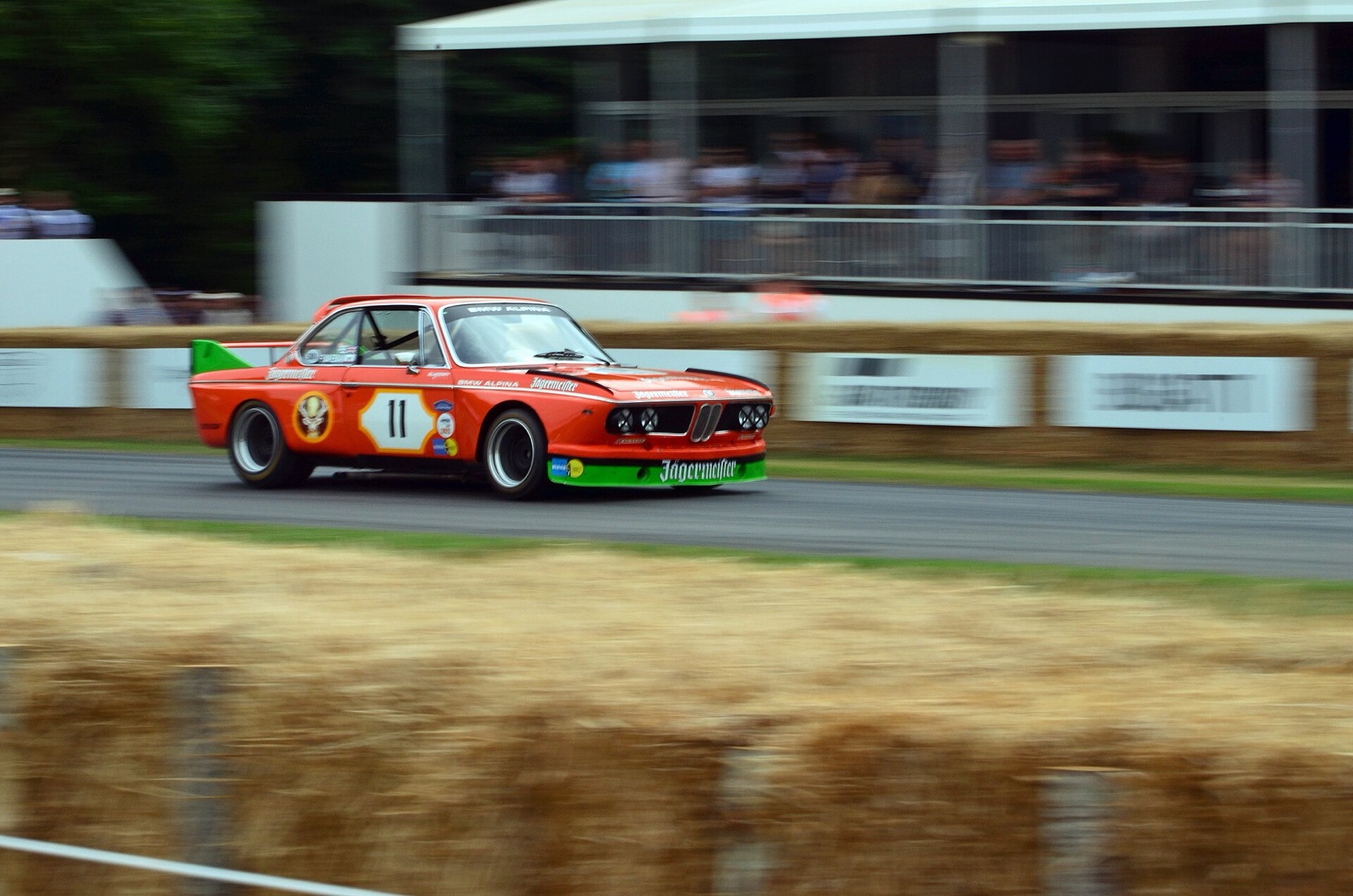
CSL 'Batmobile'
1973–1975
Homologated in July 1973 with a wild air dam, roof spoiler and towering rear wing so illegal for the road that it shipped in the boot.
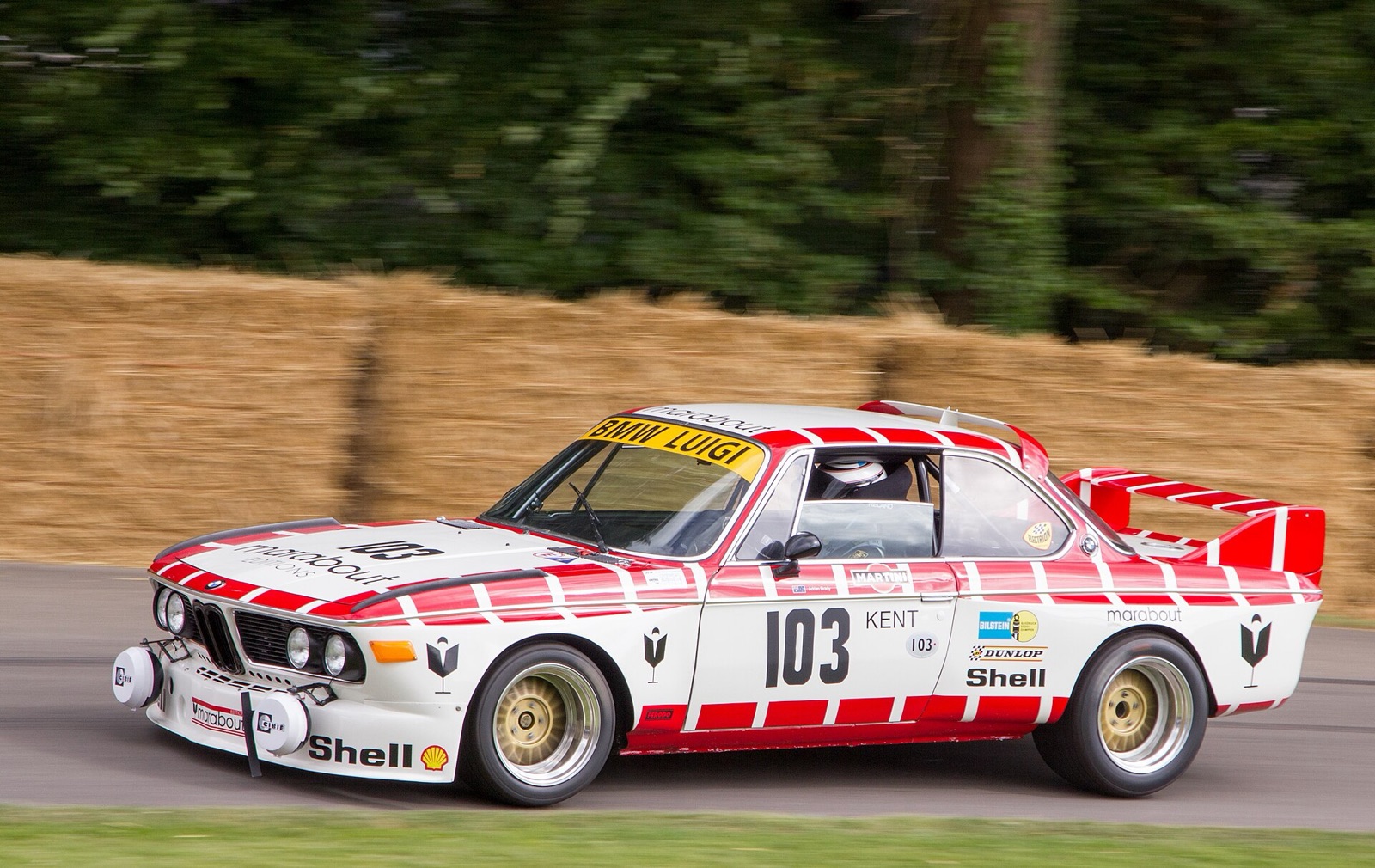
Works Group 2 racing CSL
1973–1979
The winged terror that crushed the European Touring Car Championship, taking the drivers' crown in 1973 and every year from 1975 to 1979.
Imagery via Wikimedia Commons
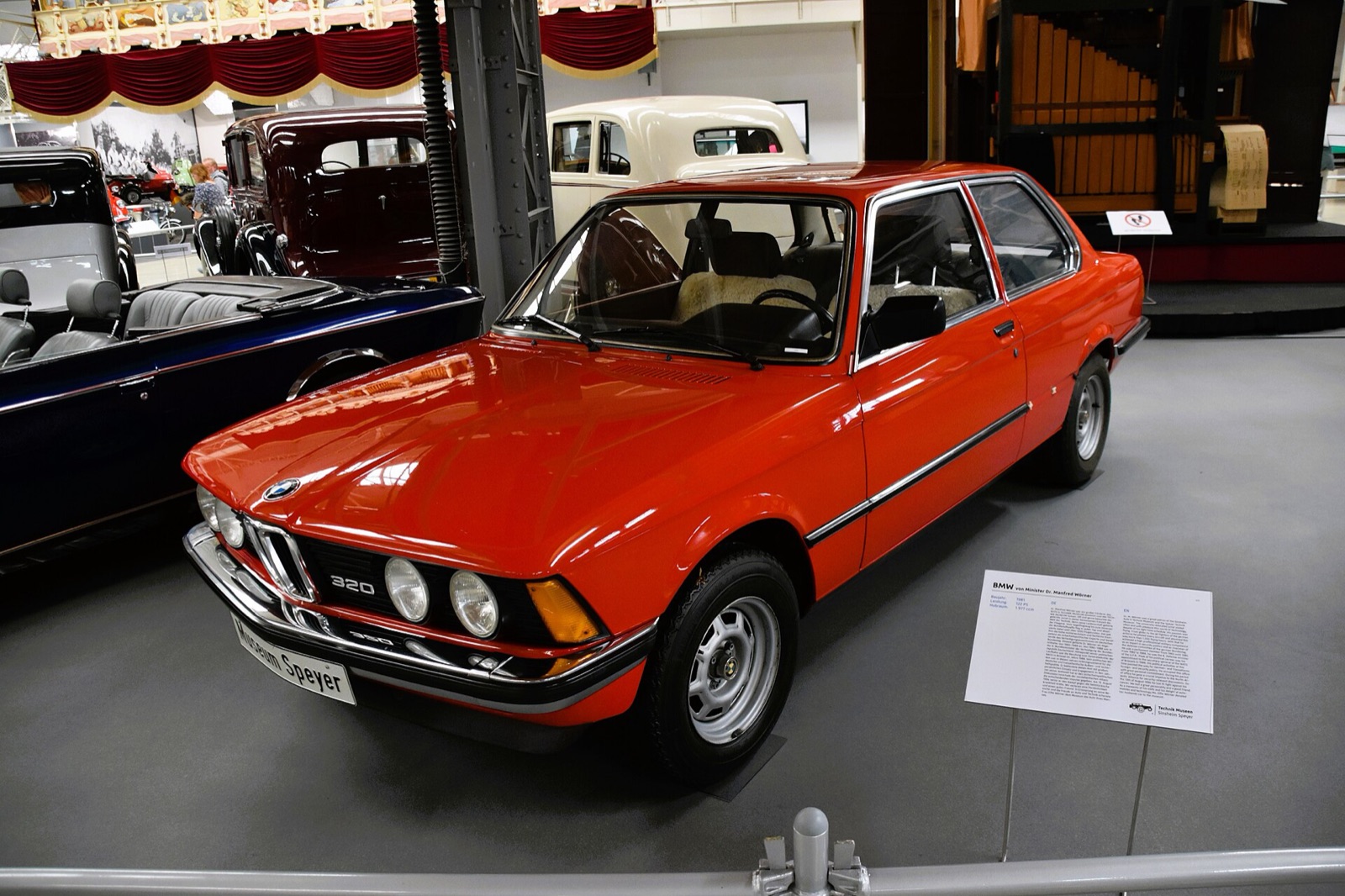
The M Era · 1975–1993
The E21 turned the 02’s loose formula into a franchise: the first car to wear the “3 Series” name. It carried over the shark nose and driver-angled cockpit, gained six-cylinder muscle late in life, and set the compact-executive blueprint BMW still sells more of than anything else.
Fun fact
The E21’s dashboard was canted toward the driver — the start of BMW’s “cockpit” philosophy, where the centre console angles everything at the person actually driving.
Design note
Standardised the driver-oriented cockpit and locked the 3 Series in as BMW’s core identity.
Evolution
6 chapters across the years — scroll to explore.
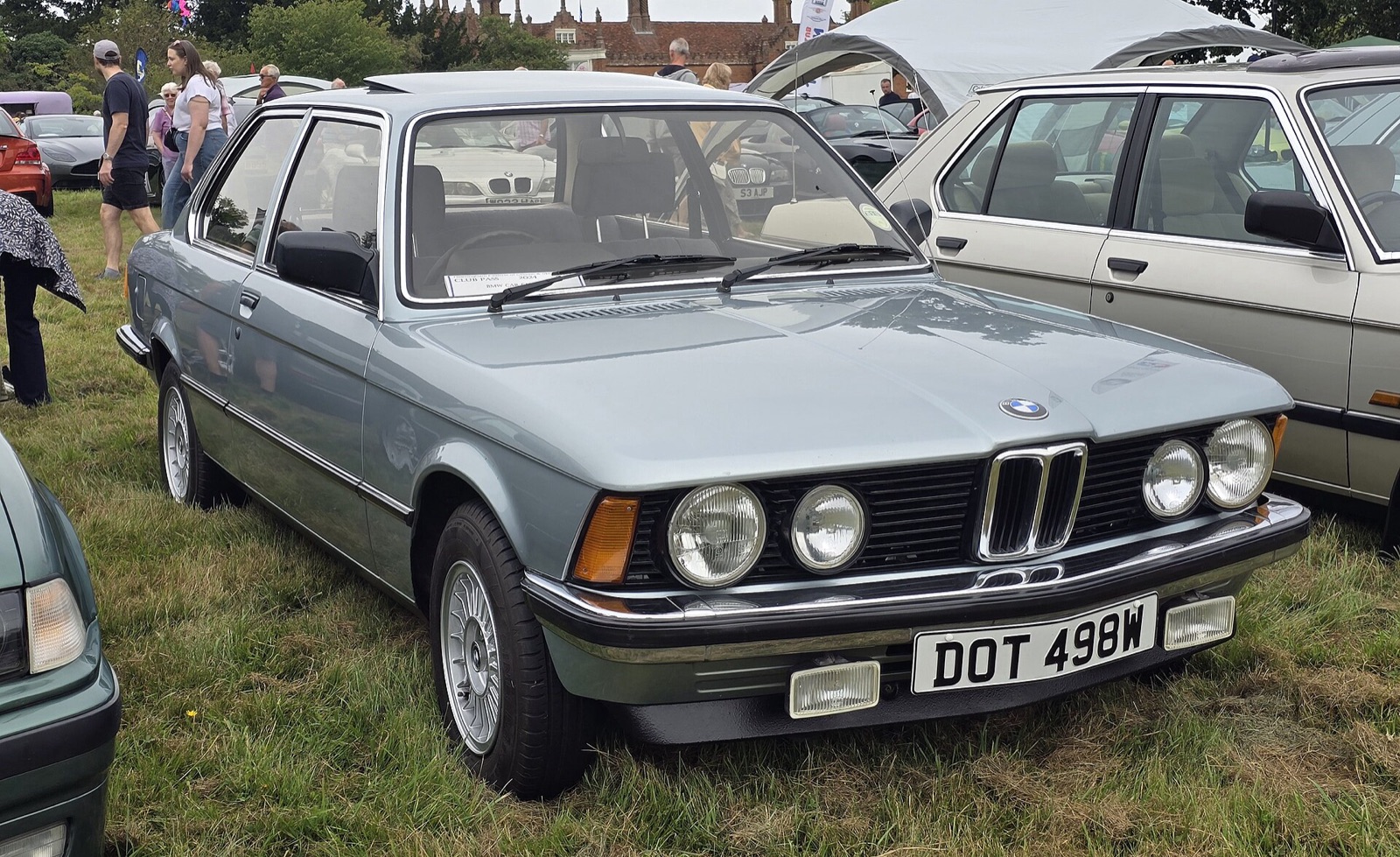
316 / 318
1975–1983
The first-ever 3 Series launched on carburetted 1.6 and 1.8 M10 fours with a single pair of round headlights and that driver-angled cockpit.
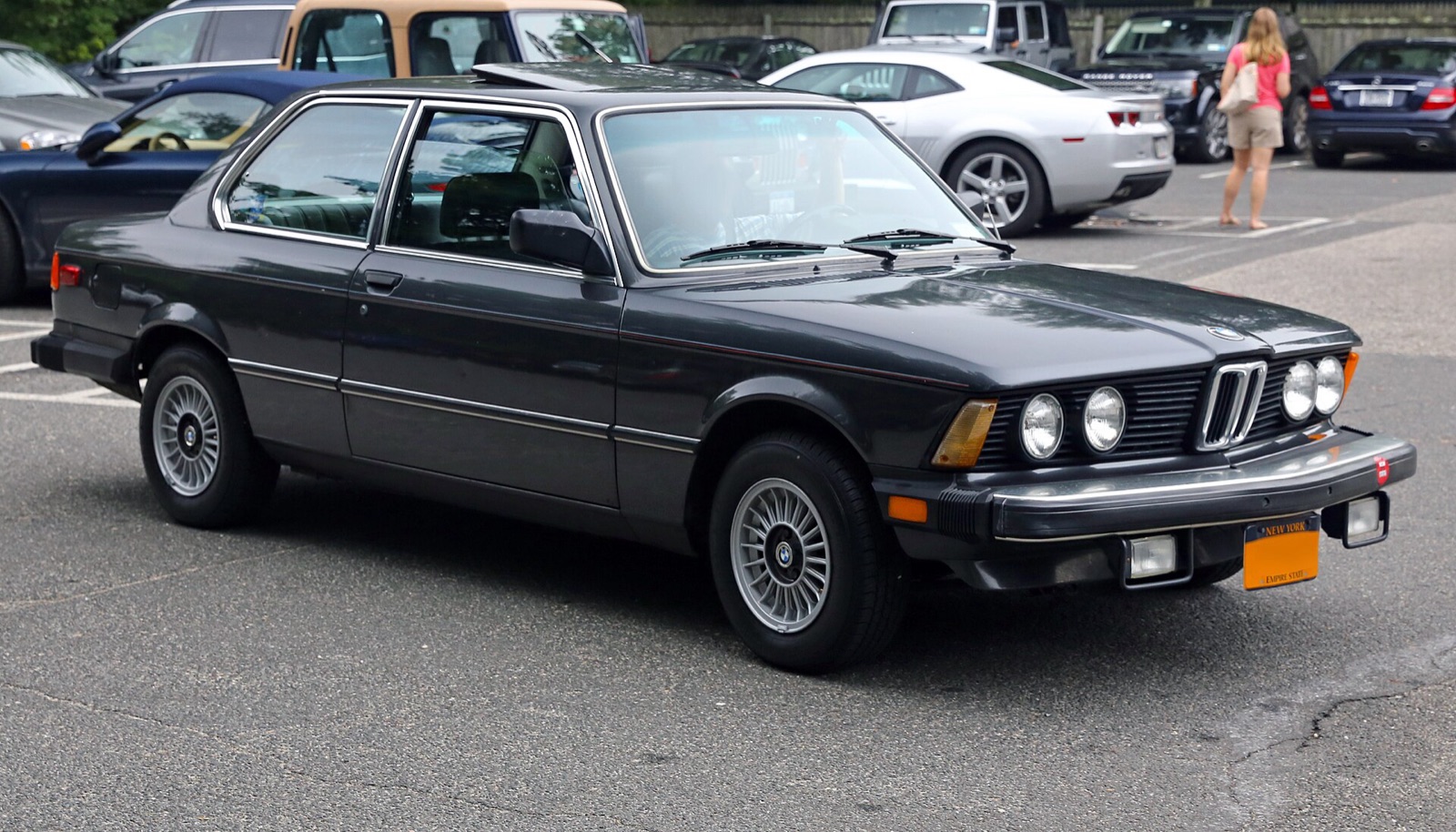
320i
1975–1977
Bosch K-Jetronic injection turned the two-litre four into the range's hot hatch of its day, hitting 180 km/h and later becoming America's only E21.
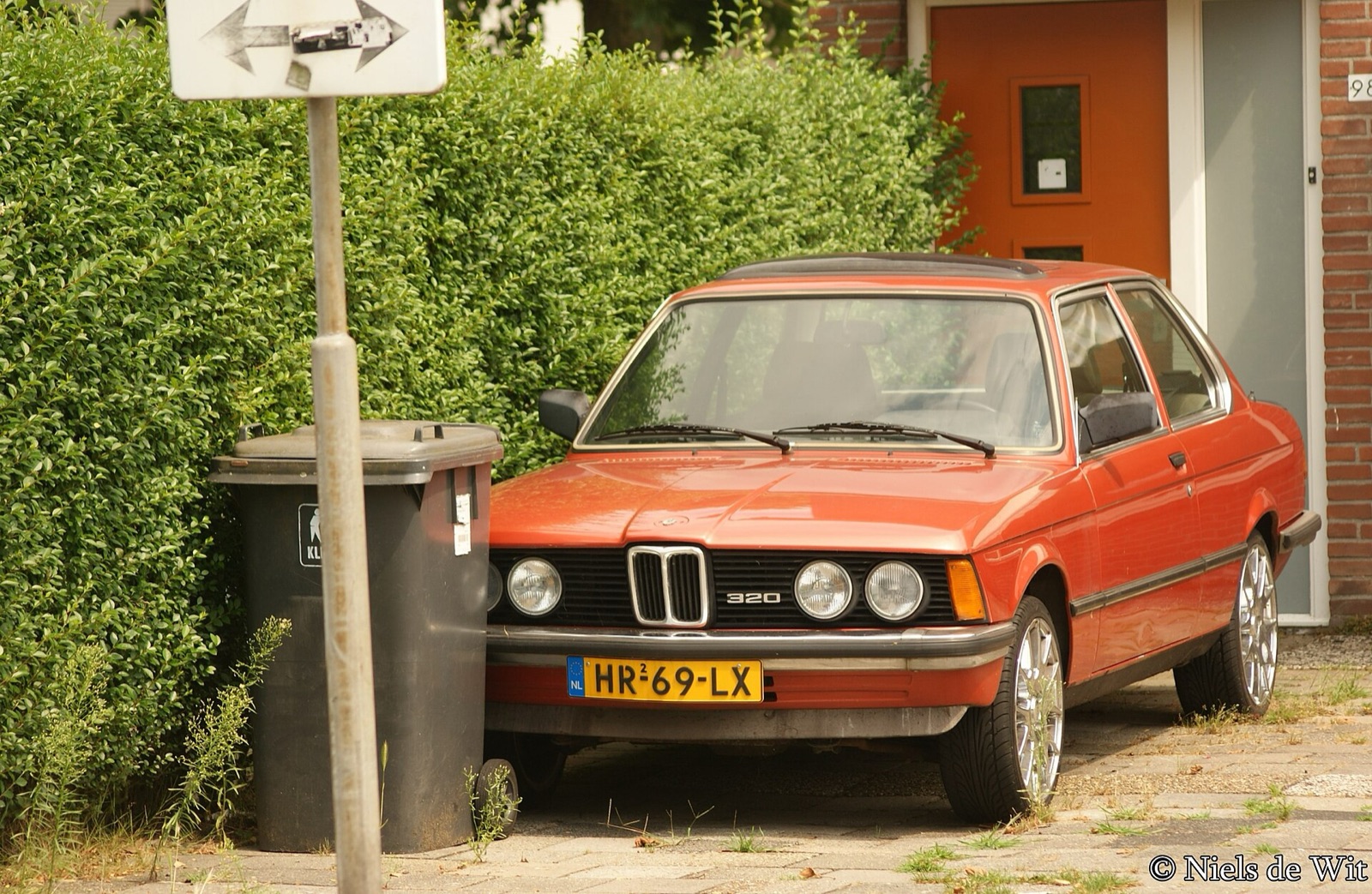
320/6
1977–1982
The silky M20 straight-six slid under the bonnet and quad round headlights announced it — the four-pot 320 was gone, the six-cylinder 3 Series was born.
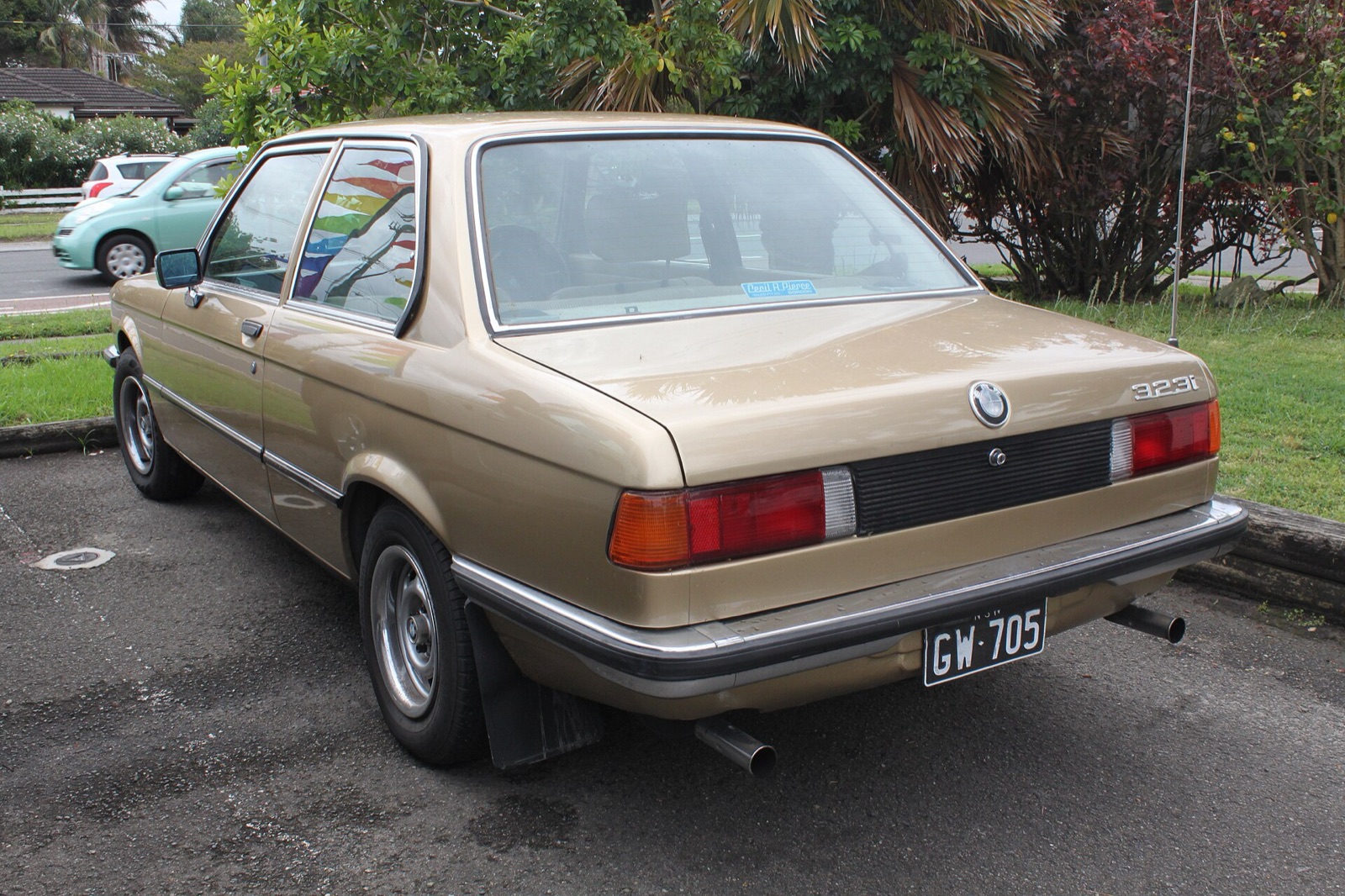
323i
1977–1983
The 2.3-litre injected six made this the E21 flagship — 143 hp, 190 km/h and four-wheel discs, the tail-happy pocket rocket that set the template for fast 3 Series.
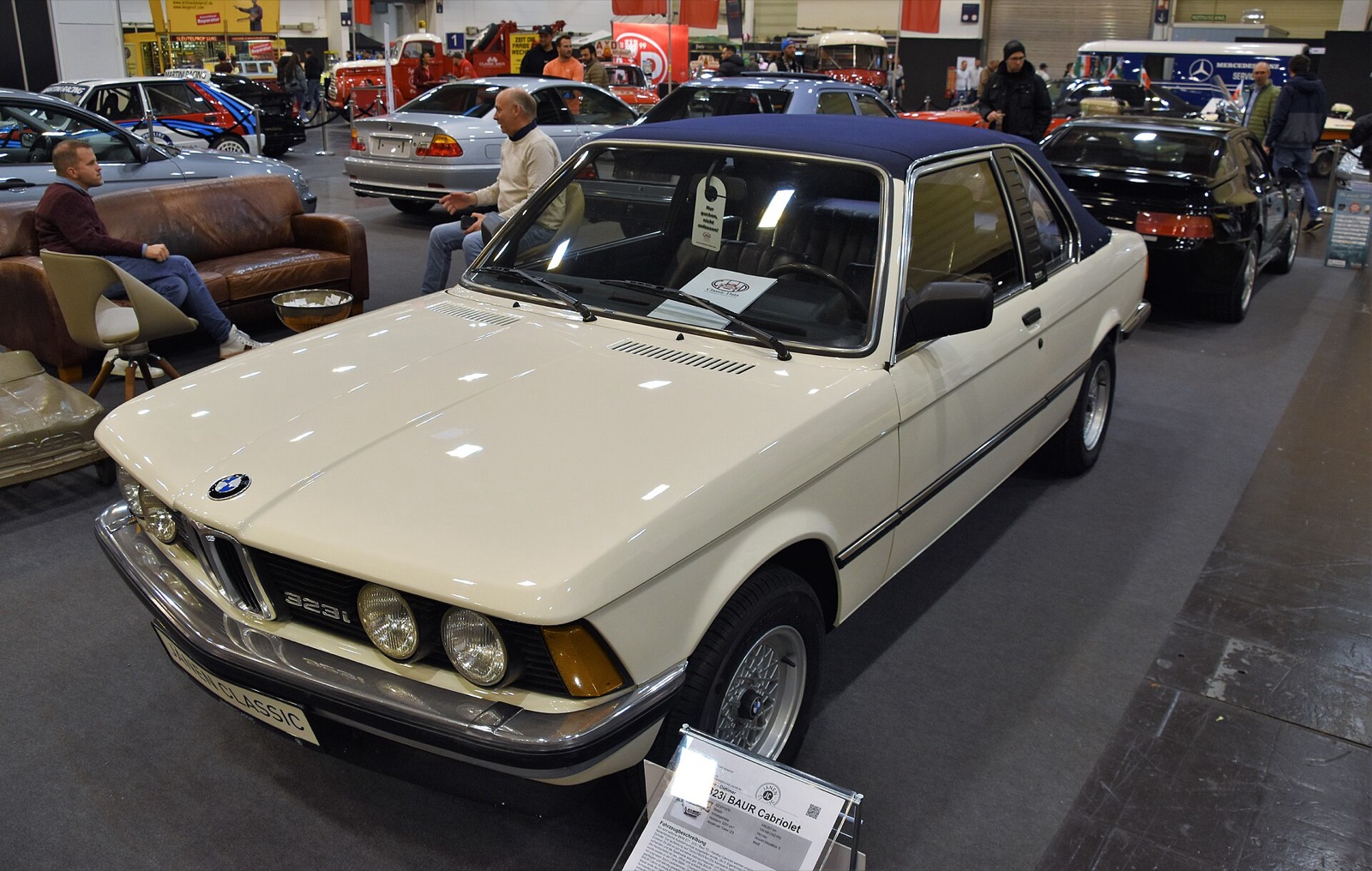
Baur TopCabriolet
1978–1981
Karosserie Baur's clever targa-plus-soft-top conversion gave the E21 open-air motoring with a roll bar — just 4,595 were built with every engine option.
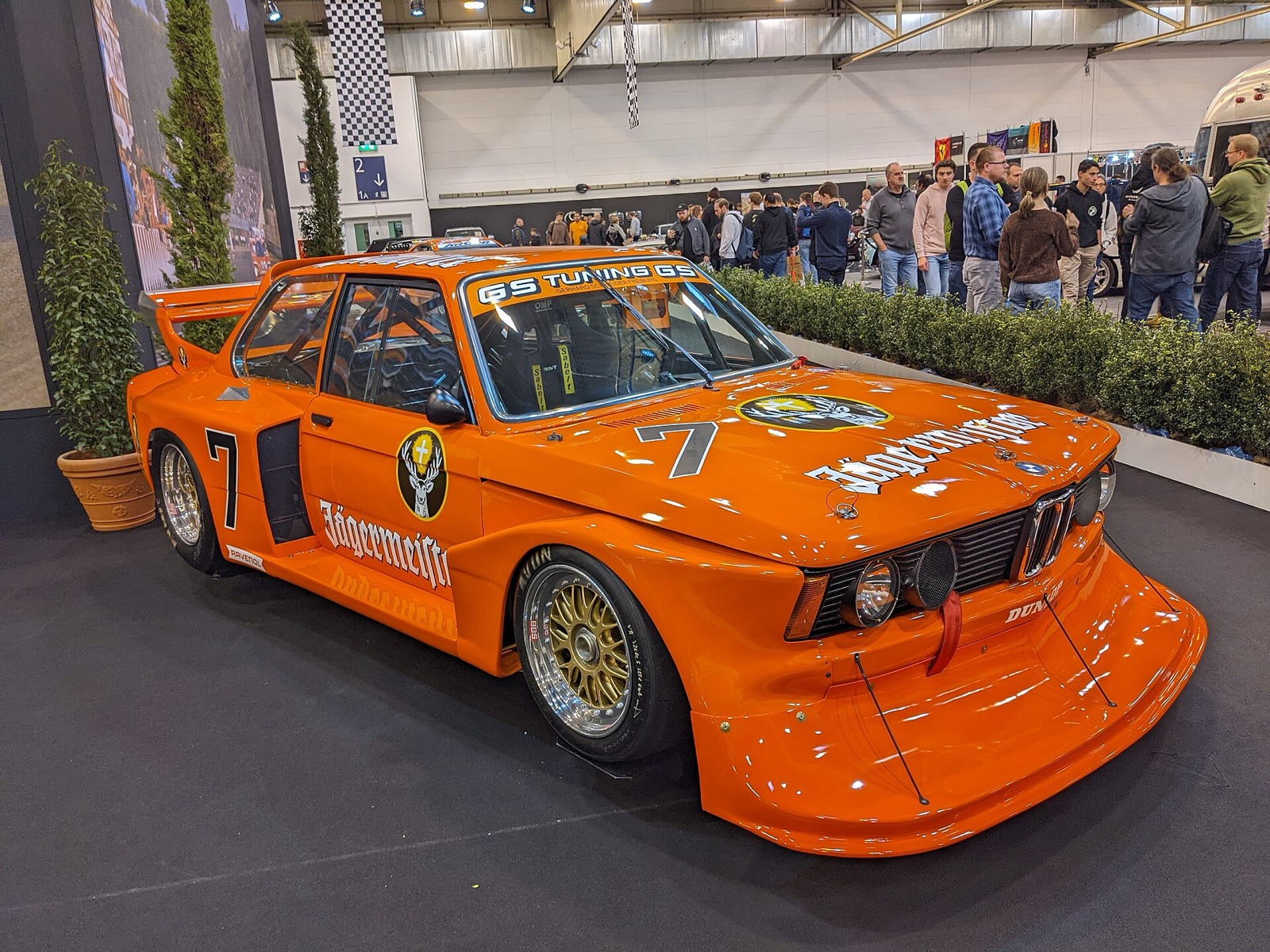
320 Turbo Group 5 "Flying Brick"
1977–1979
BMW Motorsport's blistered, winged silhouette racer replaced the 3.0 CSL, packing a 300+ bhp turbo F2 engine built in twelve weeks without a single technical drawing.
Imagery via Wikimedia Commons
The M Era · 1975–1993
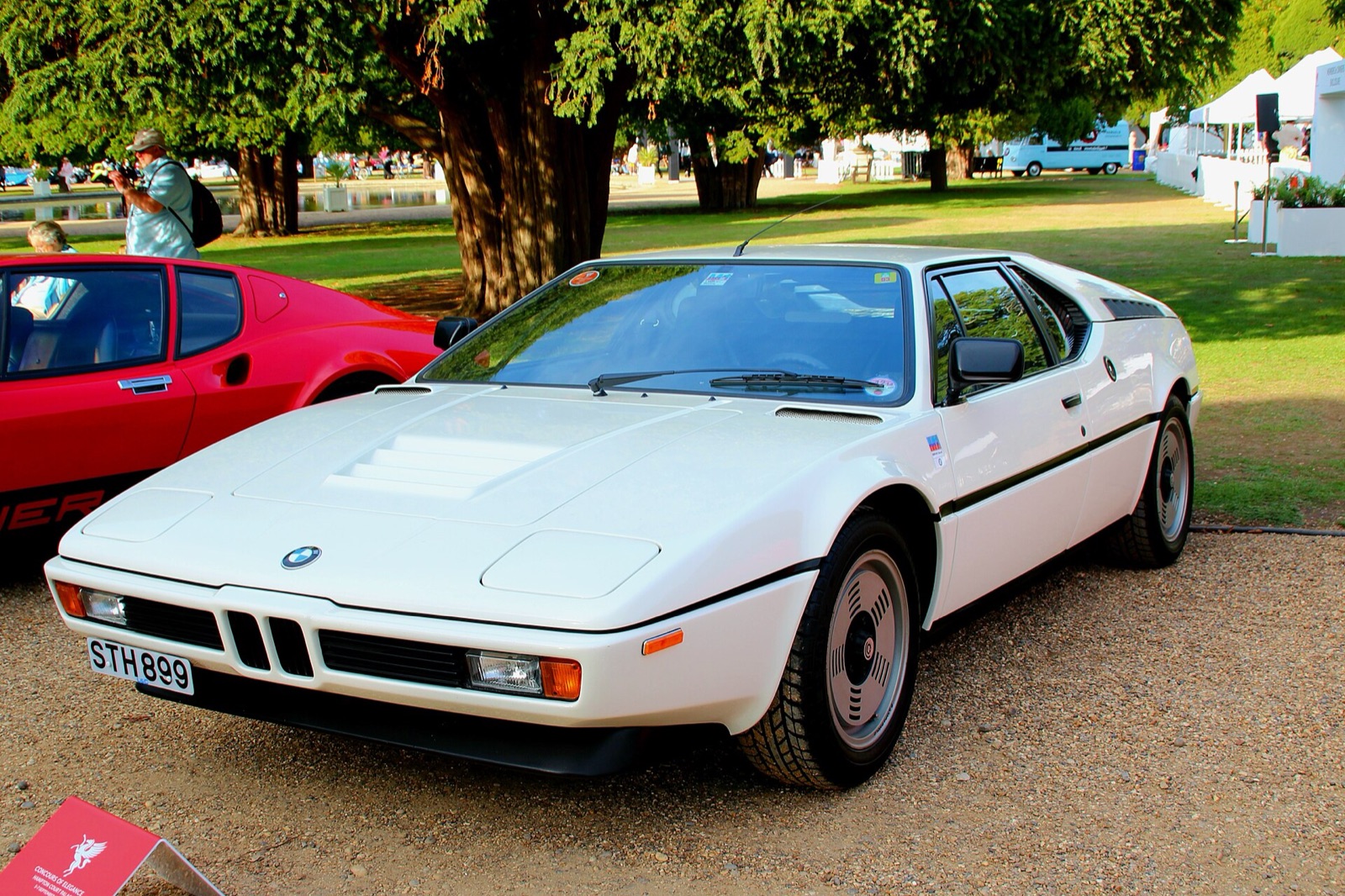
BMW’s only purpose-built mid-engine supercar, styled by Giugiaro over a chassis developed with Lamborghini. Homologation chaos meant it never raced the class it was built for, so BMW invented the Procar series — Formula 1 stars racing identical M1s as a Grand Prix support act. Just 453 were made, and it launched the M badge as a standalone icon.
Fun fact
When Lamborghini’s finances derailed development, BMW took the project in-house and created a one-make Procar championship so the finished car had somewhere to race — with Niki Lauda and Nelson Piquet among the winners.
Design note
Giugiaro’s wedge, twin round lights behind a slatted grille, and the badge worn proudly on the tail — the M1 made “M” a promise.
Evolution
4 chapters across the years — scroll to explore.
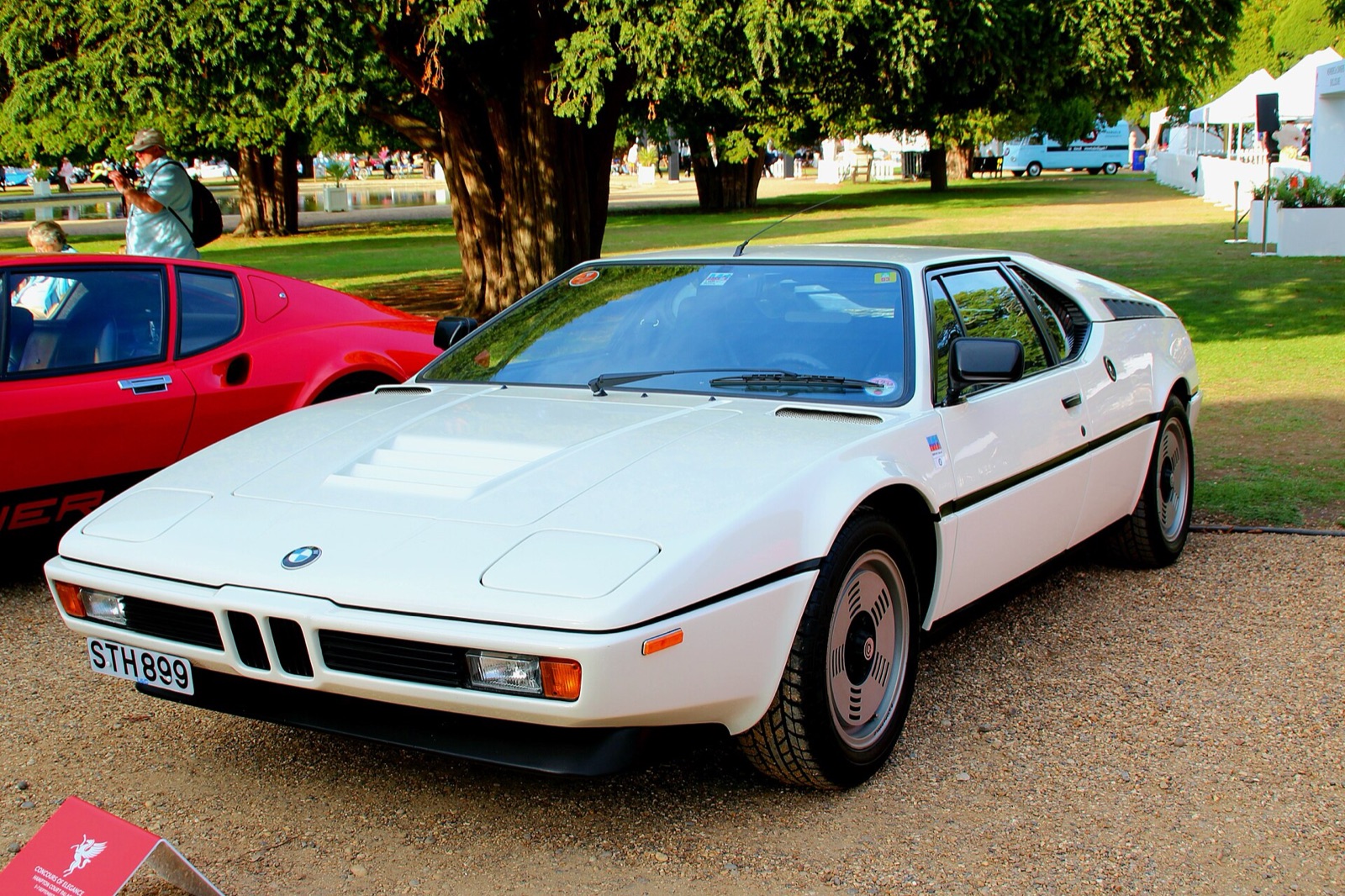
M1 Road Car (E26)
1978–1981
BMW's first and only mid-engined supercar of its era — a Giugiaro-penned wedge with a 277 PS Munich straight-six, hand-built in Italy and Germany in just 453 examples.
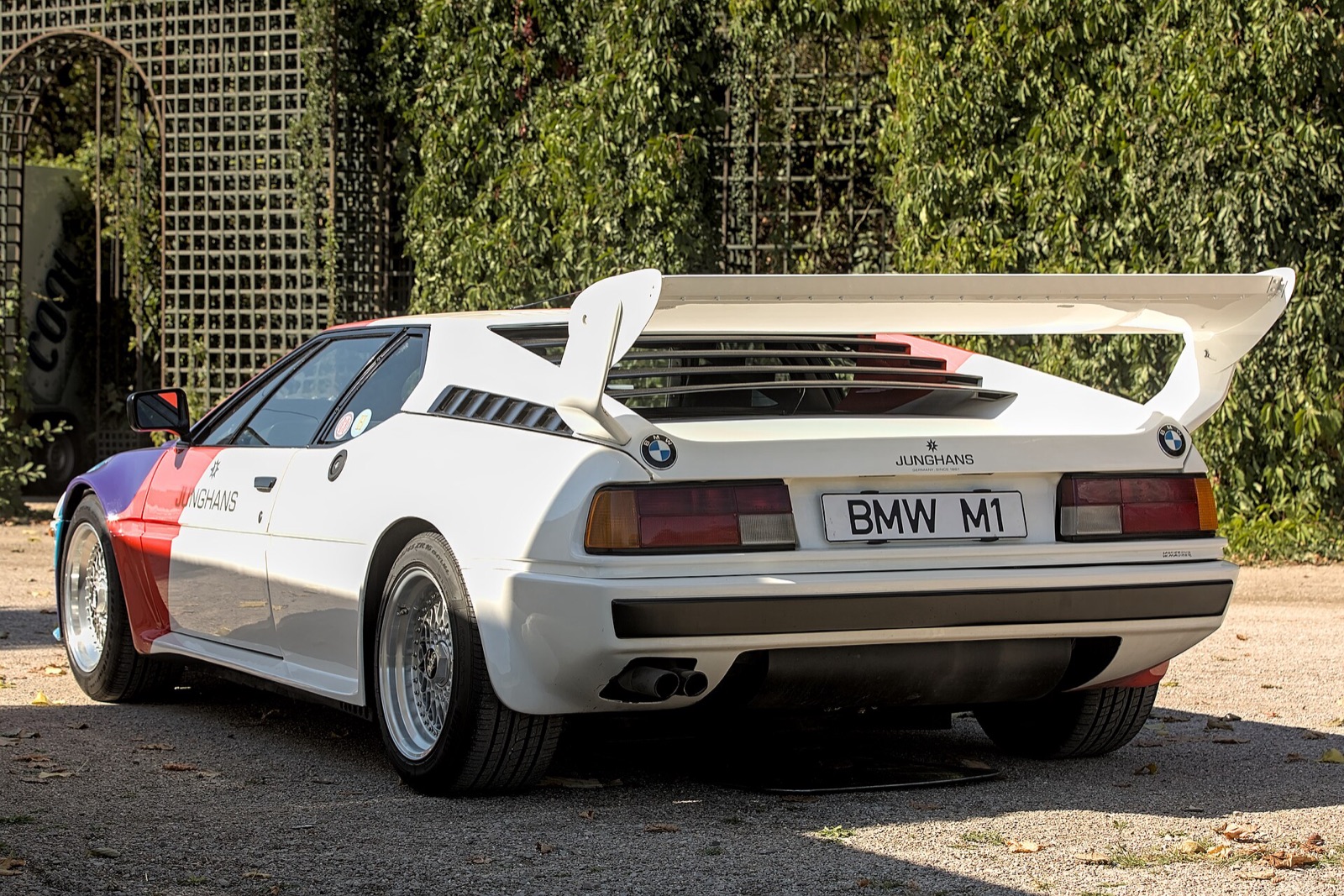
M1 Procar Championship
1979–1980
Neerpasch's genius one-make series pitted F1 aces like Lauda and Piquet against each other in identical 470 PS winged M1s as Grand Prix support races.
Group 4 Works Racer
1979–1986
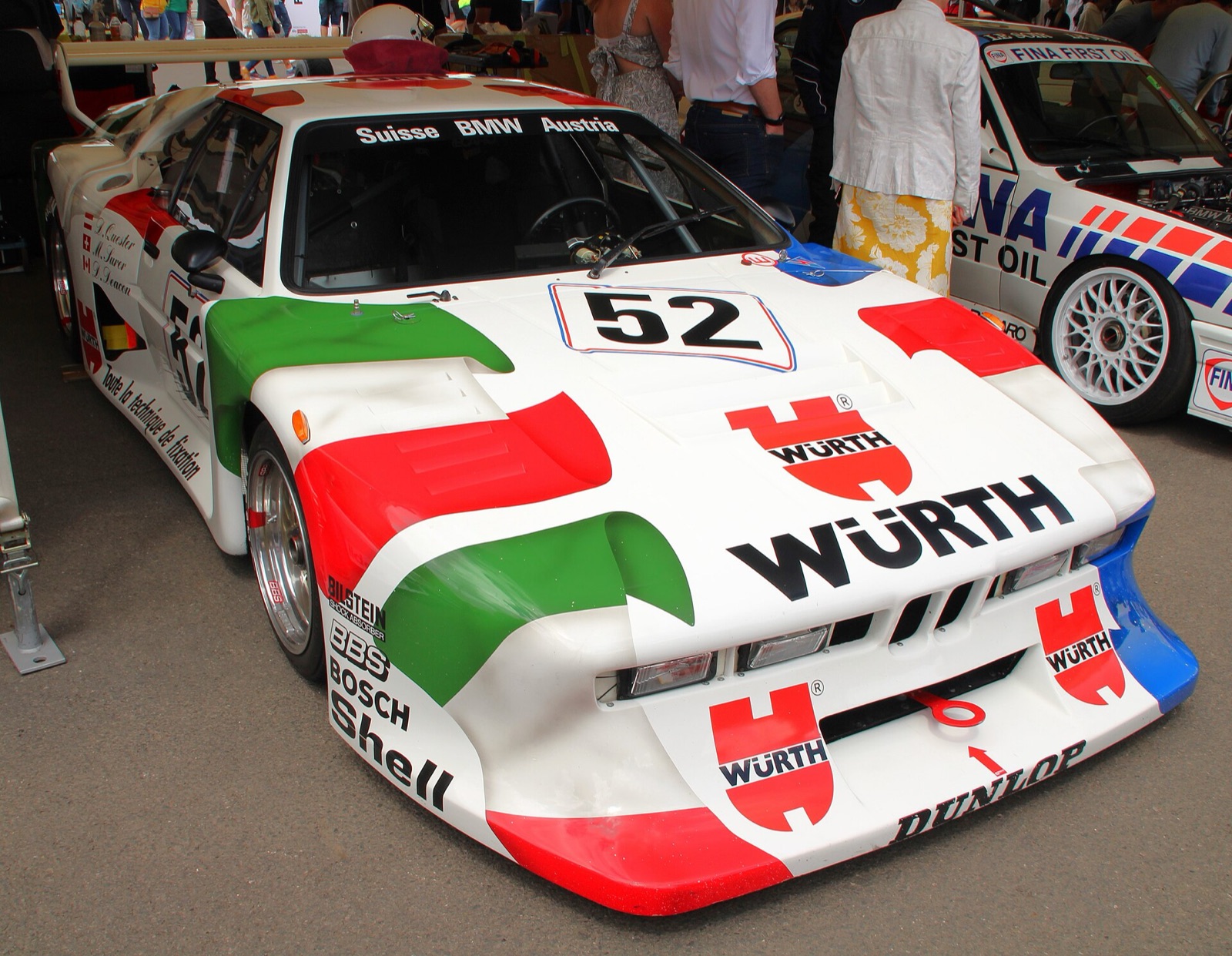
The homologation payoff — flared, be-winged M1s in sponsor liveries campaigned in Group 4 and at Le Mans right through 1986, where the shape stayed competitive against far newer machinery.
Andy Warhol Art Car
1979
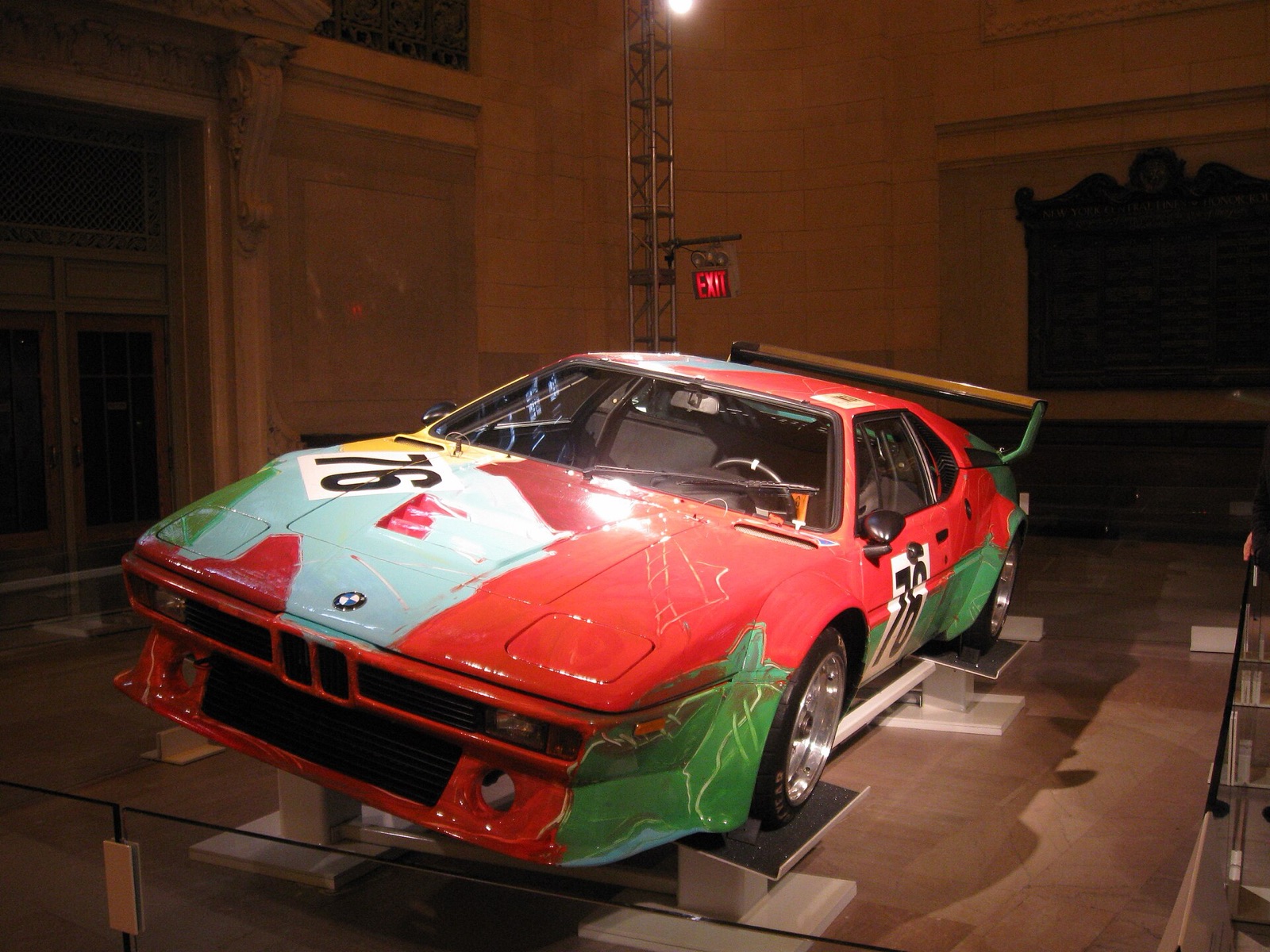
Warhol hand-painted the fourth BMW Art Car himself in 28 minutes, then it charged to sixth overall at the 1979 24 Hours of Le Mans — art and endurance racing in one wild machine.
Imagery via Wikimedia Commons
The M Era · 1975–1993
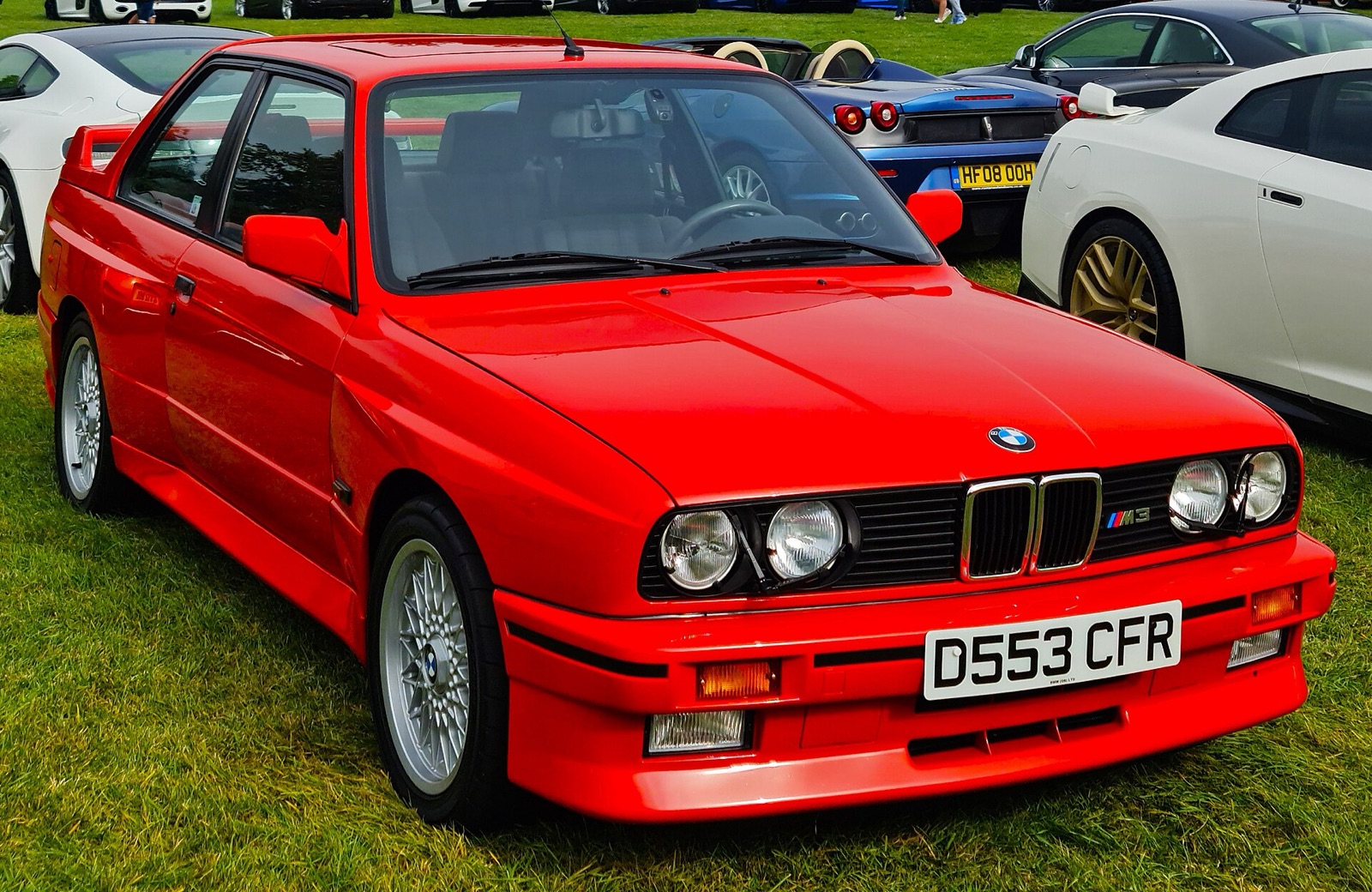
The original M3 existed to win touring-car championships — and became the most successful race car of its era. The high-revving S14 four, boxed arches, raised bootline and unique glass were all in service of homologation. On the road it was a race car with plates; on track it collected DTM, WTCC and countless national titles.
Fun fact
Almost every exterior panel differs from a normal E30 — even the rear window sits at a shallower angle and the bootlid is raised, purely to feed cleaner air to that tall rear wing.
Design note
Blistered arches and functional aero made “widebody with a purpose” a permanent part of the M vocabulary.
Evolution
5 chapters across the years — scroll to explore.
Base E30 M3
1986–1991
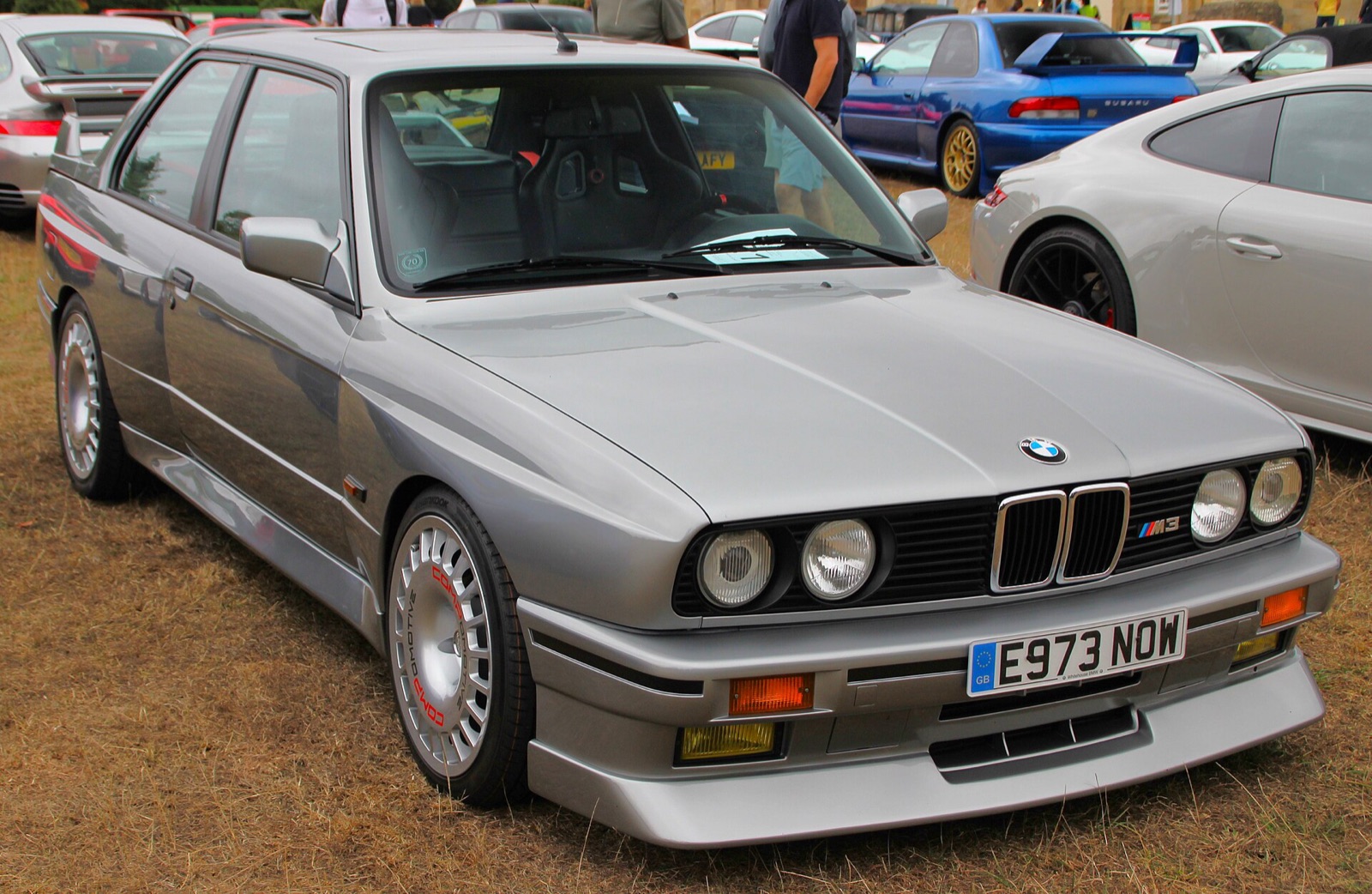
The homologation special that started it all — boxy fender flares, a glued-in flatter rear window, and a screaming 2.3-litre S14 four that revved to 7,250 rpm.
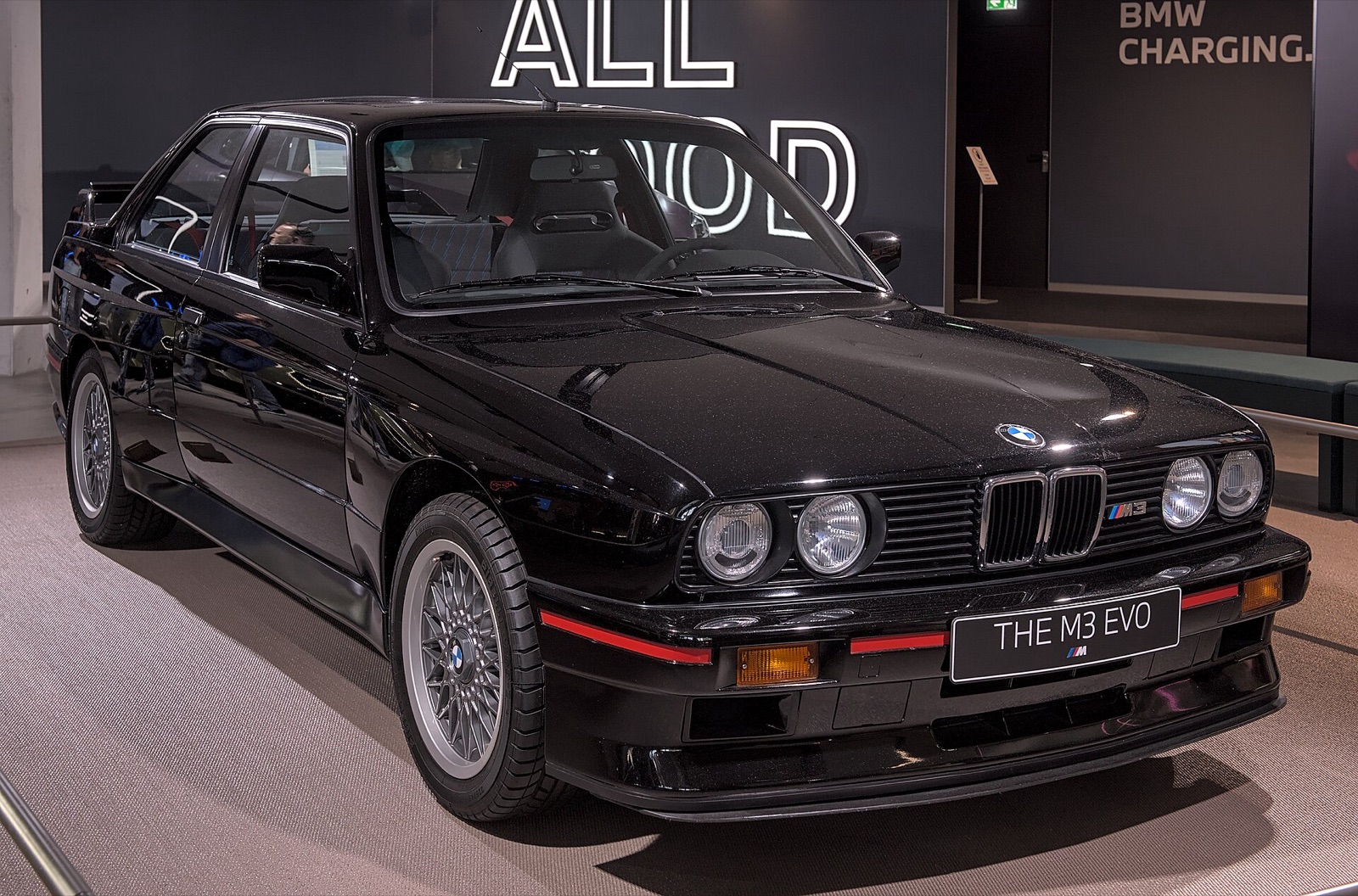
Evolution II
1988
Just 501 built to keep the M3 winning — hotter cams, 11:1 compression and 220 PS, plus a deeper air dam and taller rear wing with a trailing flap.
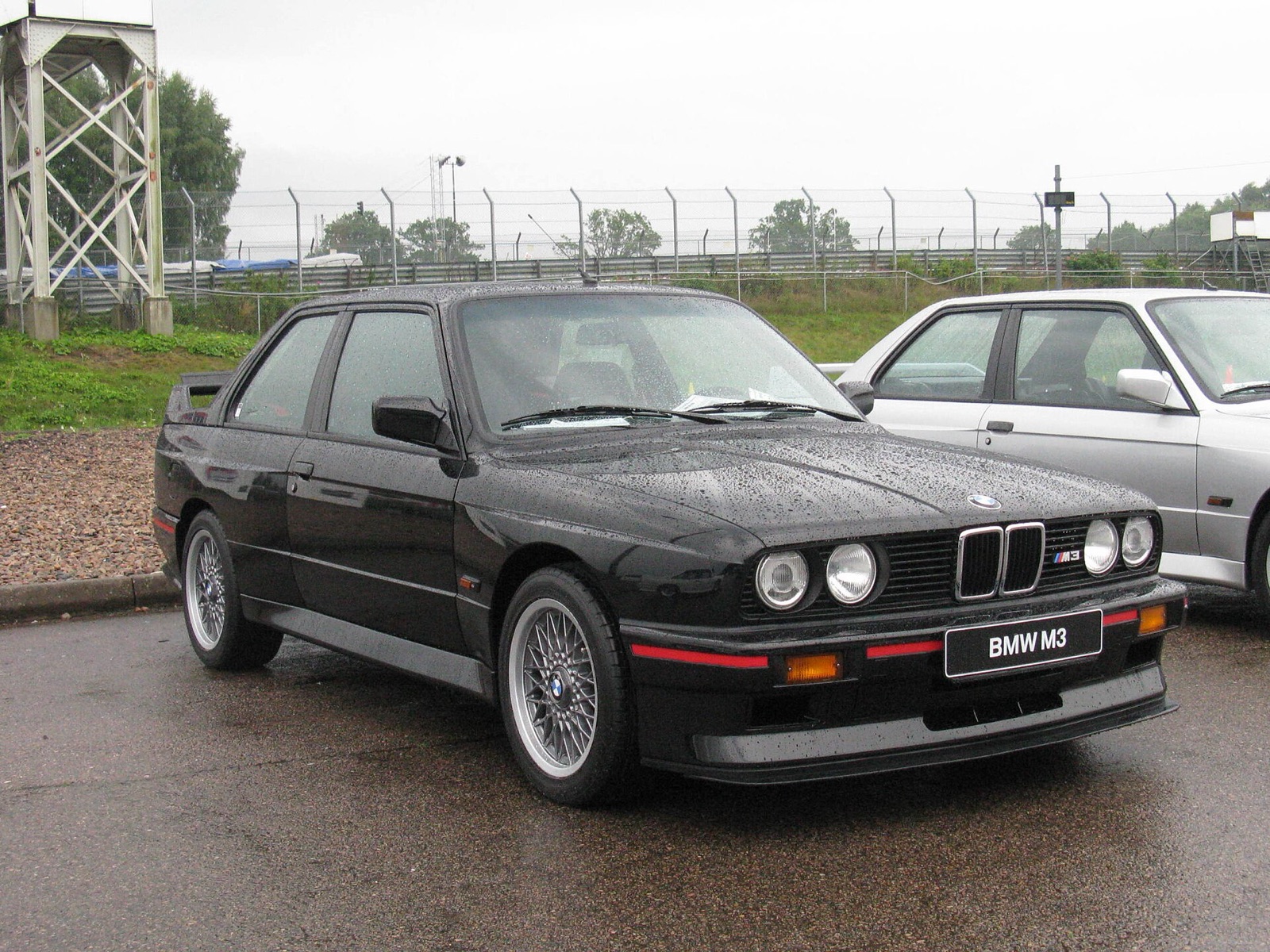
Sport Evolution
1990
The 600-off swan song — bored to 2.5 litres and 238 PS, with enlarged bumper vents and an adjustable multi-position front splitter and rear wing.
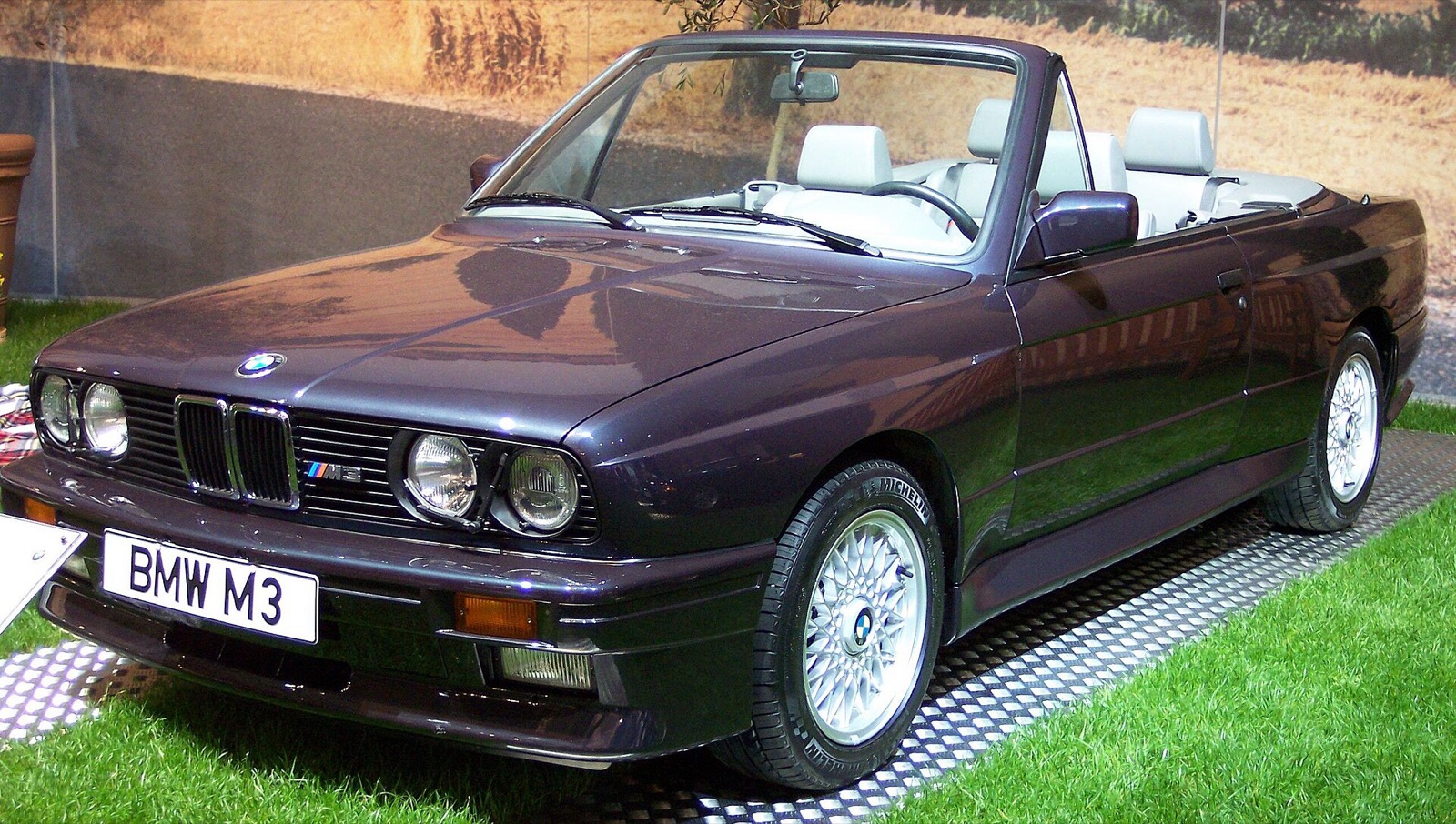
M3 Convertible
1988–1991
A rare hand-built drop-top M3 — all the S14 fury with the roof gone, produced in only tiny numbers alongside the coupe.
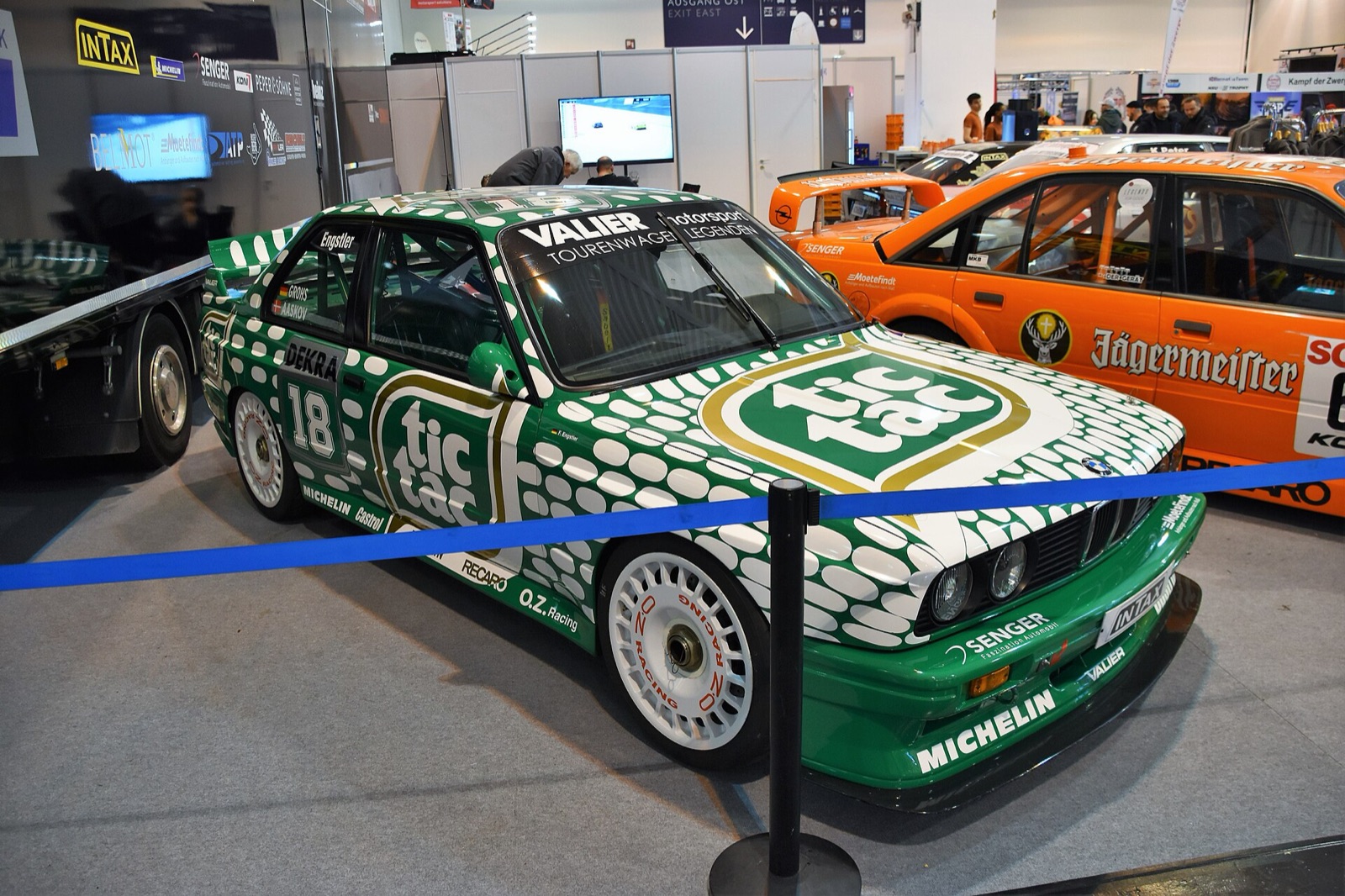
Group A / DTM race car
1987–1992
The reason the road cars existed — a giant-slaying touring car that grabbed the 1987 World and European titles and won Spa and the Nürburgring 24 Hours outright.
Imagery via Wikimedia Commons
The M Era · 1975–1993
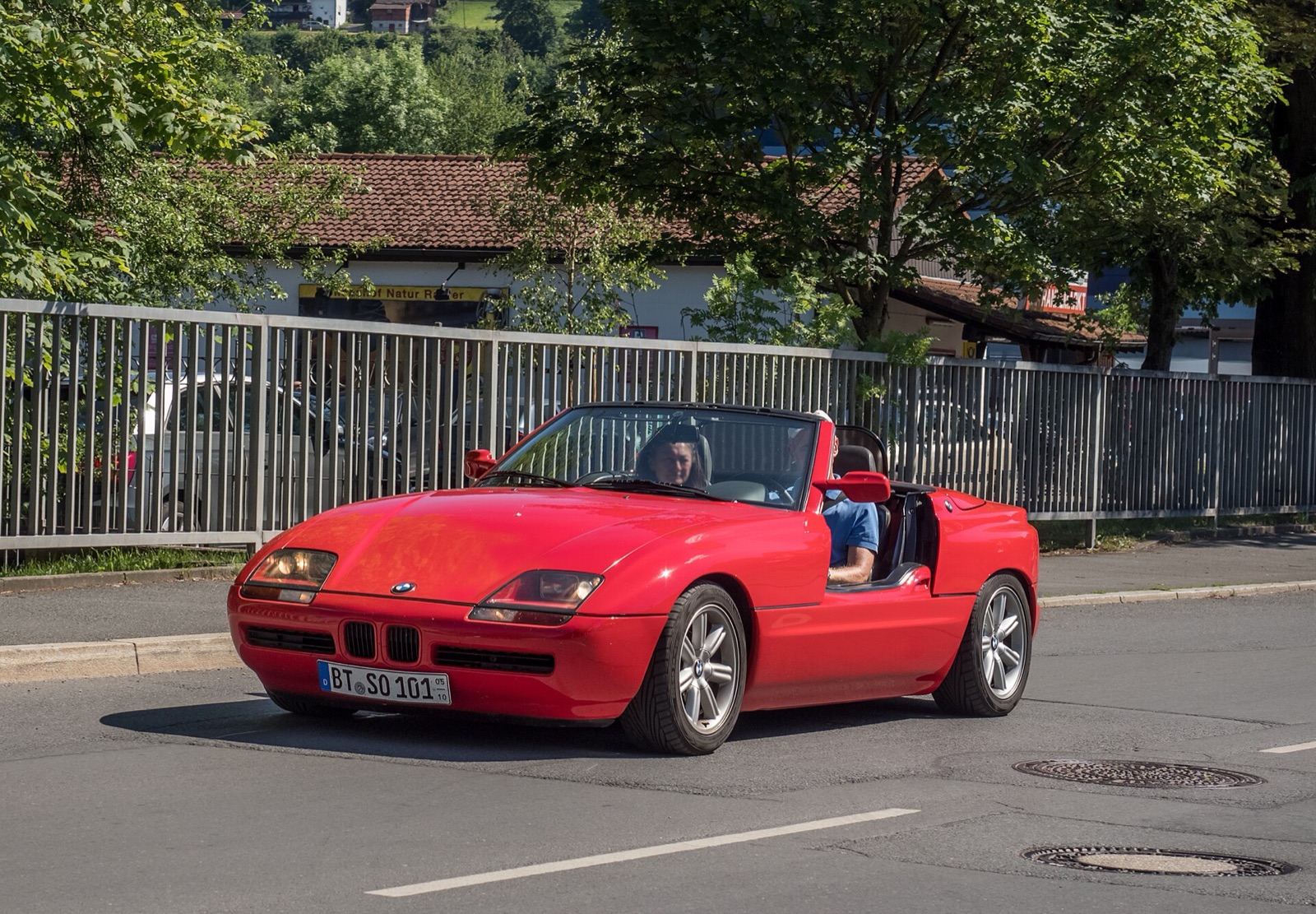
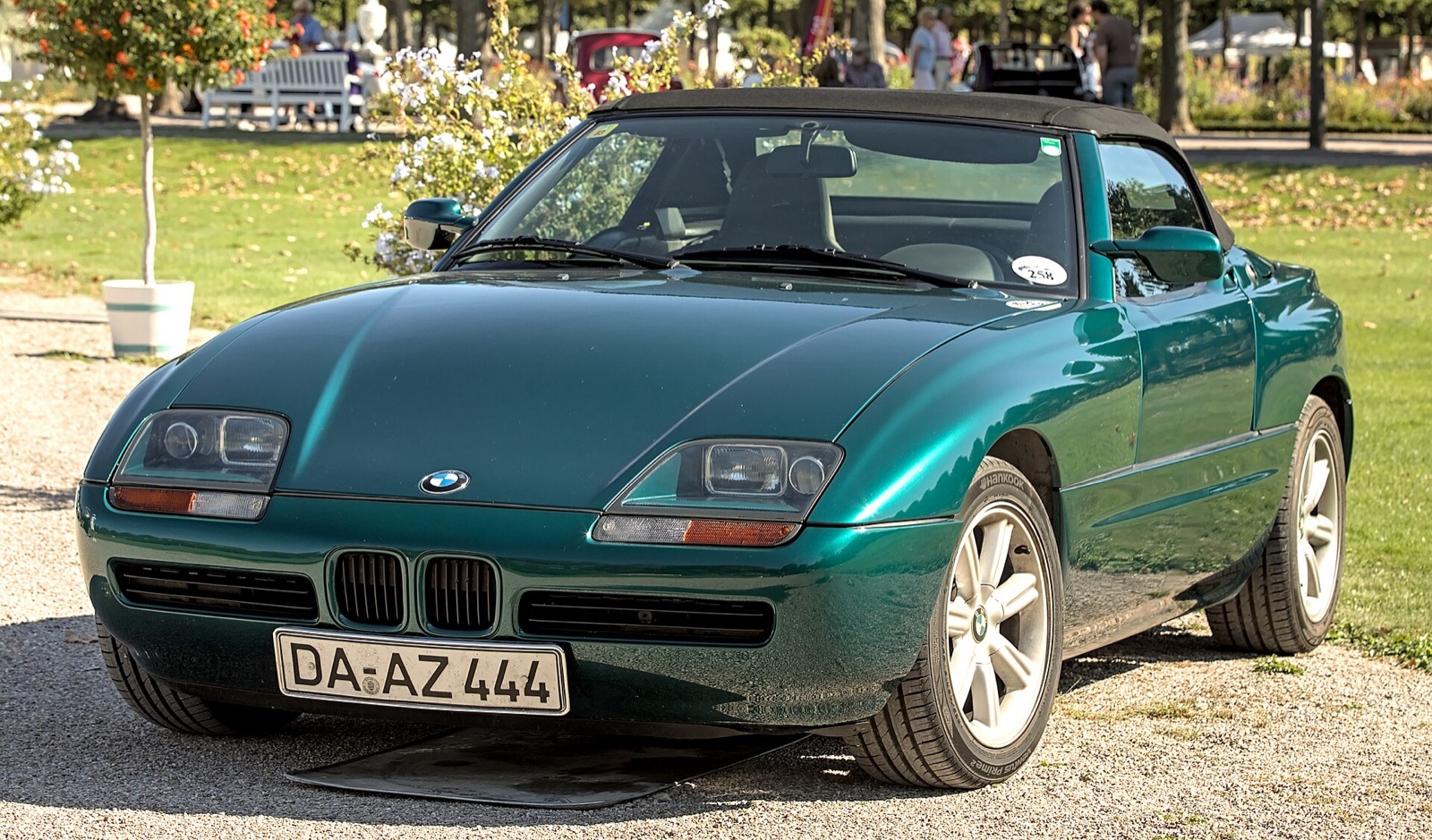
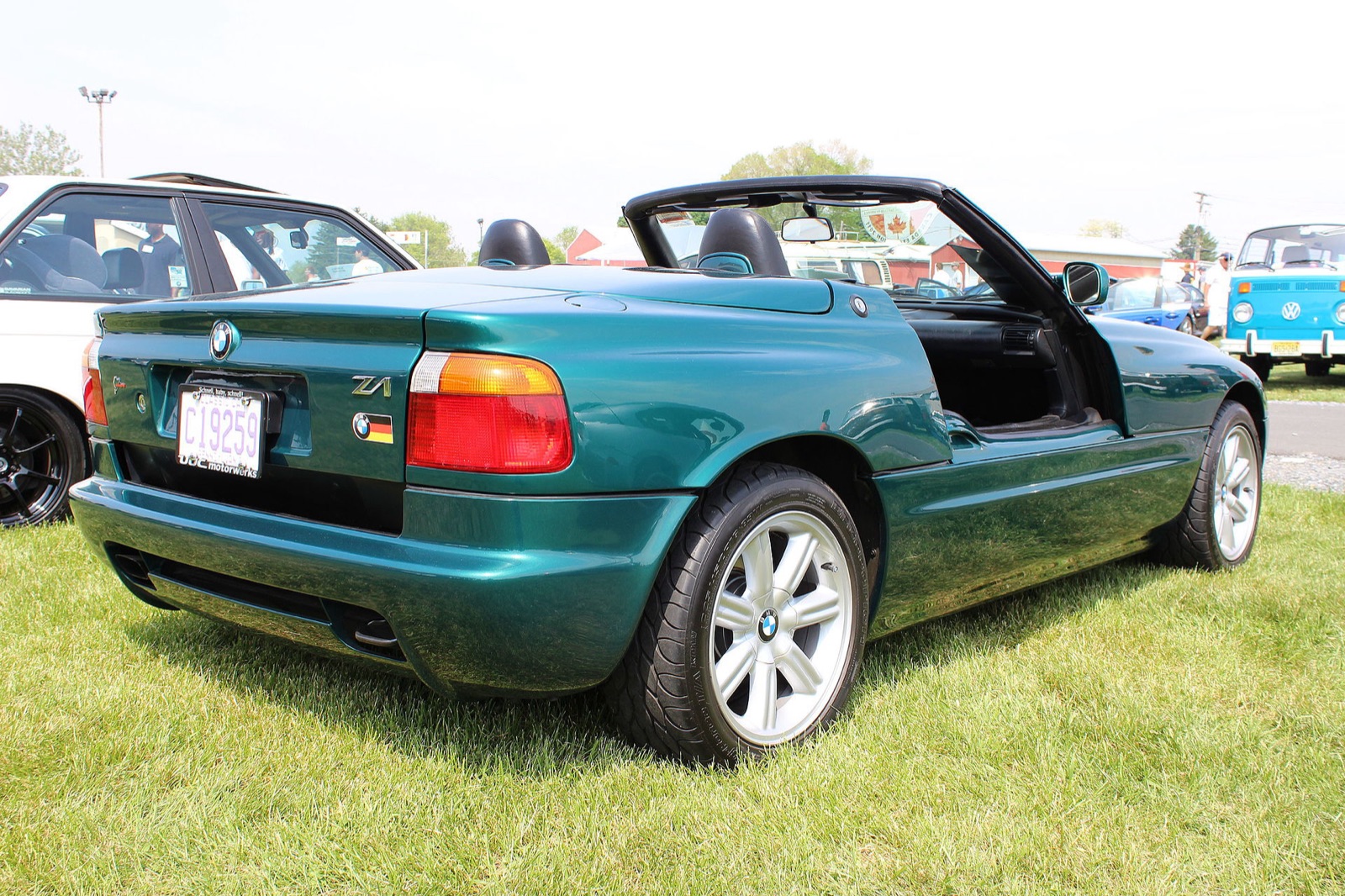
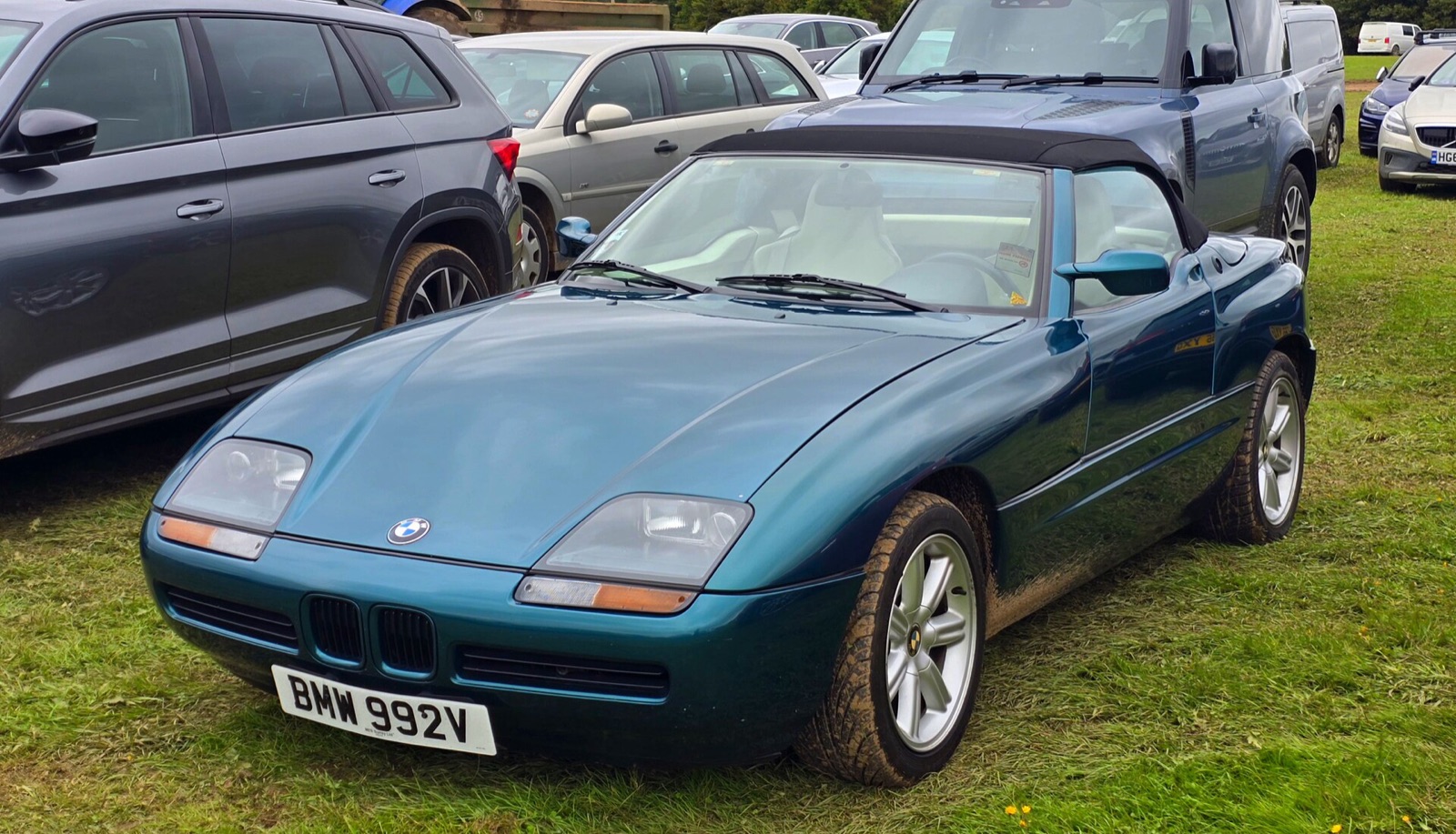
A technology showcase disguised as a roadster. The Z1’s doors didn’t swing — they dropped vertically down into the sills — and its plastic body panels were designed to be unbolted and swapped. Underneath sat a clever multilink rear axle that previewed BMW’s chassis thinking for the next decade.
Fun fact
You could legally drive the Z1 with its doors fully retracted into the bodywork, and BMW claimed the entire composite panel set could be swapped for a different colour in roughly 40 minutes. // VERIFY exact swap time (~40 min widely cited)
Design note
A rolling R&D lab: its Z-axle rear geometry shaped BMW handling long after the roadster itself faded away.
Evolution
4 chapters across the years — scroll to explore.
Z1 Roadster
1989–1991
BMW's first Z-car: exactly 8,000 hand-built two-seaters packing the E30 325i's 168-hp 2.5-litre straight-six behind a plastic-panelled, ground-effect body.
Drop-Down Doors
1989–1991
The party trick nobody's copied since: electric doors that slide straight down into the sills, and yes, you could legally drive it with them fully retracted.
Swappable Body Panels
1989–1991
Every plastic panel unbolts, so BMW pitched owning a spare set to change the car's colour on a whim — the whole body reskinned in a claimed 40 minutes.
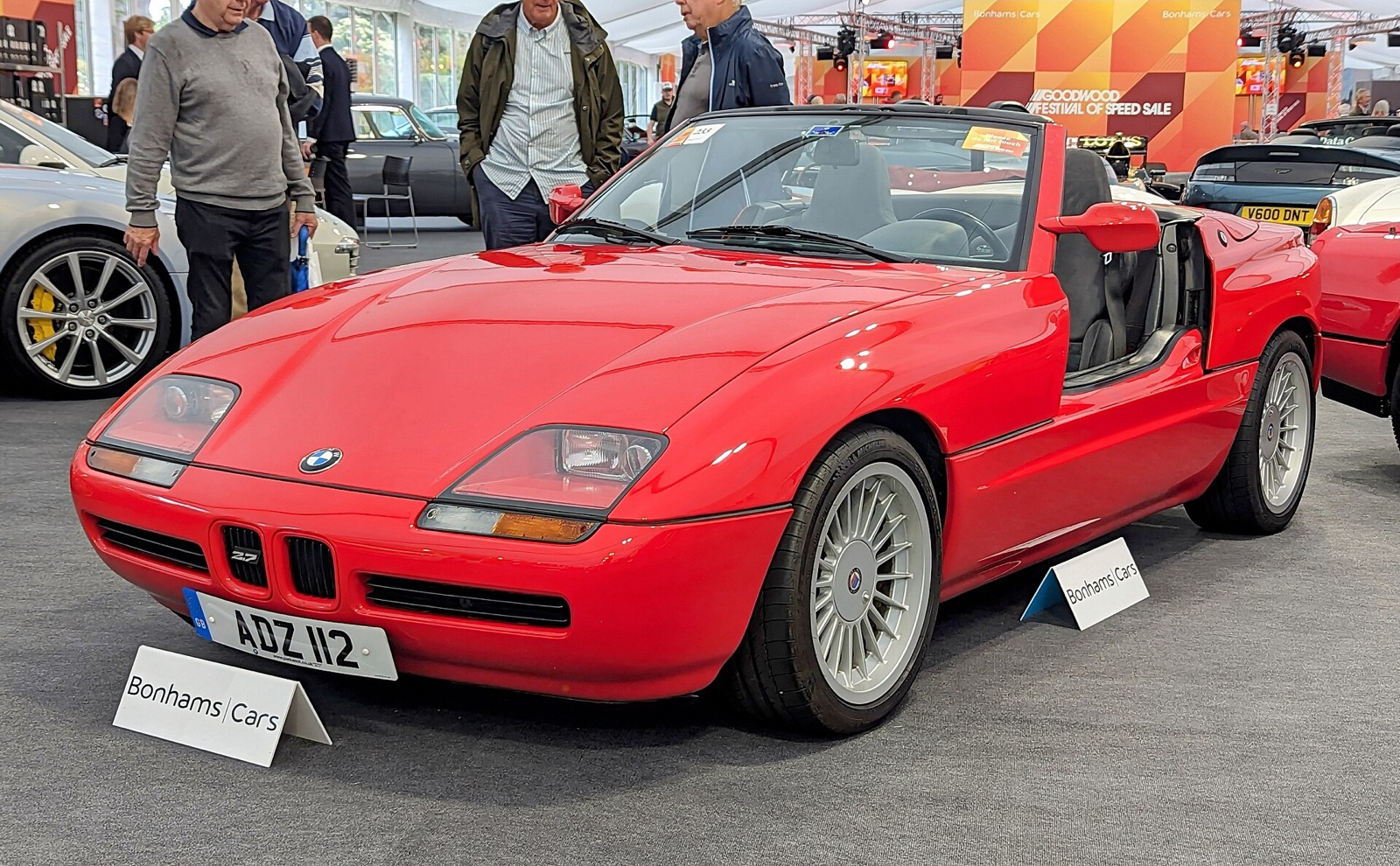
Alpina RLE
1989–1991
Alpina's rare Roadster Limited Edition wraps the Z1 in bespoke multi-spoke wheels and its own tuning, the ultimate hen's-tooth spec of an already tiny production run.
Imagery via Wikimedia Commons
The M Era · 1975–1993
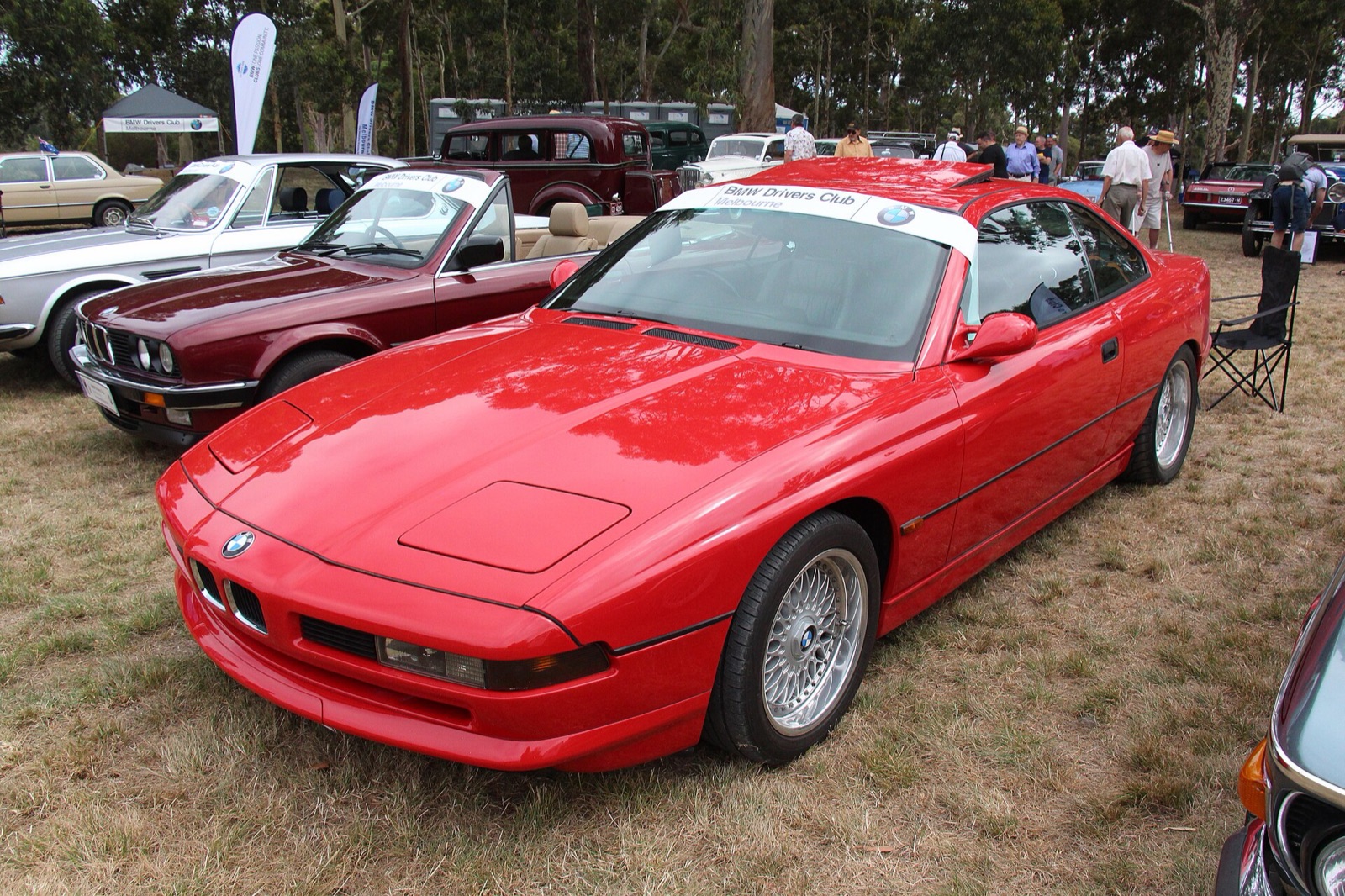
BMW’s pillarless grand tourer arrived as a statement of ambition — pop-up headlights, a multilink rear axle, and a silky V12 you could pair with a six-speed manual. Expensive and complex, it was a slow seller in its day and a cult hero now.
Fun fact
The E31 was one of the first cars developed largely with CAD, and its V12 was famed for turbine smoothness — the flagship 850CSi remains one of the great analogue GTs. // VERIFY “coin balanced on running engine” demo is anecdotal — omitted
Design note
Pop-up lights over a wide, low wedge — the E31 is where BMW’s grand-touring flagship language begins.
Evolution
4 chapters across the years — scroll to explore.
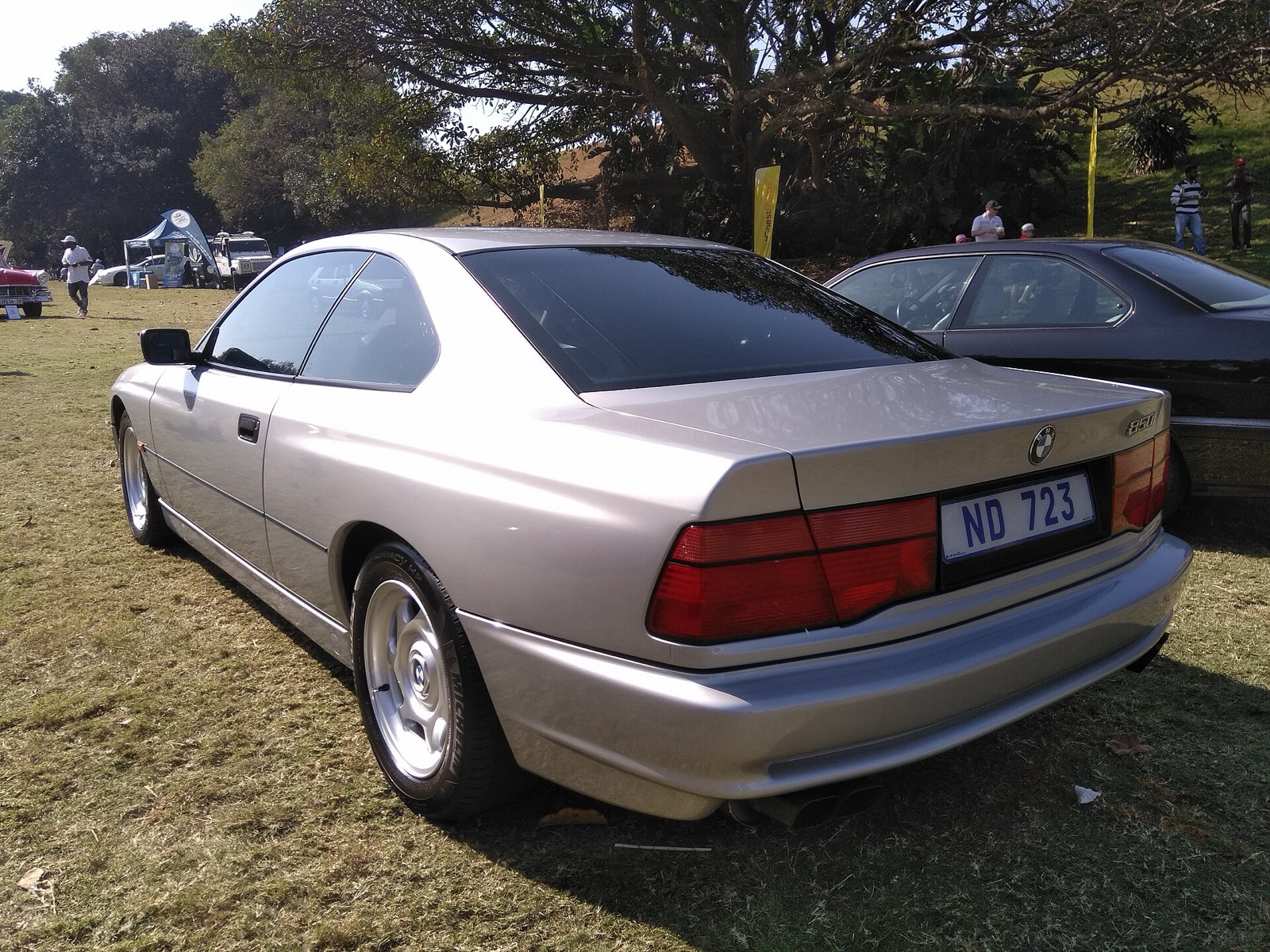
850i / 850Ci
1990–1999
The car that launched the range — a 5.0-litre M70 V12 you could pair with a six-speed manual, wrapped in pillarless, pop-up-headlight bodywork with a slippery 0.29 drag coefficient.
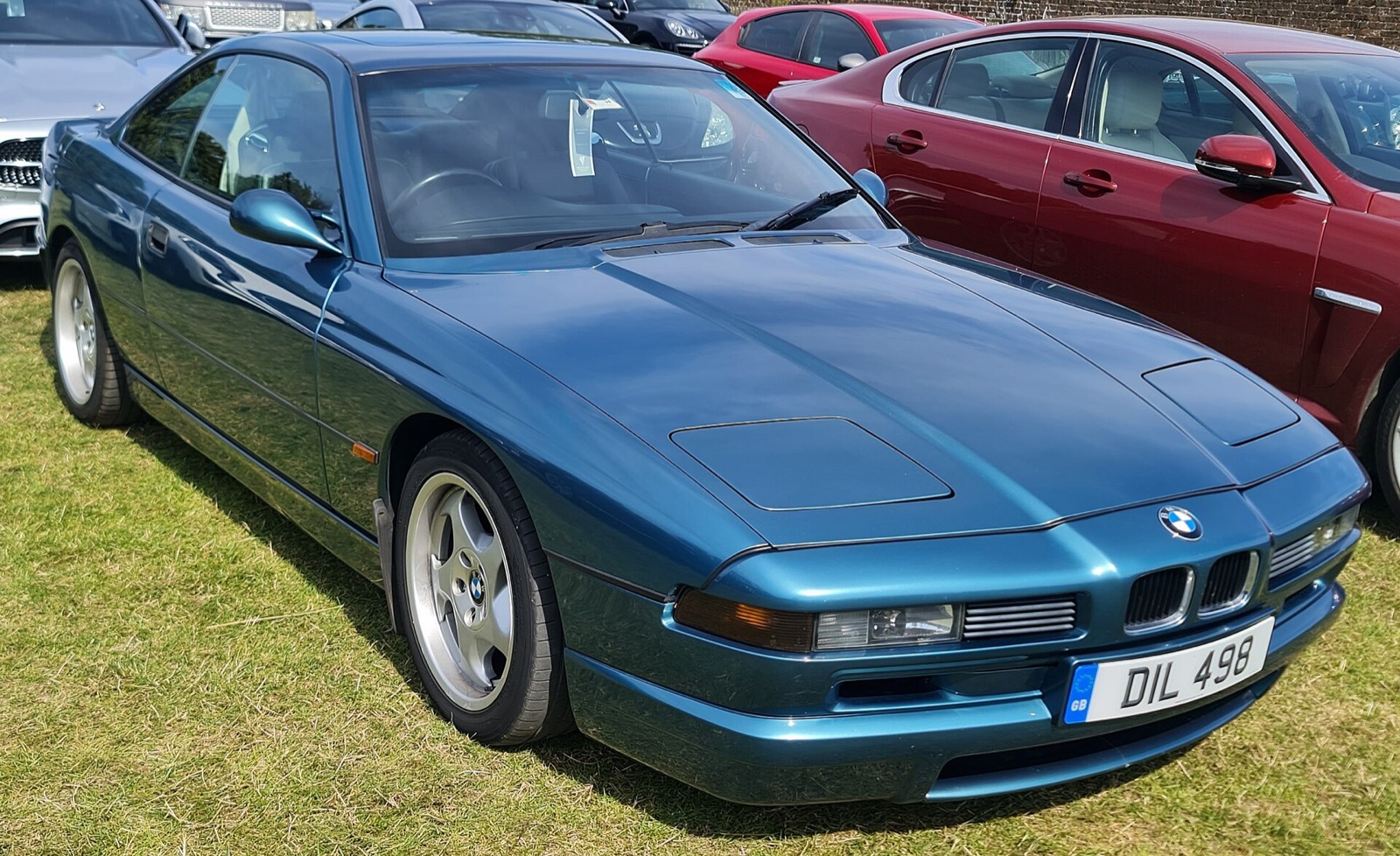
840Ci
1993–1999
The savvy V8 entry point — a 4.0- then 4.4-litre M60/M62 that traded two cylinders for better economy, given away only by its quad round exhaust tips versus the V12's square pair.
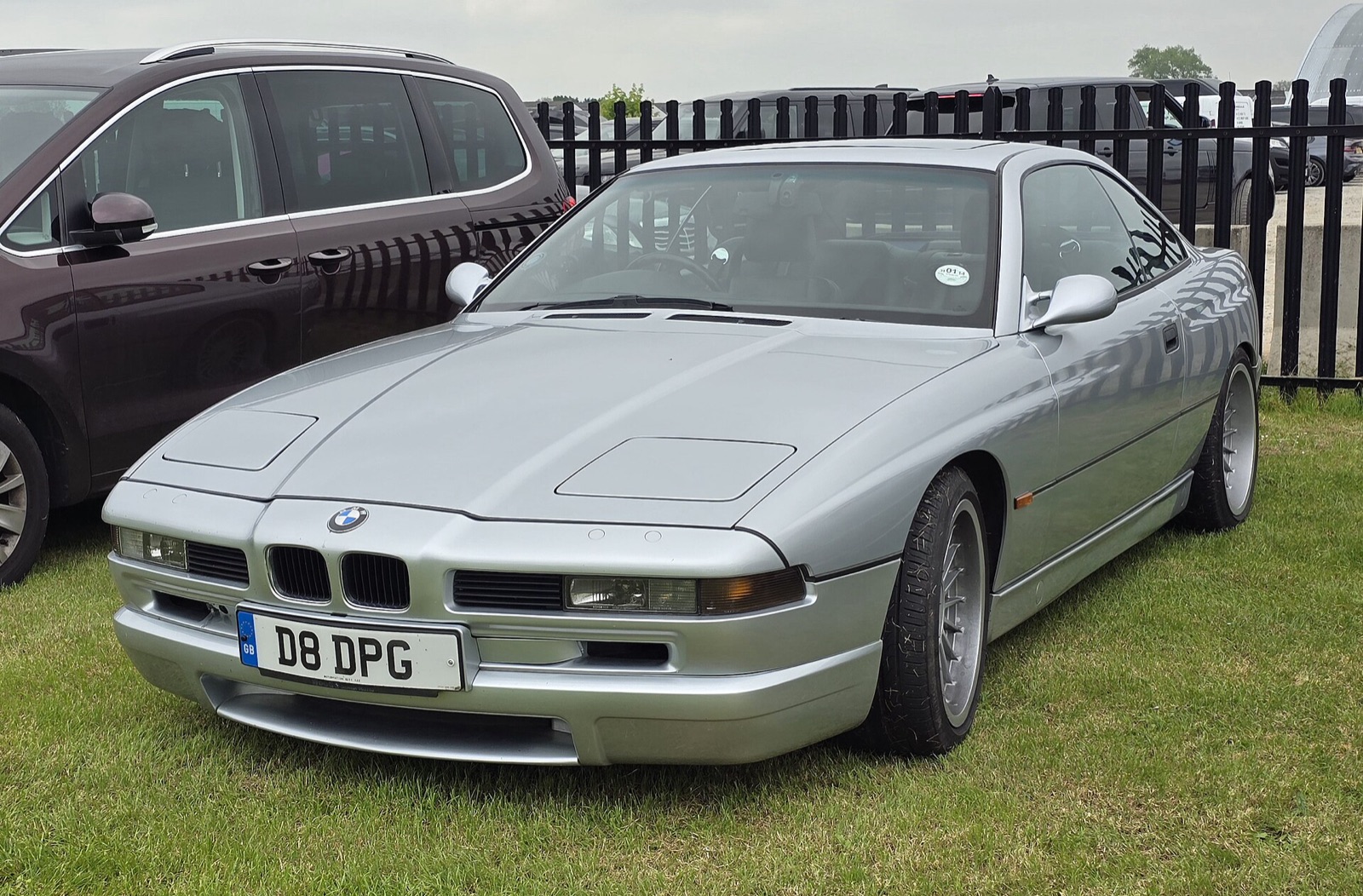
850CSi
1992–1996
The M8 that never was — M division bored the V12 to 5.6 litres and 381 hp, dropped the ride height, added rear-wheel steering and throwing-star wheels, and offered it only with a manual.
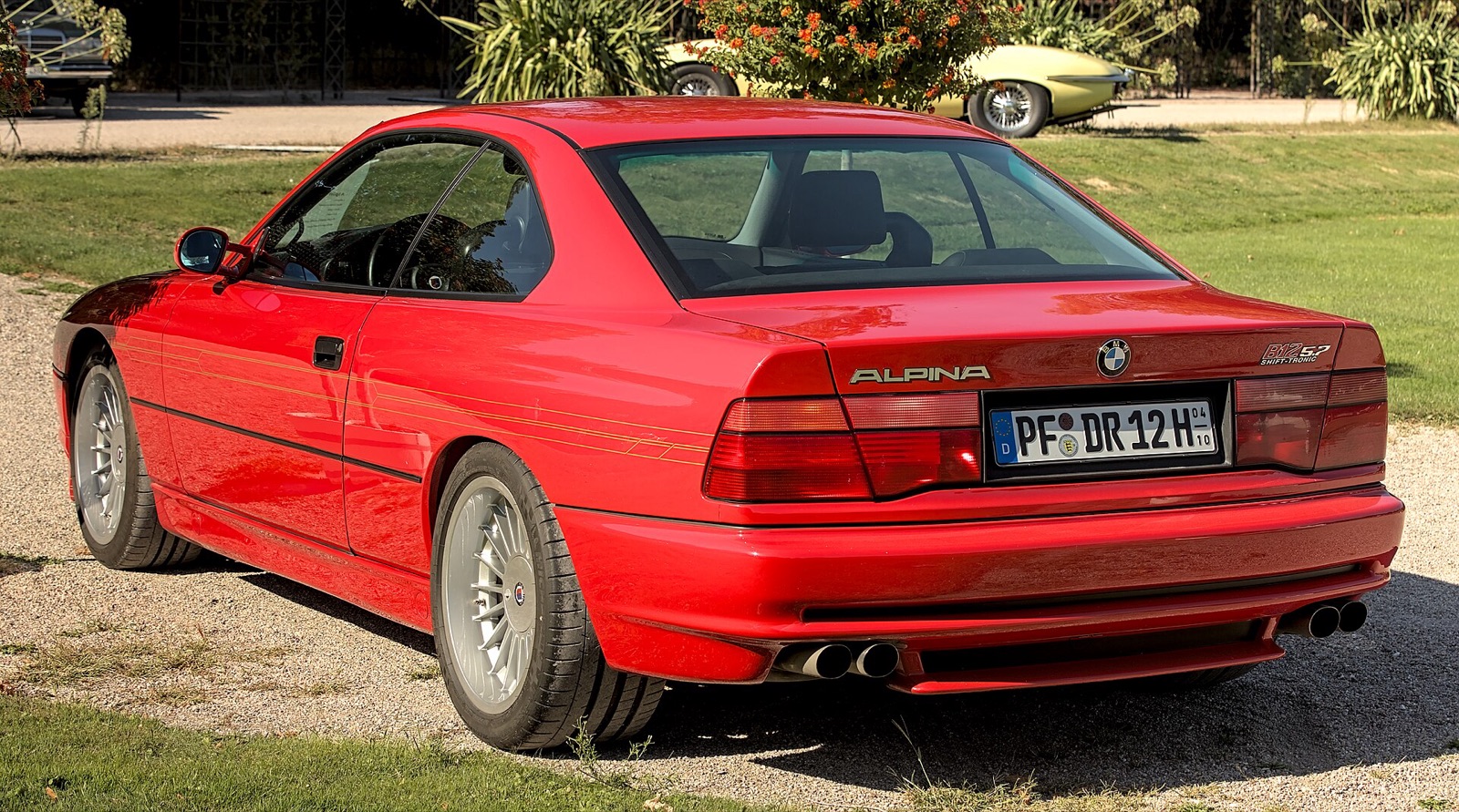
Alpina B12
1990–1996
Buchloe's take on the flagship — the B12 5.0 massaged the V12 to 350 hp, and the manual-only B12 5.7 bored the CSi engine out to 5.7 litres and 416 hp with a NACA-ducted carbon bonnet.
Imagery via Wikimedia Commons
The Electric Era & Now · 2013–2026
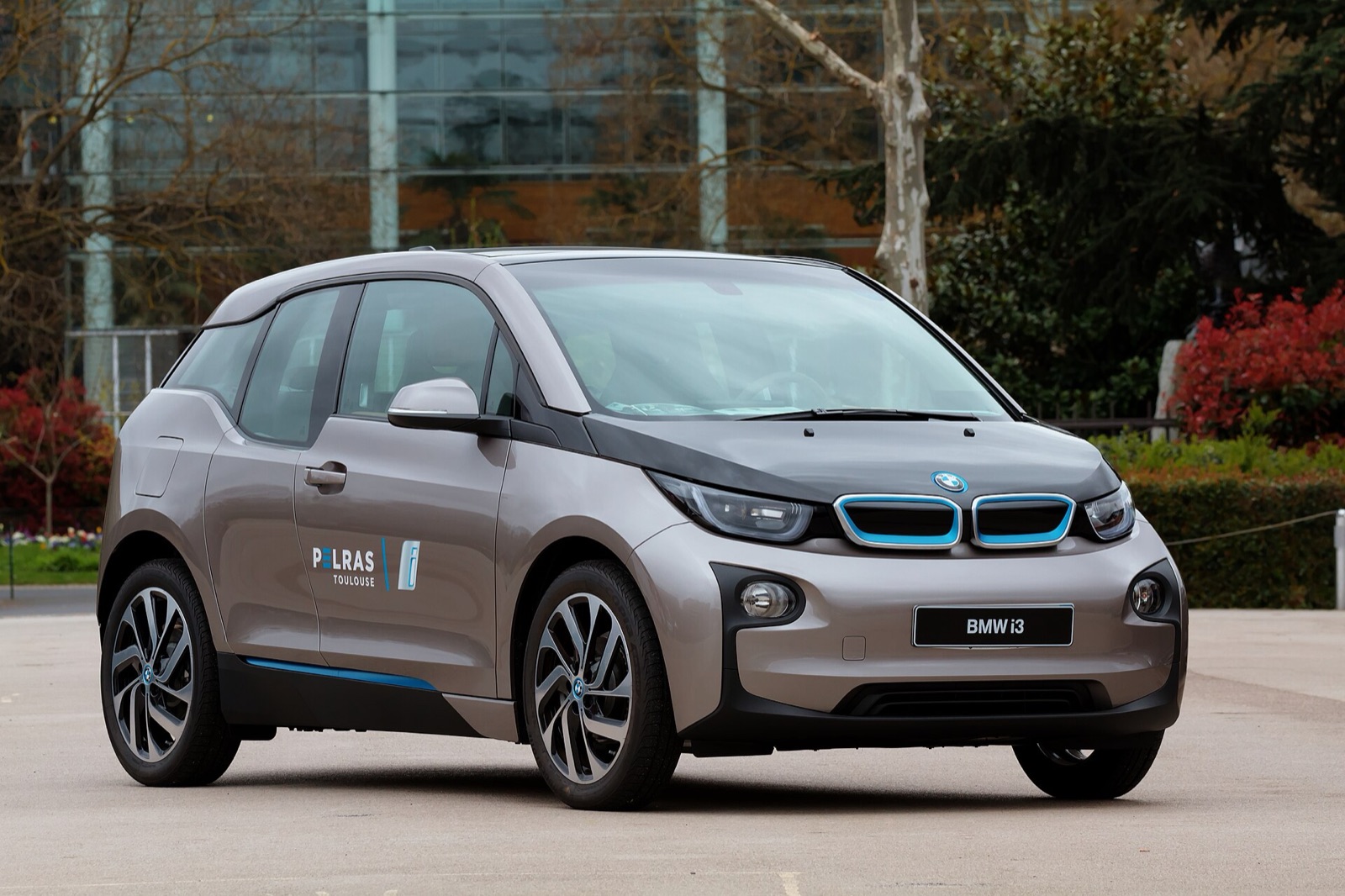
BMW’s carbon-fibre moonshot. The i3 was built around a bespoke carbon-fibre-reinforced-plastic passenger cell on an aluminium “skateboard” — the first mass-produced car with a CFRP body structure — driven by a rear-mounted motor, with rear-hinged coach doors and a recycled, open-pore cabin.
Fun fact
Its optional “range extender” was a tiny two-cylinder scooter engine that only ever charged the battery — it never once drove the wheels.
Design note
Sustainability made visible: exposed carbon weave, recycled fibres and a clean “i” face that split BMW’s EV identity from its combustion cars.
Evolution
5 chapters across the years — scroll to explore.
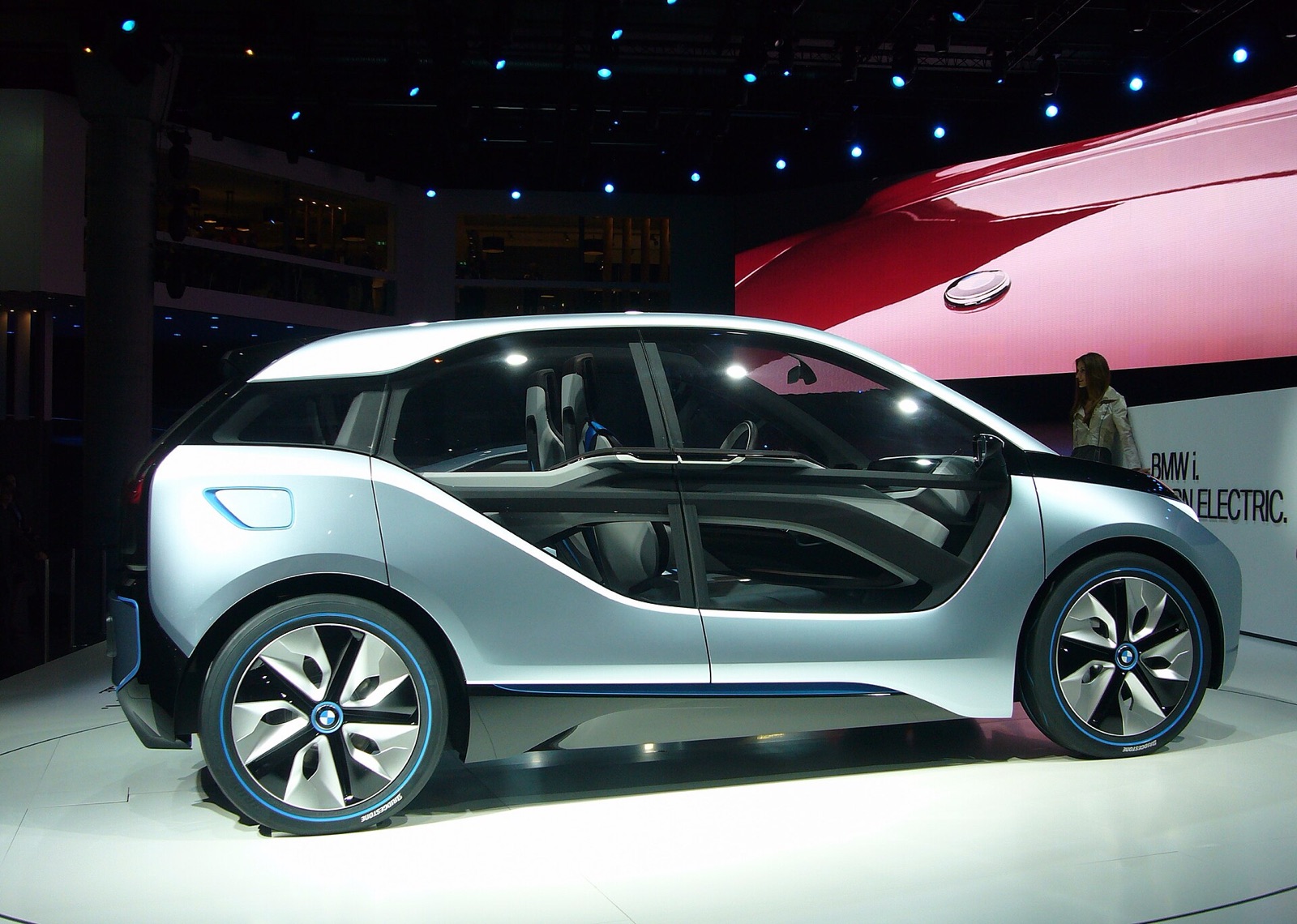
i3 Concept
2011–2012
The IAA show car that previewed BMW's electric future — a carbon-fibre Life Module on an aluminium skateboard, blue-rimmed wheels and coach doors and all.
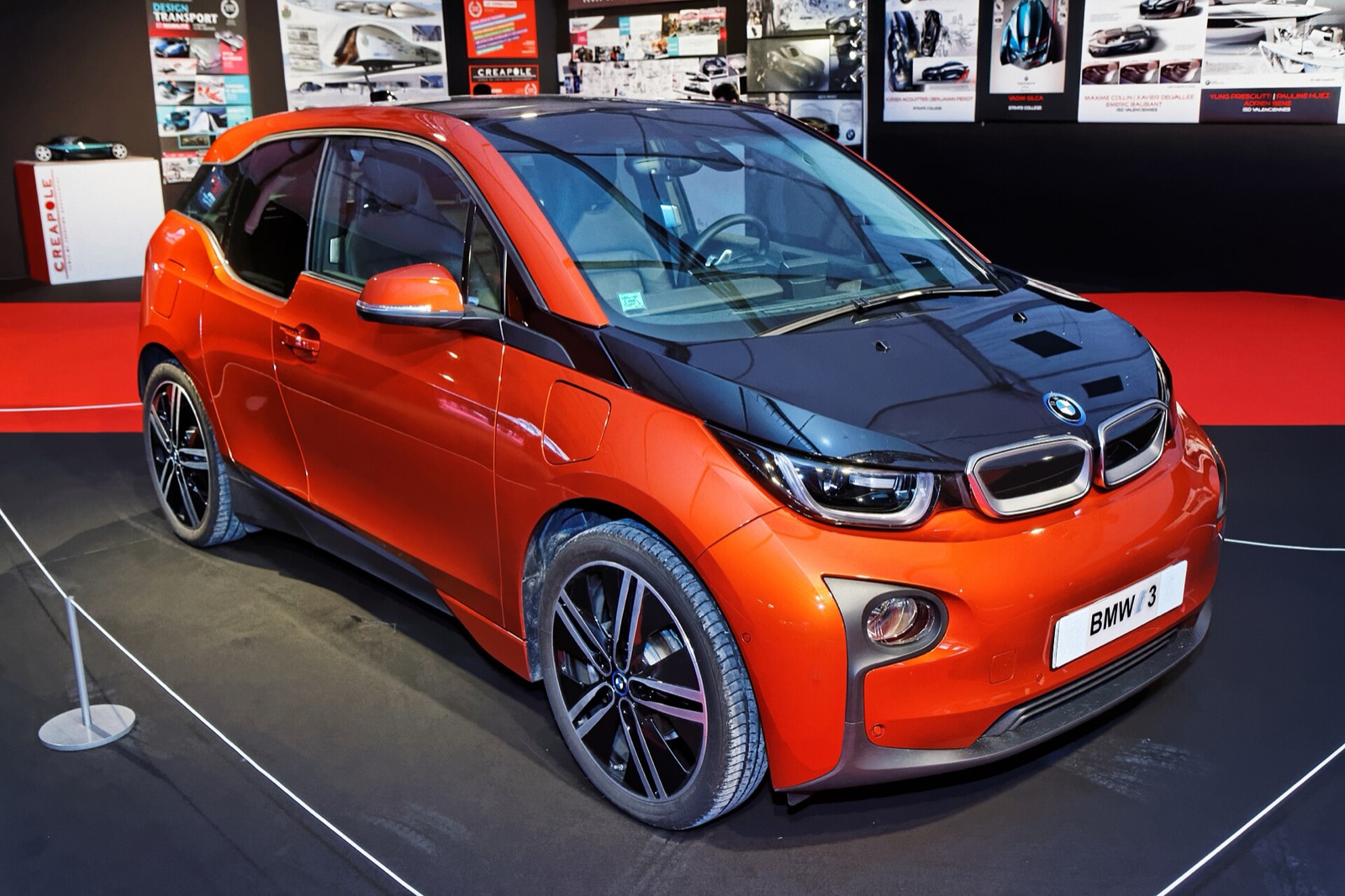
i3 (60 Ah launch)
2013–2016
The production debut and BMW's first zero-emissions car — a rear-drive 22 kWh EV wrapped in a CFRP body, with an optional two-cylinder REx scooter engine to kill range anxiety.
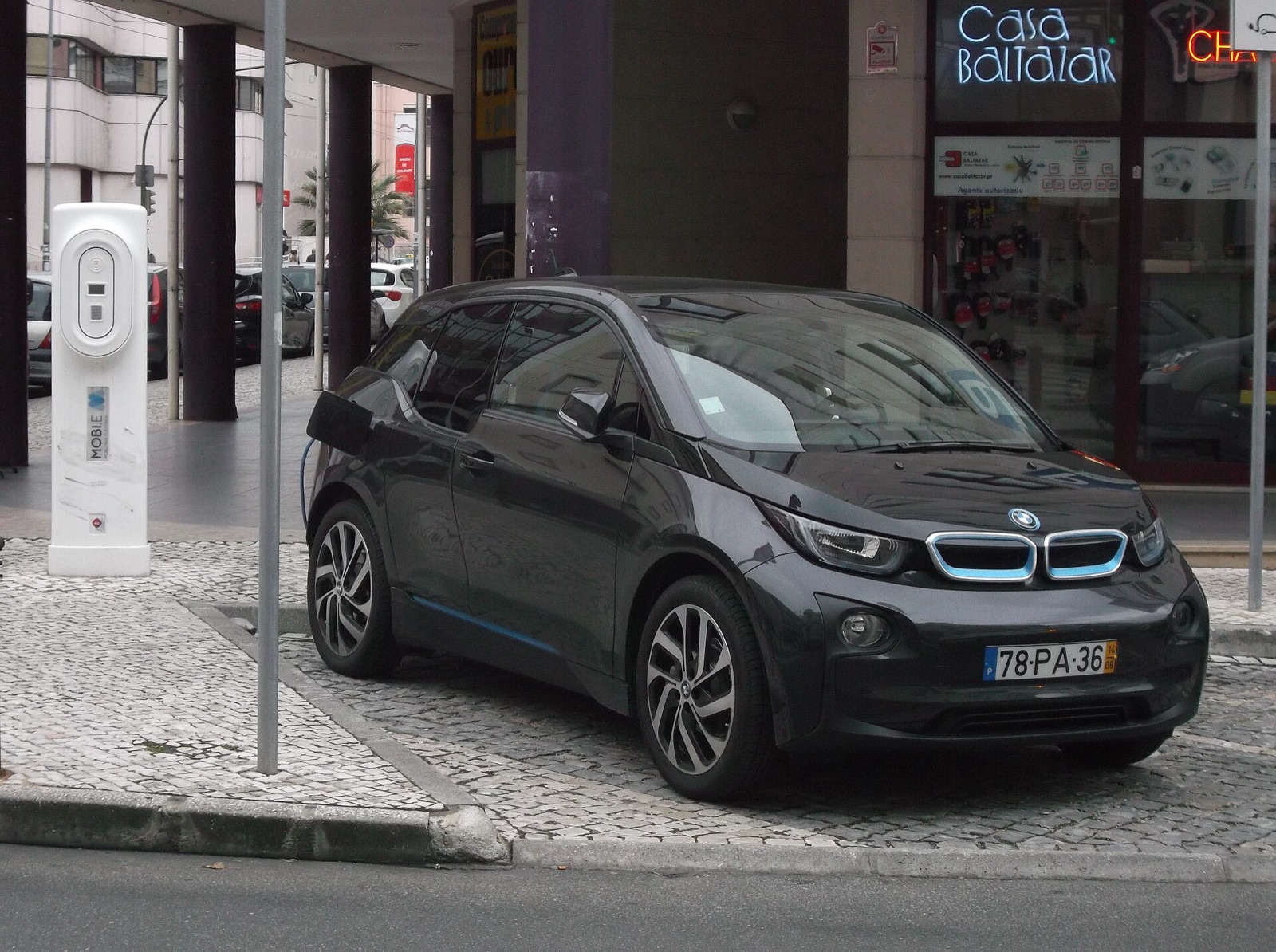
i3 (94 Ah / 33 kWh)
2016–2018
Same body, bigger heart — new Samsung cells packed 50% more energy into the identical case, roughly doubling real-world range without gaining a millimetre.
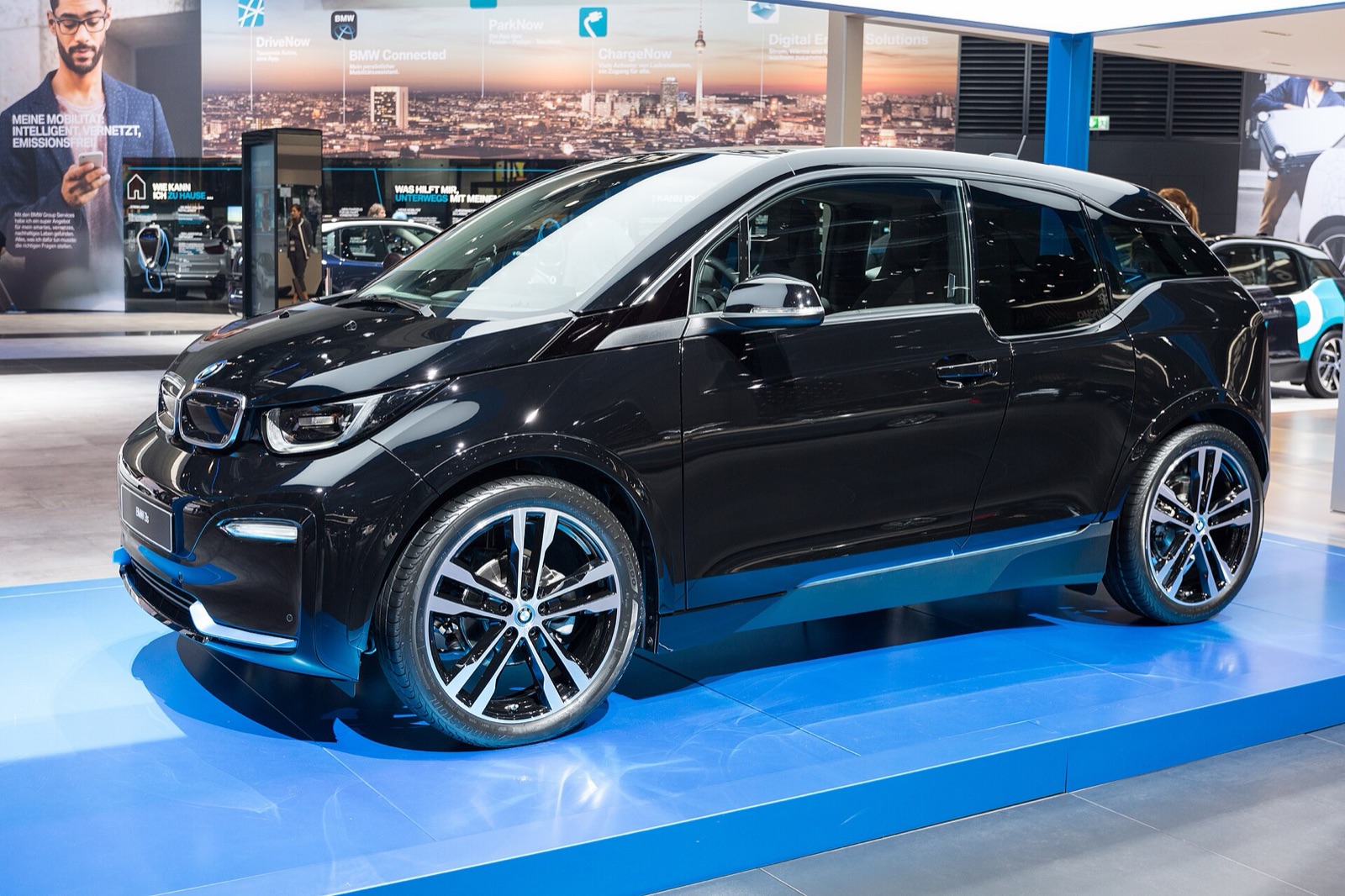
i3s
2017–2022
The sporty one — 184 hp, a Sport mode, 20 mm wider tracks with flared arches and blacked-out trim on fat 20-inch wheels, giving the tall EV a proper hot-hatch stance.
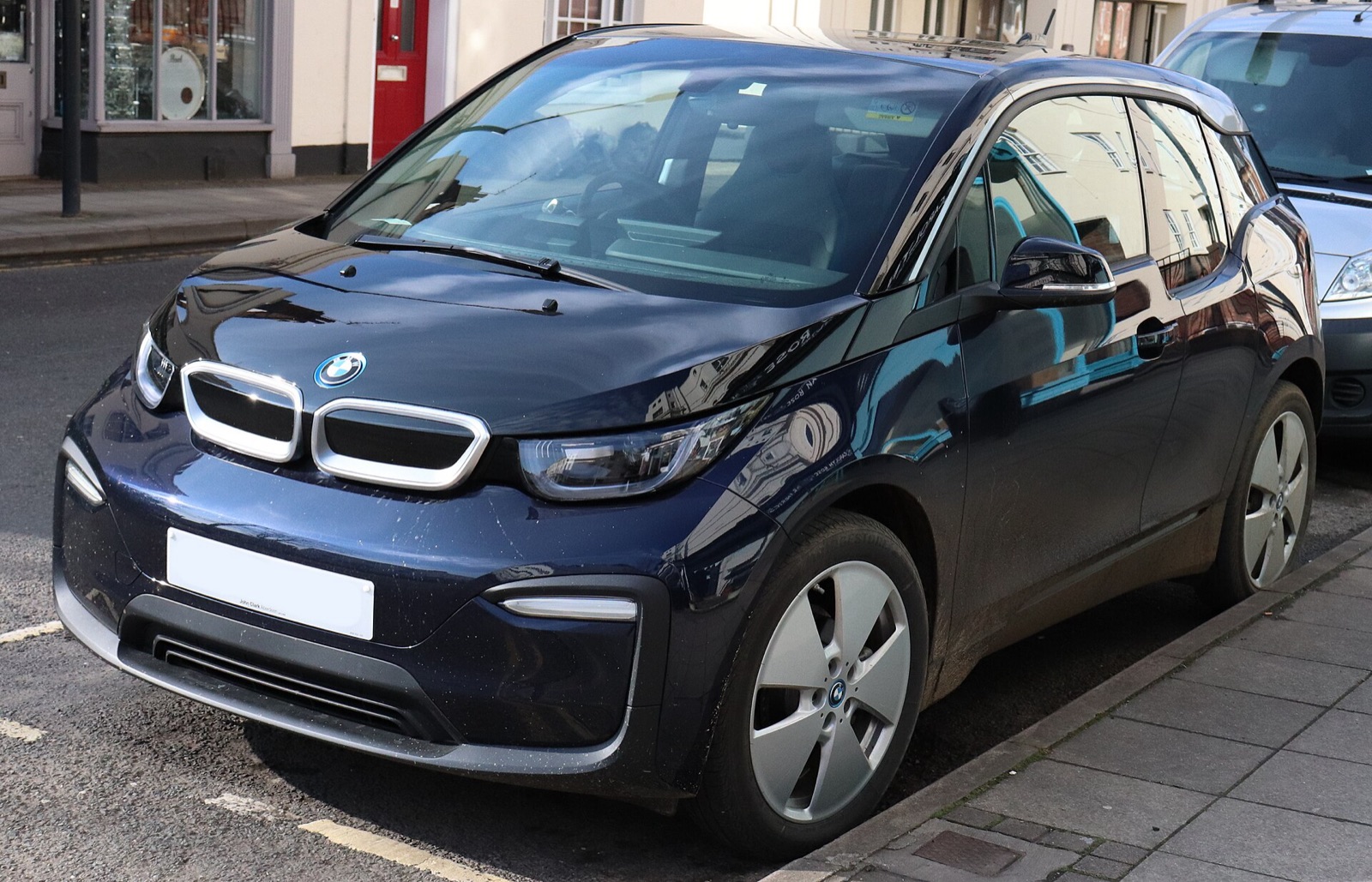
i3 (2018 facelift / 120 Ah)
2018–2022
The final form — restyled bumpers, horizontal LED signatures and standard full-LED lights, soon joined by a 42.2 kWh (120 Ah) pack that pushed range past 300 km and retired the range extender in Europe.
Imagery via Wikimedia Commons
The Electric Era & Now · 2013–2026
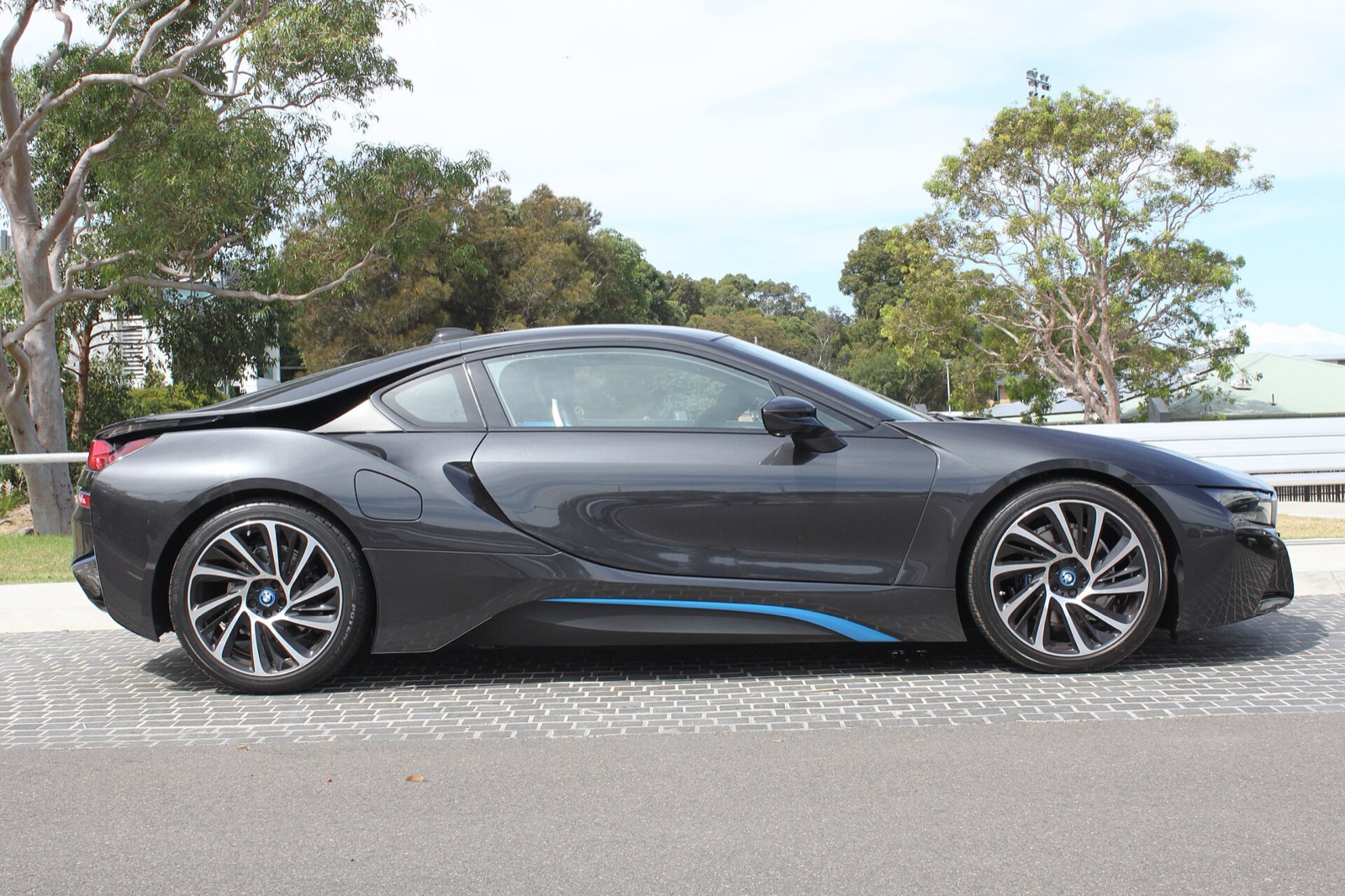
A plug-in hybrid supercar that ran a 1.5-litre three-cylinder over the rear axle and an electric motor over the front, wrapped in a carbon tub with scissor doors. It looked like a concept that escaped the show stand — and proved performance and efficiency needn’t be enemies.
Fun fact
The i8 was among the first production cars offered with laser headlights — brighter and more efficient than LEDs, with roughly double the high-beam range. // VERIFY “first-ever” claim (BMW/Audi both claimed near-simultaneous firsts in 2014)
Design note
Laser lights, aerodynamic “stream-flow” pillars and butterfly doors — the i8 showed how BMW’s future halo cars could look.
Evolution
4 chapters across the years — scroll to explore.
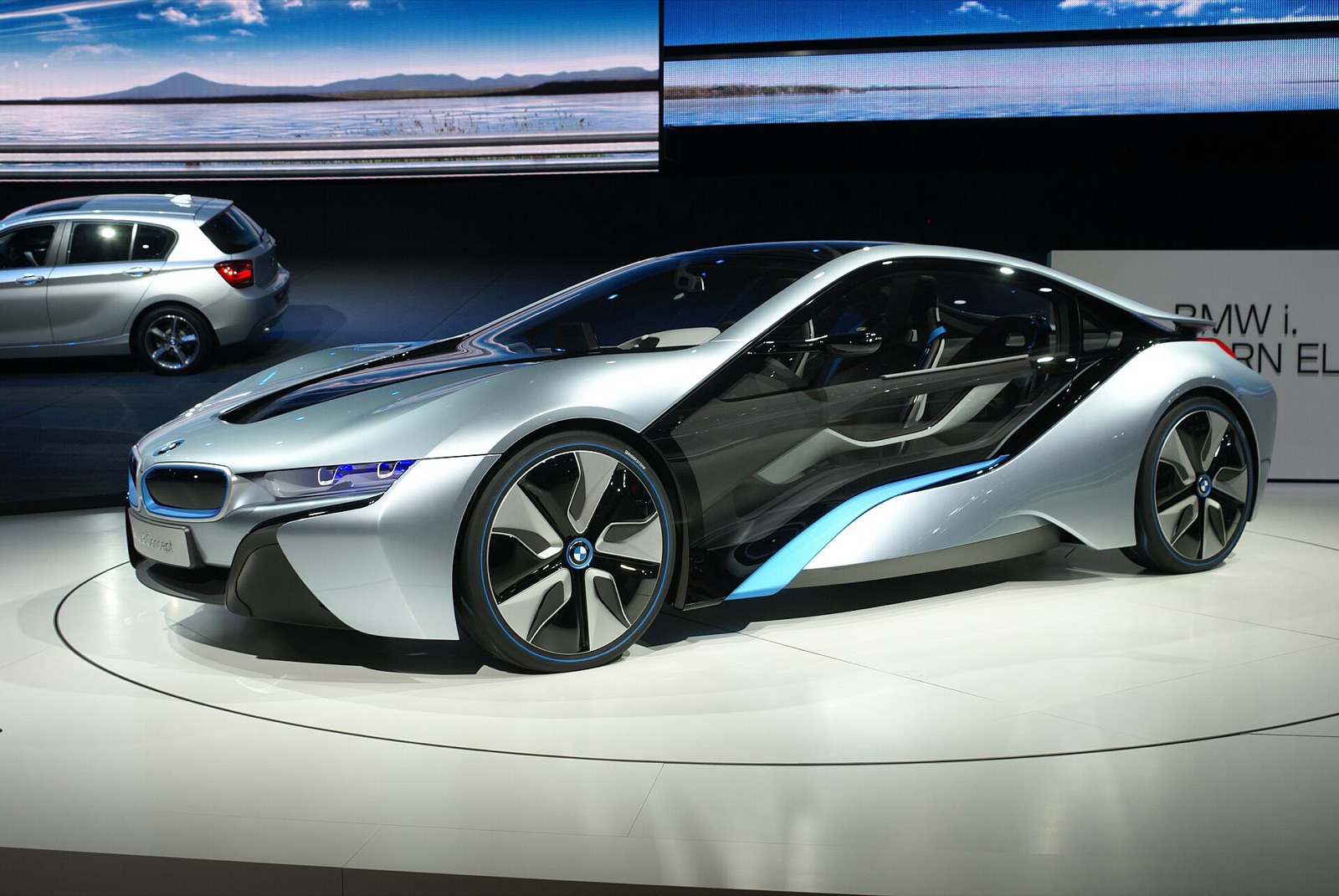
Vision EfficientDynamics & i8 Concept
2009–2013
The show-stopping laser-lit concept — turbodiesel then petrol triple, glass butterfly doors and a 0.22 drag body — that promised a hybrid supercar and, astonishingly, kept the promise.
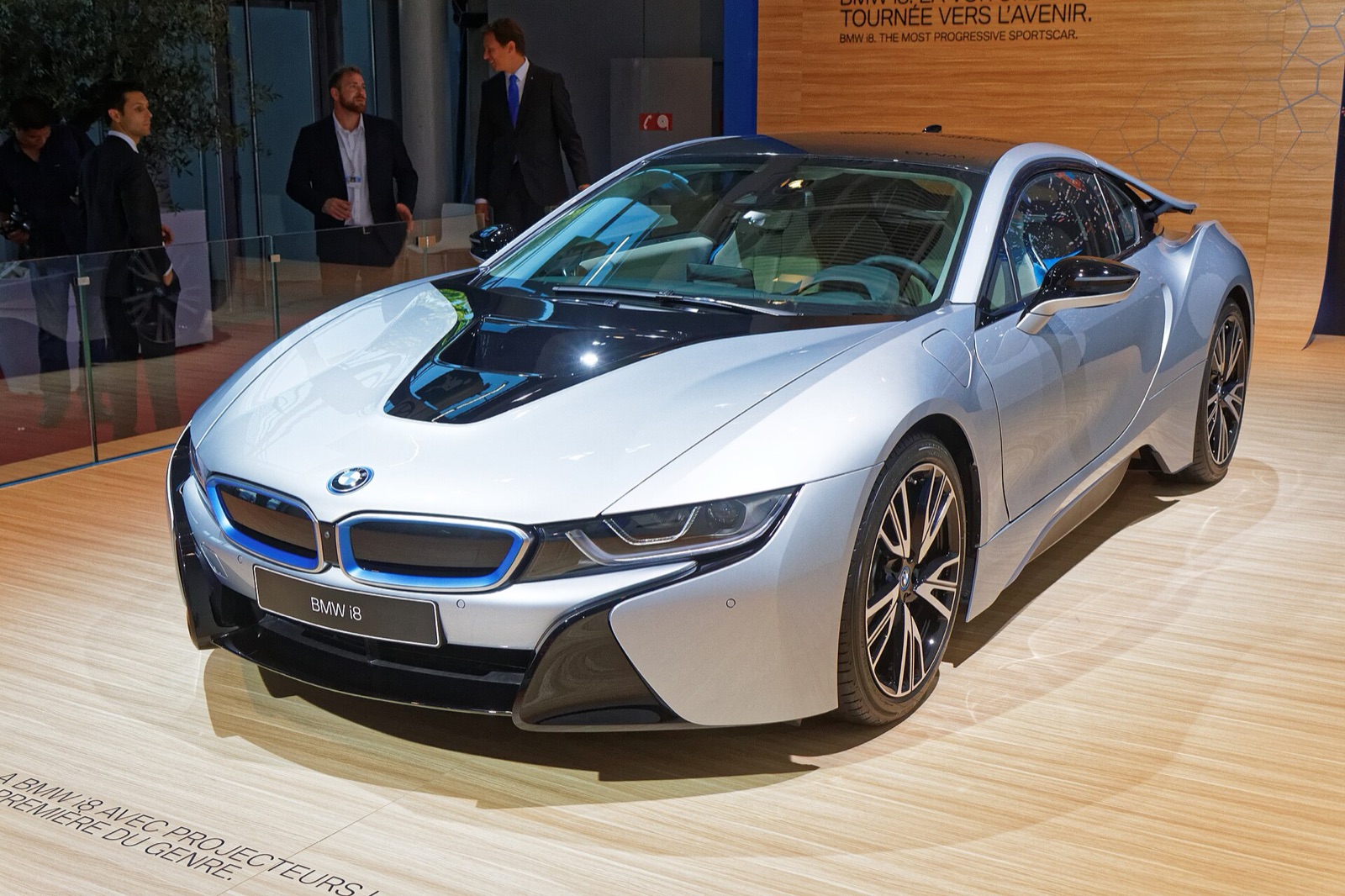
i8 Coupé
2014–2017
The production launch car: a 1.5-litre three-cylinder turbo plus front e-motor for 357 hp, a carbon-fibre tub, butterfly doors and a 7.1 kWh battery good for scenery-melting looks and a clear conscience.
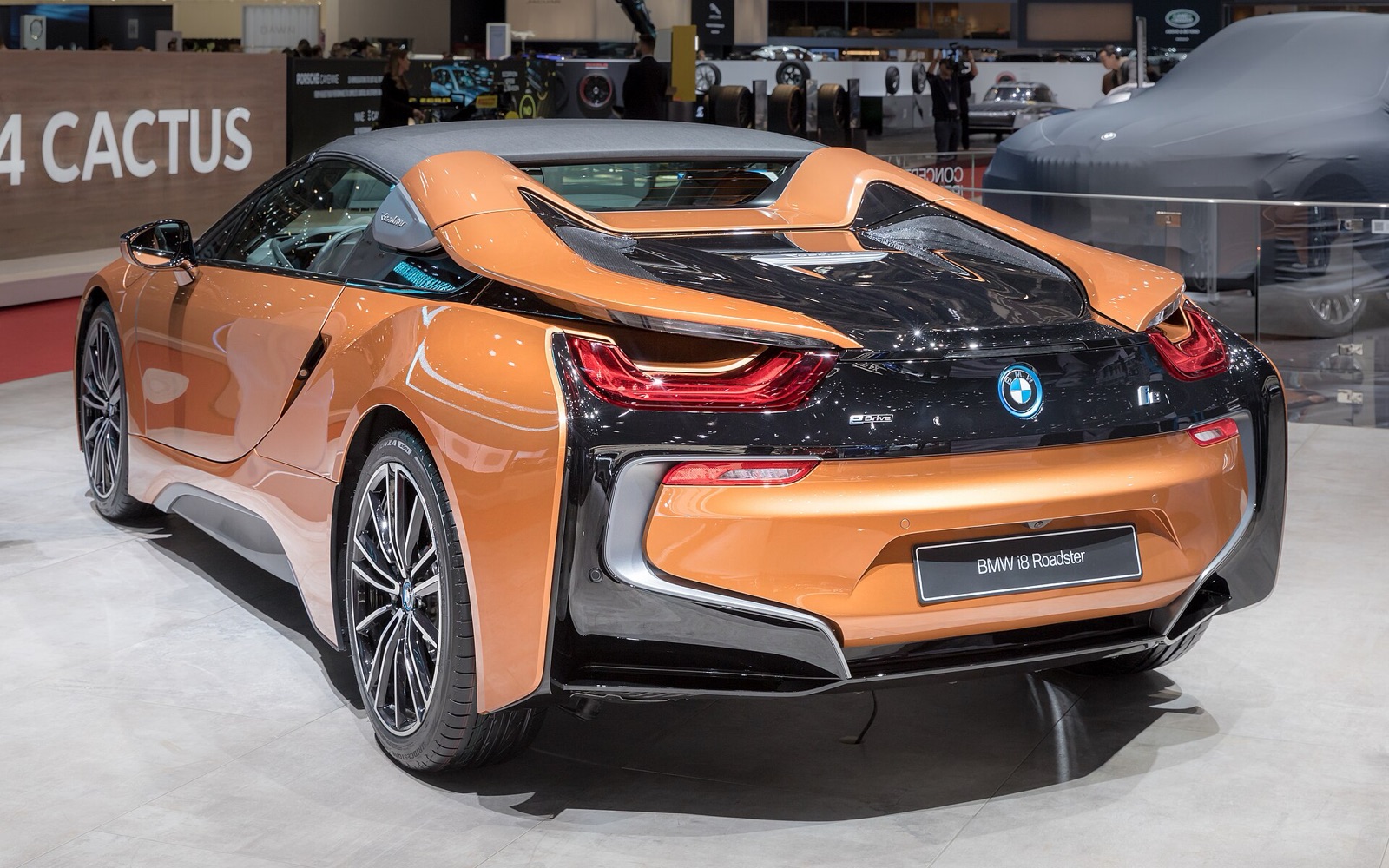
i8 Roadster (LCI)
2018–2020
The open-top arrives alongside a bigger 11.6 kWh battery and a punchier 143 hp e-motor — folding fabric roof stowed where the rear seats used to be, EV range and swagger both up.
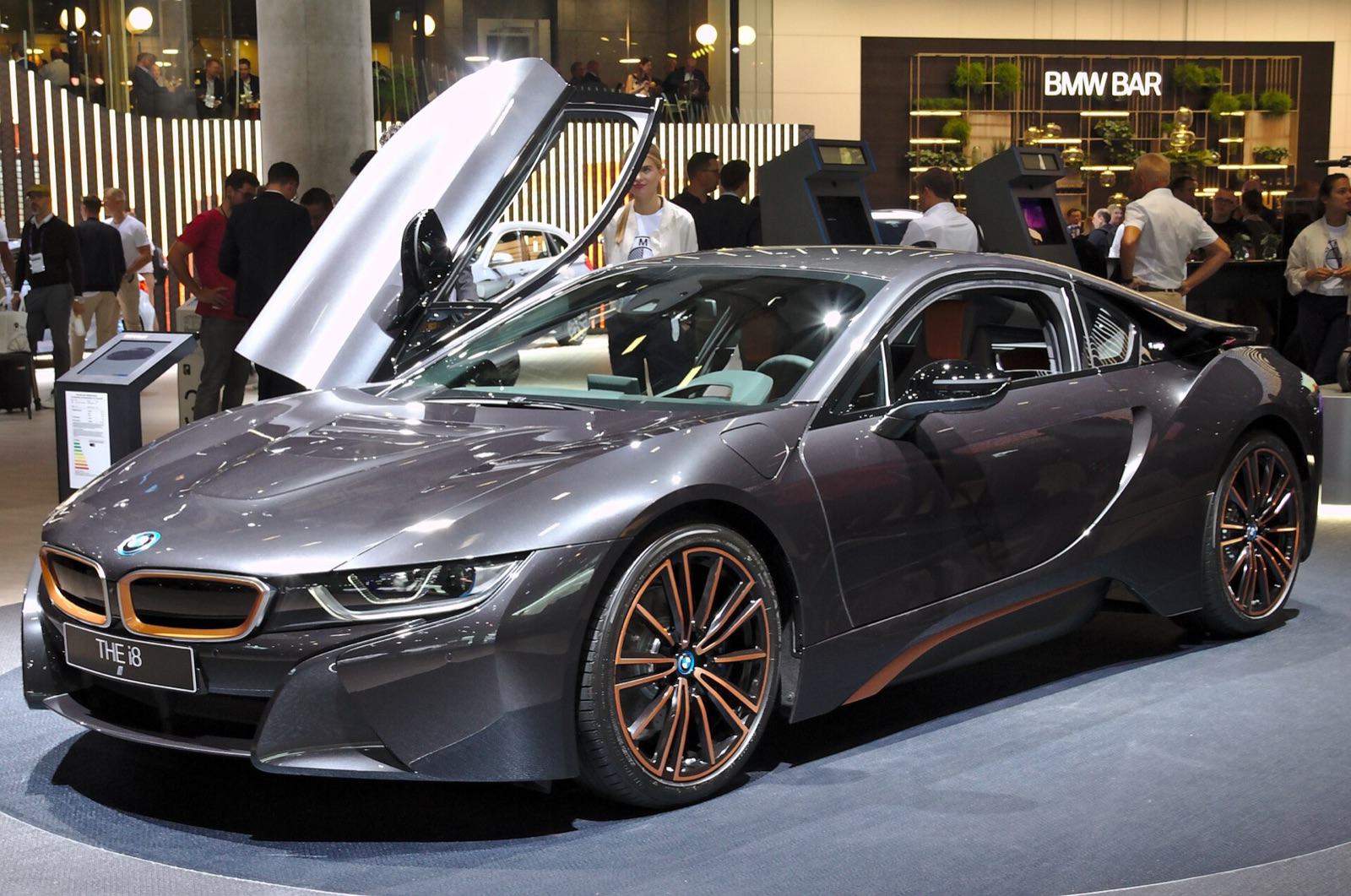
Ultimate Sophisto Edition
2019–2020
The 200-car send-off in Sophisto Grey brushed metallic with E-Copper accents on grille, vents and wheels — a farewell special that saw the 20,000th i8 built before the plug was finally pulled in June 2020.
Imagery via Wikimedia Commons
The Electric Era & Now · 2013–2026
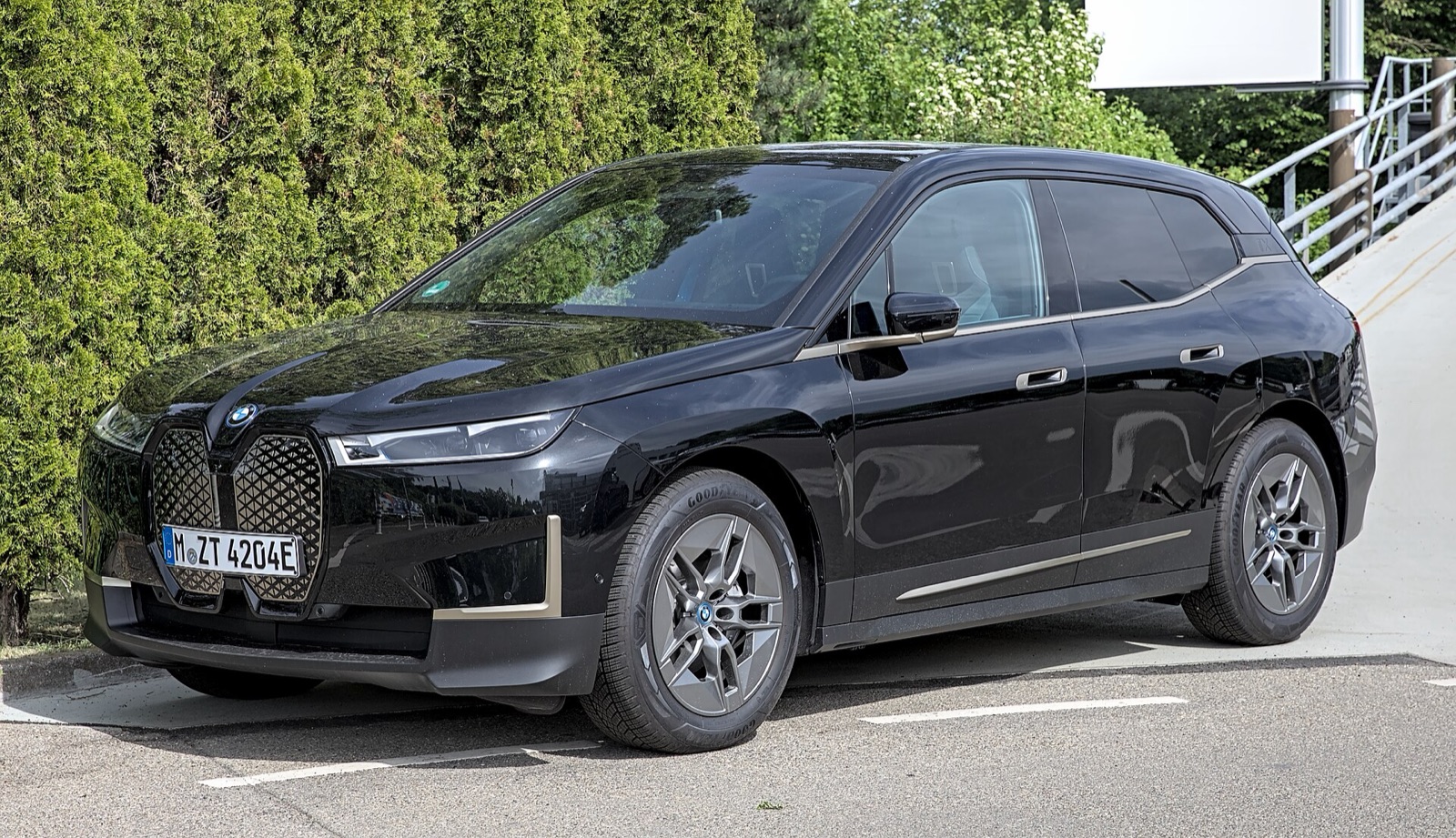
BMW’s technology flagship for the electric era: a large SAV on a purpose-built architecture, with a carbon-reinforced structure hidden in the body, a slippery shape and a cabin conceived as a lounge. The polarising oversized grille is a sealed sensor panel — there’s no radiator behind it to cool.
Fun fact
The iX’s giant “kidney grille” isn’t a grille at all — it’s a self-healing polyurethane panel housing cameras and radar, and BMW says minor scratches smooth themselves out with heat. // VERIFY self-healing claim (per BMW marketing)
Design note
Reframed the kidney grille as a sensor surface — proof the brand’s most argued-about feature could become pure function.
Evolution
4 chapters across the years — scroll to explore.
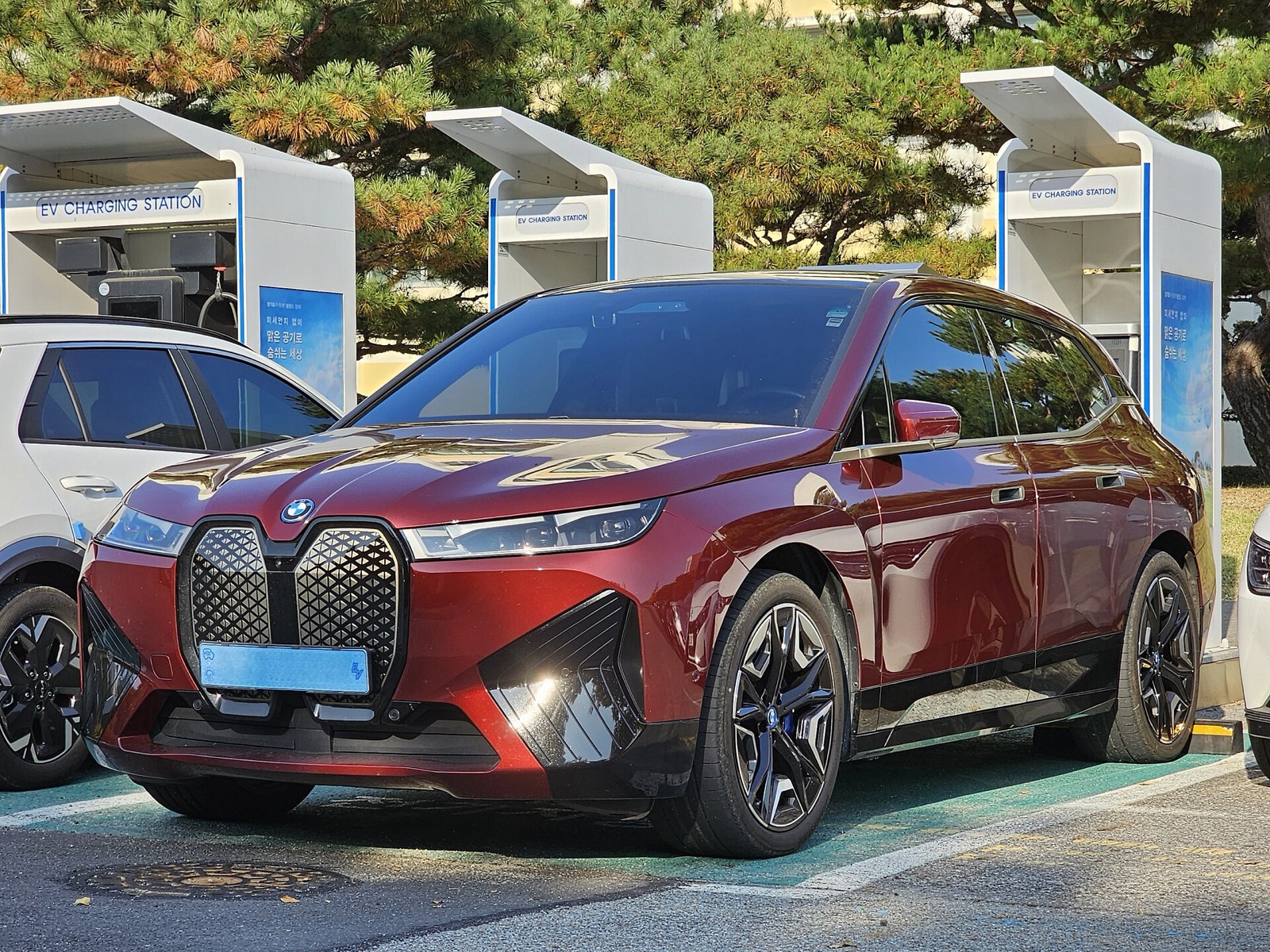
iX xDrive40
2021–2024
The entry point into BMW's carbon-and-aluminium EV flagship — dual motors, roughly 322 hp and a 71 kWh usable pack good for real-world commuting.
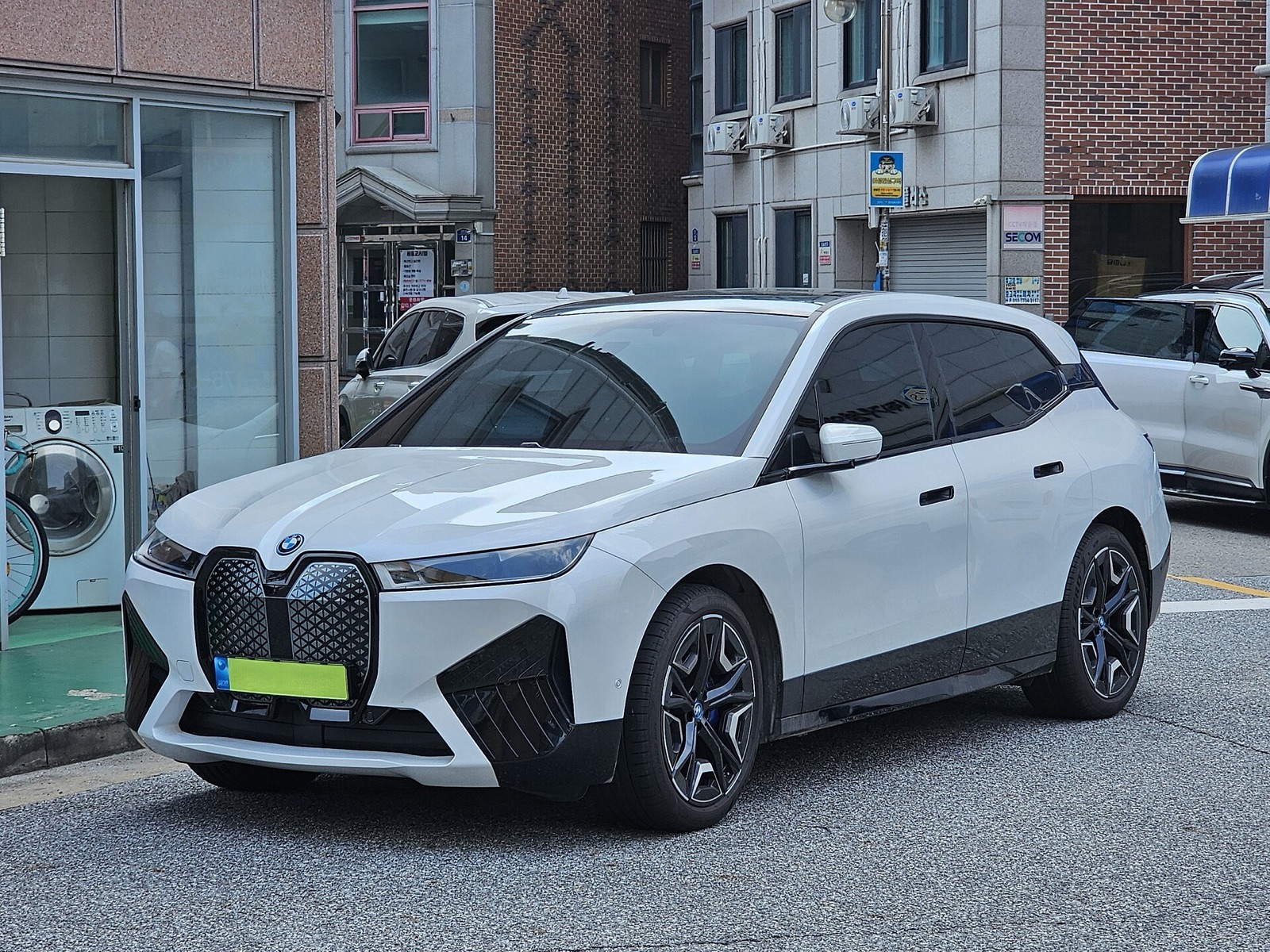
iX xDrive50
2021–2024
The long-range launch flagship — a bigger 105 kWh battery for up to 630-odd km WLTP, 200 kW DC charging and a sub-5-second sprint.
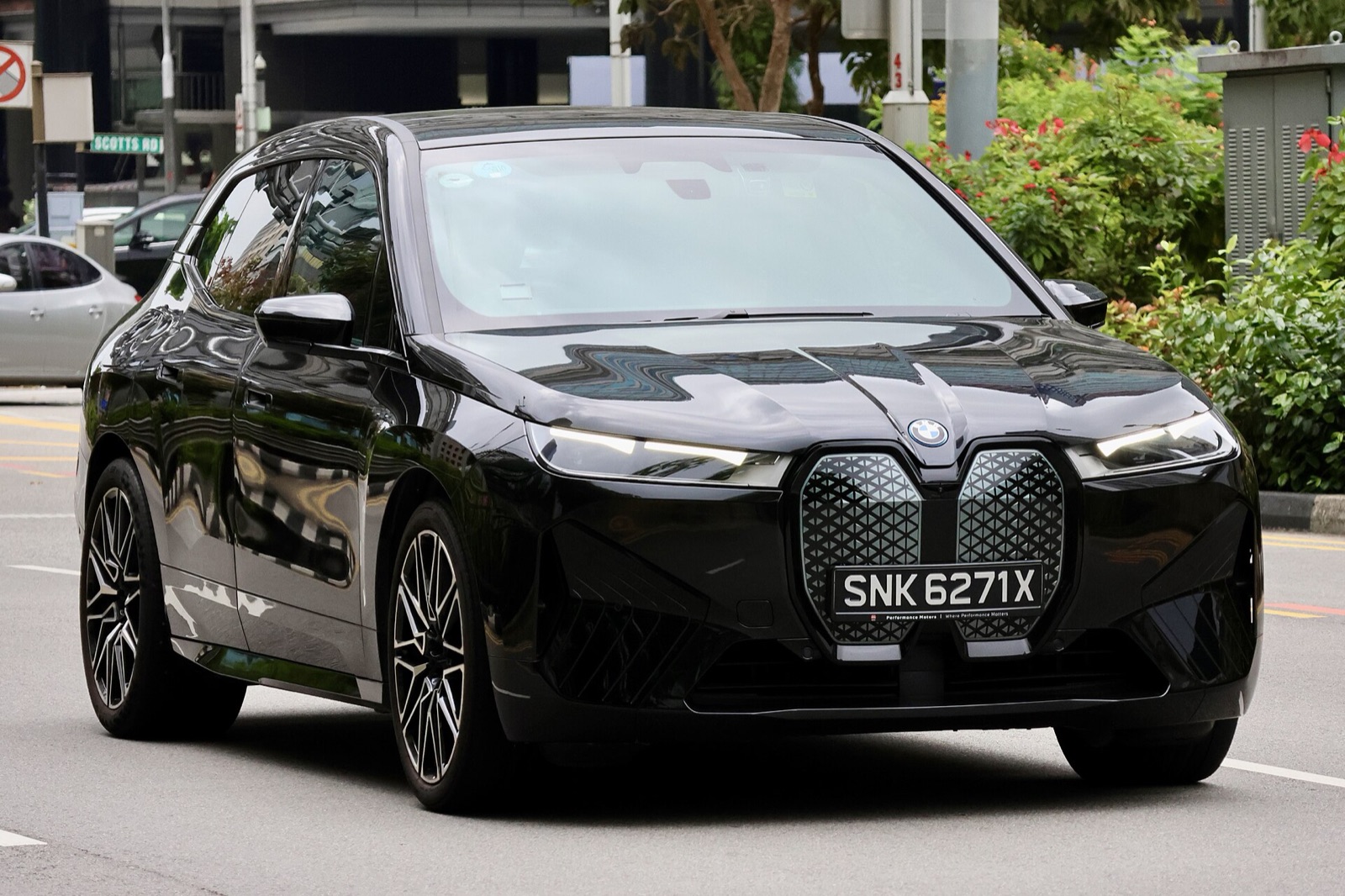
iX M60
2022–2024
The M-fettled performance halo — around 610 hp in Sport Boost, roughly 1,100 Nm and 0–100 km/h in about 3.8 seconds from a 2.6-tonne SUV.
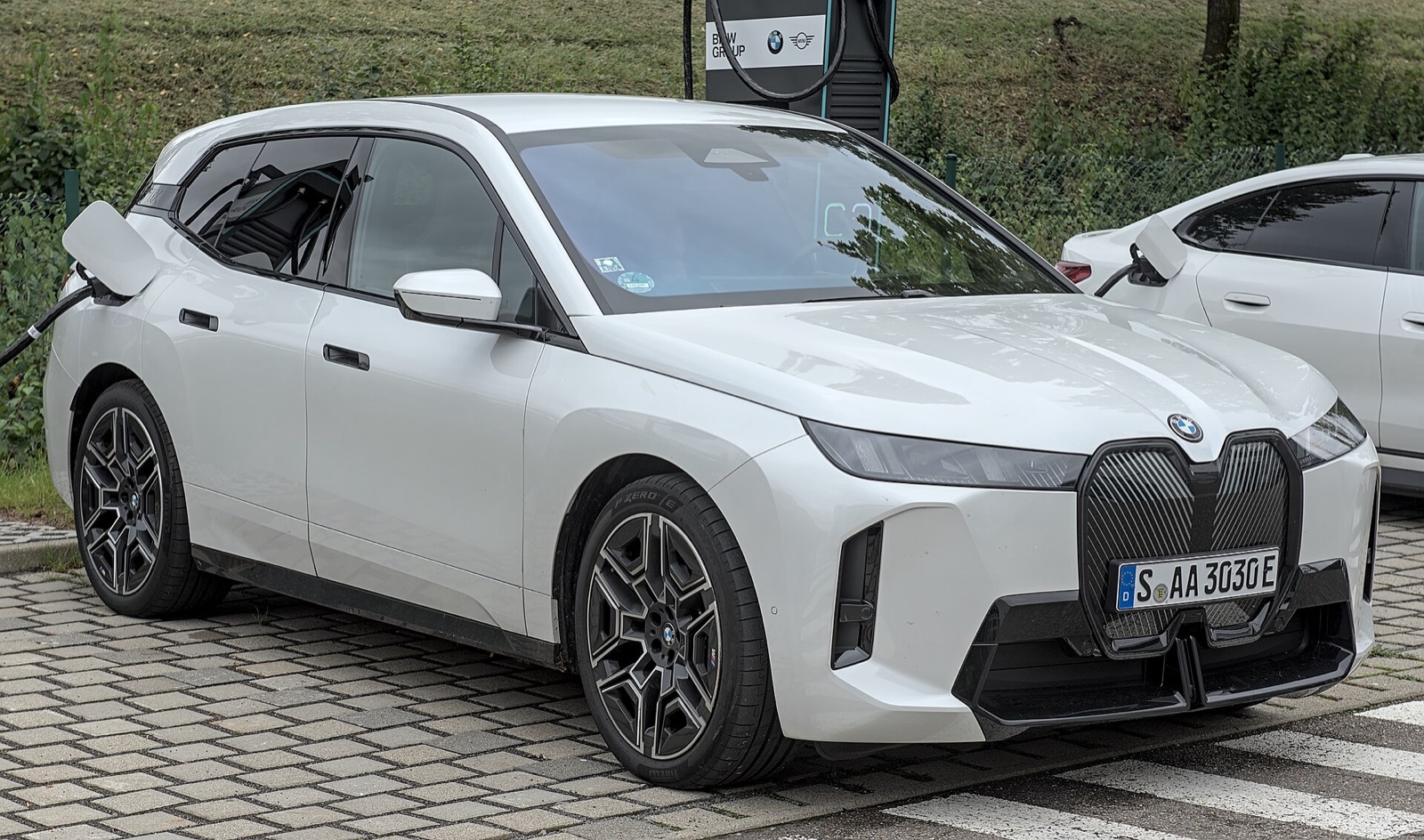
Facelift (LCI)
2025–present
The 2025 refresh reshuffled the range into xDrive45, xDrive60 and M70, adding an illuminated grille, more power and up to 700-plus km of WLTP range.
Imagery via Wikimedia Commons
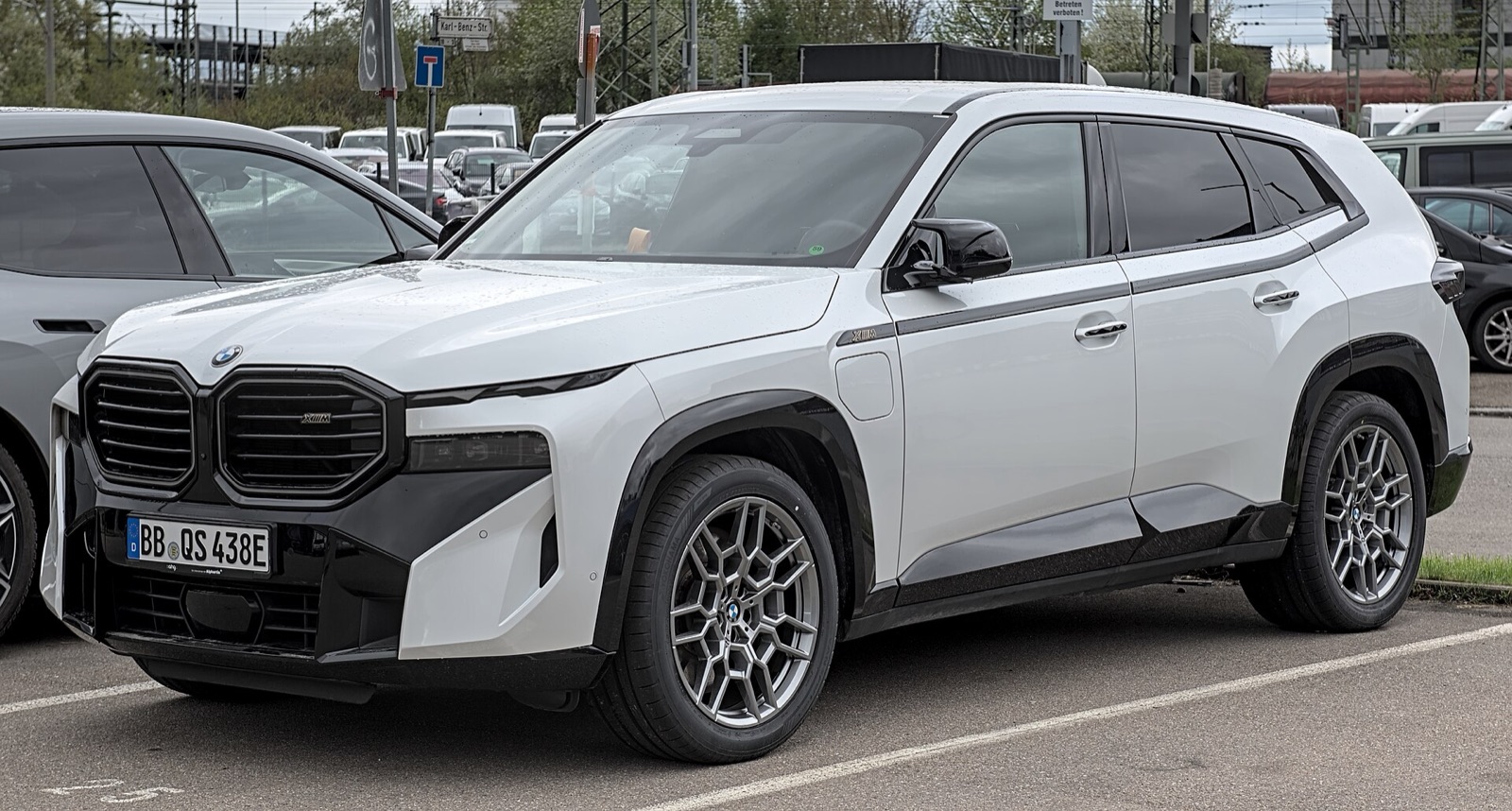
The Electric Era & Now · 2013–2026
The first standalone BMW M model since the M1 in 1978 — and the first M car with electrification at its core. A giant plug-in-hybrid V8 SAV, the XM is deliberately maximalist: enormous split kidneys, stacked exhausts and a vault-like rear. Divisive by design, it’s a flex of what M can be untethered from any existing model.
Fun fact
The XM is only the second car in history developed by BMW M as a bespoke, standalone model — the first was the M1 supercar, 44 years earlier.
Design note
Announced M’s electrified, no-limits future — and pushed the illuminated kidney grille to its most theatrical extreme.
Evolution
3 chapters across the years — scroll to explore.
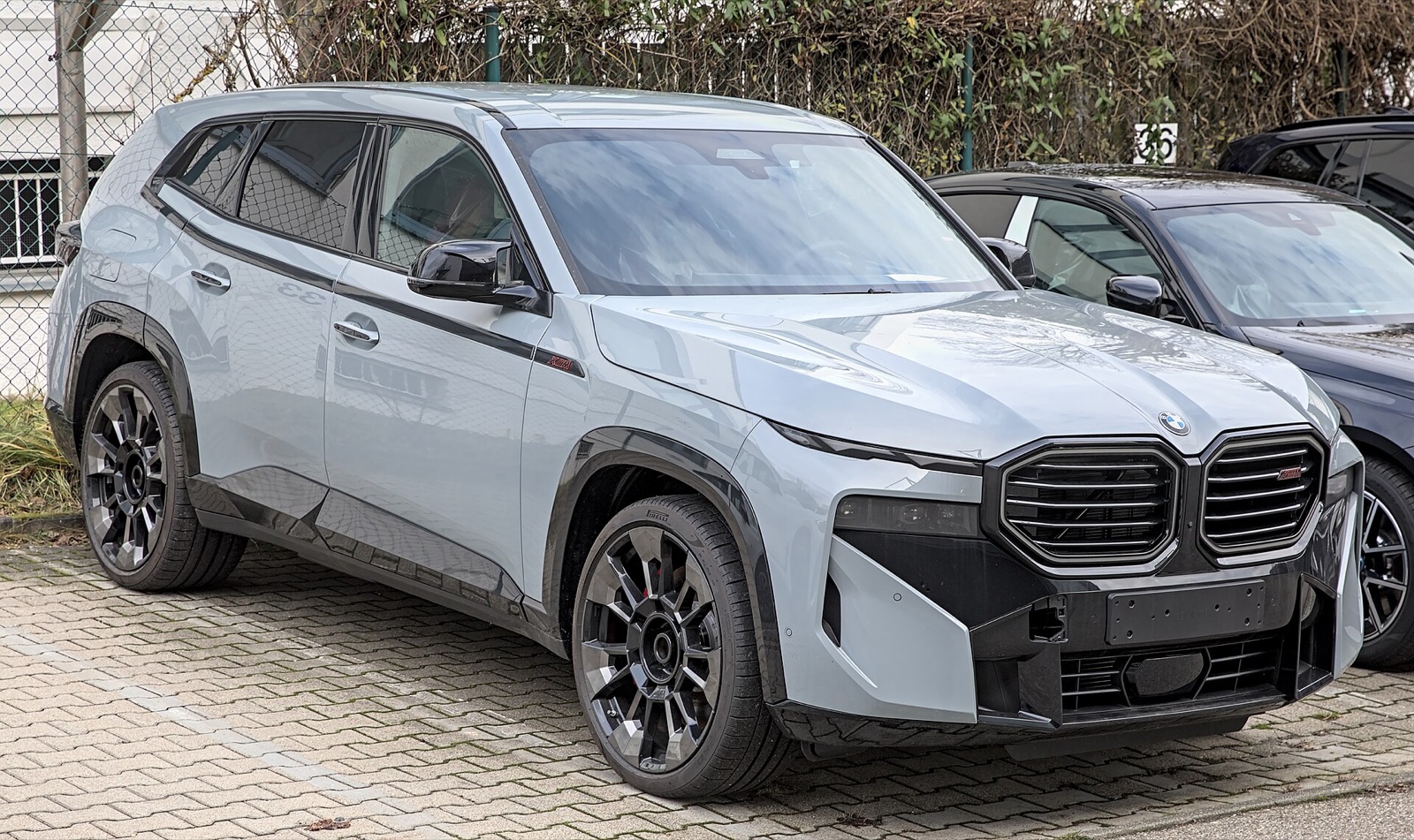
XM
2022–present
M's first standalone model since the M1 — a 644 hp plug-in hybrid V8 wearing that polarizing split-grille, gold-trimmed face.
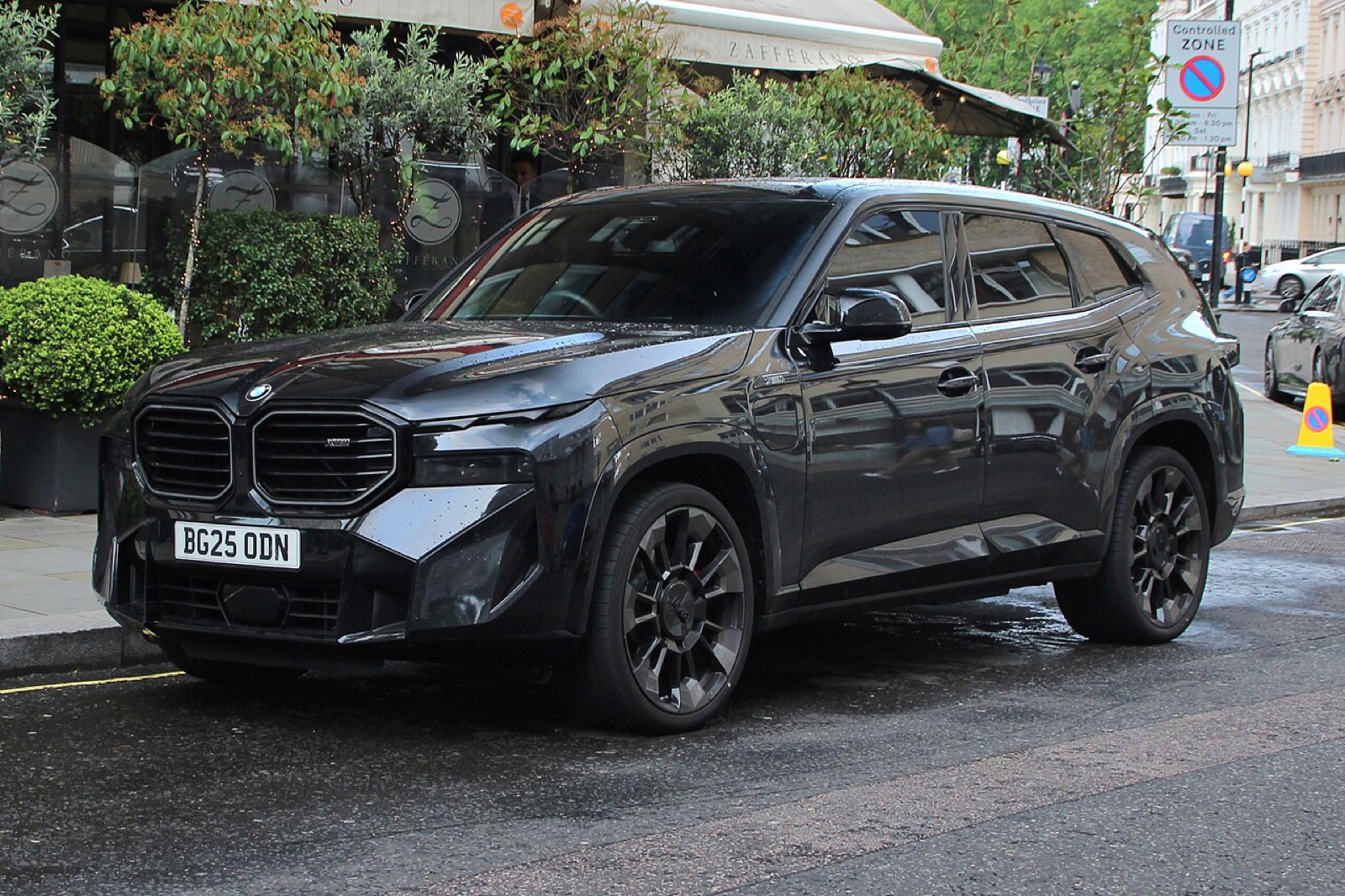
XM 50e
2023–present
The sensible entry point — a straight-six B58 hybrid dropping to 469 hp, marked out by aluminium grille and badge trim.
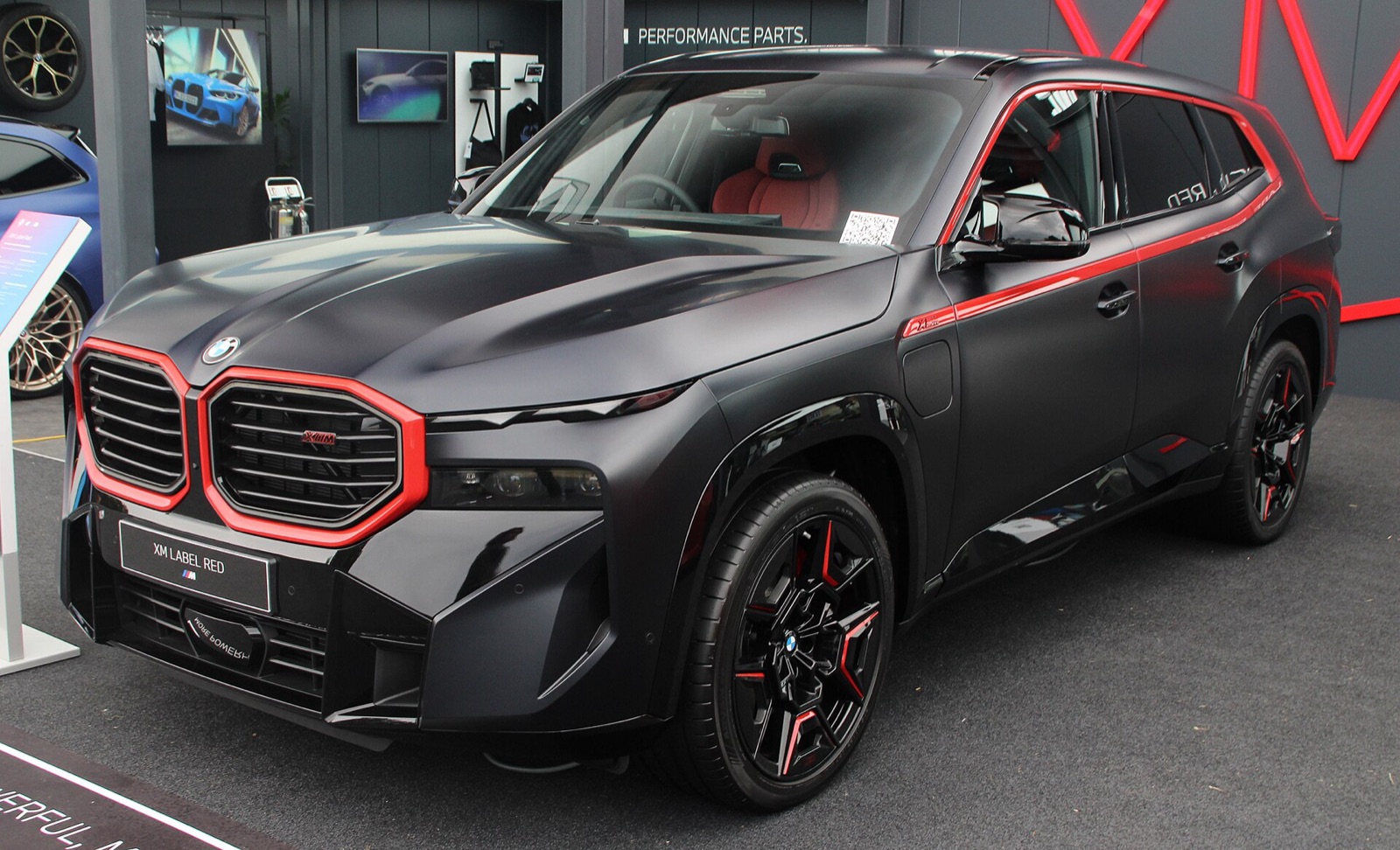
XM Label Red
2023–present
The 738 hp range-topper, capped at 500 units, with a fiery red-outlined grille, red accents and 1,000 Nm of shove.
Imagery via Wikimedia Commons